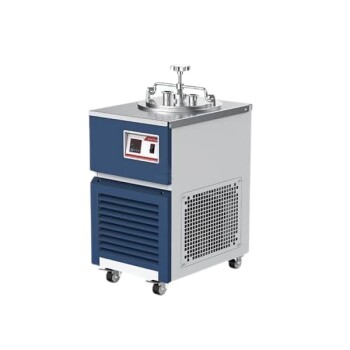
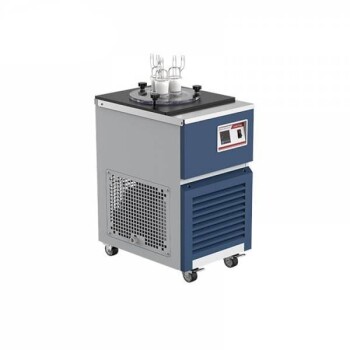
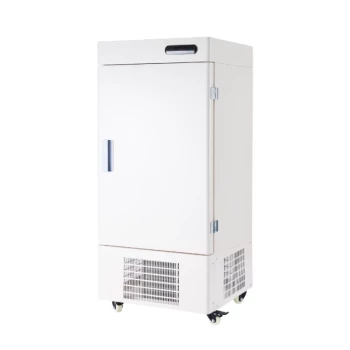
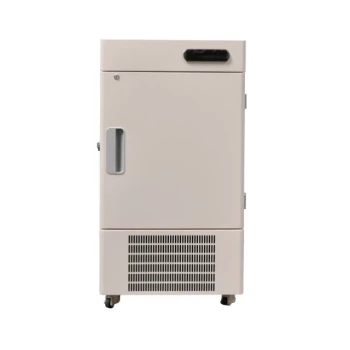
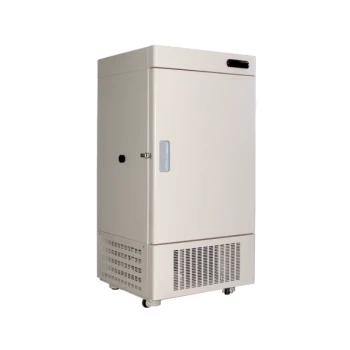
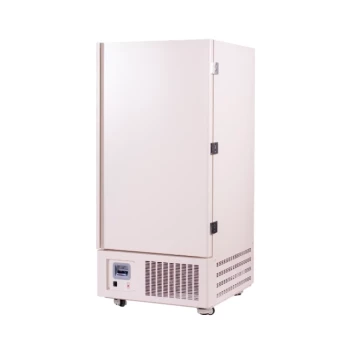
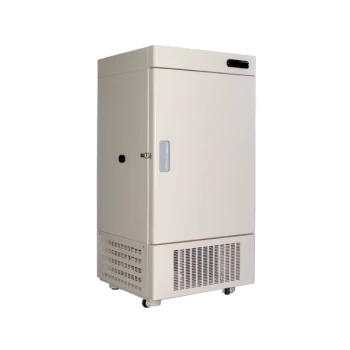
Vacuum freeze-drying is the essential preparation step required to preserve the structural and chemical integrity of Sulfate-Reducing Bacteria (SRB) samples prior to microscopic analysis. By removing moisture through sublimation under vacuum conditions, this process prevents the physical collapse and chemical alteration that traditional heat drying would cause, ensuring the data captured matches the sample's true state.
Traditional thermal drying introduces surface tension and heat stress that can distort biological samples and alter surface chemistry. Vacuum freeze-drying bypasses the liquid phase entirely, "locking in" the original morphology and distribution of cadmium precipitates to ensure authentic analytical results.
Preserving Biological and Structural Fidelity
The Mechanism of Sublimation
Vacuum freeze-drying removes water from the sample by converting ice directly into vapor (sublimation). This occurs under low-temperature and low-pressure conditions, avoiding the liquid phase transition associated with standard evaporation.
Retaining Original Morphology
SRB and their associated cadmium precipitates often have delicate, porous structures. Freeze-drying ensures these structures do not collapse or shrink, which is a common side effect of the surface tension forces present during air or heat drying.
Preventing Component Denaturation
Biological components within SRB are sensitive to high temperatures. By maintaining a cold environment, freeze-drying prevents the denaturation of proteins and other cell components, preserving the sample's chemical identity for analysis.
Ensuring Accuracy in Advanced Analysis
Optimization for Scanning Electron Microscopy (SEM)
SEM requires samples to be completely dry to function in a vacuum, but they must also look exactly as they did when wet. Freeze-drying prevents sample aggregation (clumping), ensuring that the images capture the true distribution of bacteria and immobilized cadmium.
Validity for X-ray Photoelectron Spectroscopy (XPS)
XPS analyzes the chemical states of elements on the sample surface. Because freeze-drying avoids high heat, it prevents heat-induced chemical reactions that could artificially change the oxidation state or bonding environment of the immobilized cadmium.
Understanding the Trade-offs: Thermal vs. Freeze Drying
The Risk of Thermal Drying
While a standard laboratory vacuum drying oven is useful for removing excess moisture to maintain bacterial activity for reuse, it is often insufficient for high-resolution microscopy. Even moderate heat can alter the surface texture and close the pores of the material, leading to misleading SEM images.
Time and Complexity
Vacuum freeze-drying is generally a slower and more energy-intensive process compared to thermal drying. However, this investment of time is non-negotiable when the goal is accurate structural characterization rather than simple moisture removal.
Making the Right Choice for Your Goal
To ensure your analytical data is defensible, choose your preparation method based on your specific output requirements:
- If your primary focus is Visual Morphology (SEM): Use vacuum freeze-drying to prevent pore collapse and aggregation, ensuring images reflect the actual interaction between the SRB and cadmium.
- If your primary focus is Chemical Surface Analysis (XPS): Use vacuum freeze-drying to avoid heat-induced oxidation or chemical shifting of the surface precipitates.
High-quality analysis begins with high-fidelity sample preparation; without freeze-drying, your microscopic data may reflect the drying process rather than the experiment itself.
Summary Table:
| Feature | Vacuum Freeze-Drying | Traditional Thermal Drying |
|---|---|---|
| Mechanism | Sublimation (Ice to Vapor) | Evaporation (Liquid to Vapor) |
| Structural Impact | Preserves morphology & pore structure | Causes shrinkage and pore collapse |
| Chemical Stability | Prevents heat-induced denaturation | Risks oxidation & chemical shifting |
| Sample State | Non-aggregated, authentic distribution | Potential clumping/aggregation |
| Best For | High-resolution SEM & XPS analysis | General moisture removal for reuse |
Elevate Your Research Precision with KINTEK Solutions
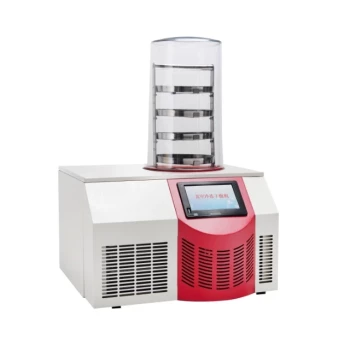
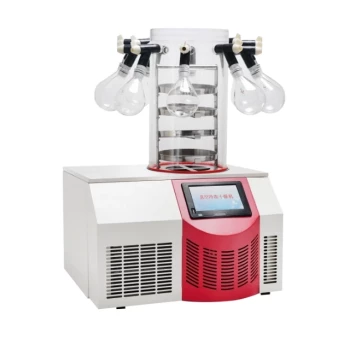
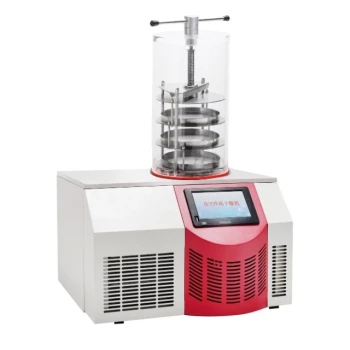
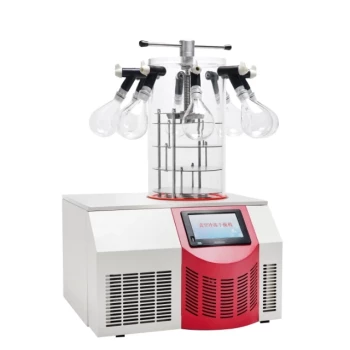
Don’t let poor sample preparation compromise your analytical data. KINTEK specializes in high-performance laboratory equipment designed for the most demanding biological and chemical research. Our advanced vacuum freeze dryers (freeze dryers) and cooling solutions ensure your Sulfate-Reducing Bacteria samples maintain perfect structural fidelity for SEM and XPS analysis.
From high-temperature furnaces and vacuum systems to crushing equipment and PTFE consumables, KINTEK provides a comprehensive ecosystem for material science and biotechnology. Ensure your results are defensible and accurate—Contact KINTEK today to find the perfect equipment for your lab!
References
- Lang Liao, Yan Zhang. Immobilization Behavior and Mechanism of Cd2+ by Sulfate-Reducing Bacteria in Anoxic Environments. DOI: 10.3390/w16081086
This article is also based on technical information from Kintek Solution Knowledge Base .
Related Products
- Benchtop Laboratory Vacuum Freeze Dryer
- High Performance Laboratory Freeze Dryer
- High Performance Laboratory Freeze Dryer for Research and Development
- Benchtop Laboratory Freeze Dryer for Lab Use
- Vacuum Cold Mounting Machine for Sample Preparation
People Also Ask
- What are the technical advantages of using a laboratory freeze dryer for porous carbon precursors? Preserve 3D Networks
- How do laboratory freeze dryers support scientific research? Preserve Sample Integrity for Reproducible Results
- Why is a laboratory freeze dryer preferred over traditional heating? Preserve Biochar Structure & Maximize Porosity
- What types of liquid samples can be processed using a laboratory freeze dryer? Preserve Your Sensitive Materials
- What role do laboratory freeze dryers play in the food industry? Unlock Superior Food Preservation