Knowledge Why is a vacuum rotary evaporator selected for drying palladium nanoparticles? Optimize Catalyst Performance
Author avatar

Tech Team · Kintek Solution

Updated 1 day ago

Why is a vacuum rotary evaporator selected for drying palladium nanoparticles? Optimize Catalyst Performance


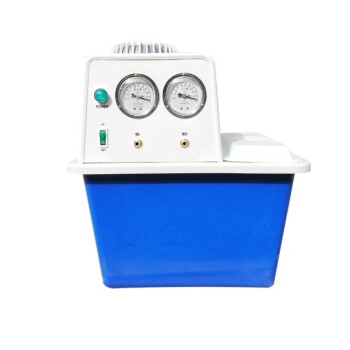
The primary reason for selecting a vacuum rotary evaporator is to facilitate rapid drying at low temperatures. Specifically, this method allows for the removal of washing liquids at moderate temperatures, typically between 40-60 °C, by operating under reduced pressure. This controlled environment protects the palladium nanoparticles from the thermal stress that occurs in standard high-temperature drying methods.

Core Takeaway: The vacuum rotary evaporator is not just a drying tool; it is a preservation mechanism. By lowering the boiling point of solvents, it prevents the sintering and agglomeration of nanoparticles, ensuring the catalyst maintains the high dispersion necessary for peak performance.

Preserving Catalyst Structure

Preventing Particle Sintering

The most critical risk during the preparation of bimetallic catalysts is sintering. When palladium nanoparticles are exposed to high heat, they tend to migrate and fuse together.

This fusion increases the average particle size significantly. A vacuum rotary evaporator mitigates this by enabling evaporation at temperatures that are too low to trigger this thermal degradation.

Ensuring High Dispersion

Catalytic activity depends heavily on surface area. You need the palladium to remain as distinct, highly dispersed particles across the bimetallic carrier.

By removing liquids rapidly without excessive heat, the rotary evaporator "freezes" the nanoparticles in their dispersed state. This prevents the formation of large, inactive clumps that reduce the catalyst's overall efficiency.

The Mechanics of Control

Utilizing Reduced Pressure

The device operates by creating a vacuum within the drying flask. This lowers the boiling point of the washing liquids involved in the synthesis.

Consequently, effective drying can occur within the safe 40-60 °C window. This avoids the harsh thermal spikes associated with atmospheric drying ovens.

Rapid Solvent Removal

The "rotary" action of the evaporator spreads the solvent as a thin film across the flask walls. This drastically increases the surface area available for evaporation.

This leads to a faster drying rate, which further limits the time the delicate nanoparticles are exposed to processing conditions.

Understanding the Trade-offs

Batch Process Limitations

While ideal for maintaining quality, rotary evaporation is inherently a batch process. It may introduce bottlenecks if you are attempting to scale up to continuous industrial production compared to conveyor-based drying.

Operational Precision

Unlike a static oven, this method requires active monitoring of vacuum levels and rotation speeds. An operator must ensure the pressure is tuned correctly to prevent "bumping" (solvent boiling over), which could physically displace the catalyst material.

Making the Right Choice for Your Goal

To maximize the efficacy of your bimetallic Crn+/Pd0 supported catalysts, consider these priorities:

  • If your primary focus is Maximum Catalytic Activity: Prioritize the vacuum rotary evaporator to strictly maintain temperatures below 60 °C, ensuring the highest possible dispersion of active sites.
  • If your primary focus is Particle Size Control: Use this method to prevent agglomeration, guaranteeing that the specific, engineered particle size of the palladium is preserved from synthesis to final product.

By controlling the thermal environment, you protect the geometric integrity that makes the catalyst effective.

Summary Table:

Feature Vacuum Rotary Evaporation Traditional Oven Drying
Temperature Range Low (40-60 °C) High (>100 °C)
Pressure Reduced (Vacuum) Atmospheric
Particle Sintering Minimized / Prevented High Risk
Dispersion Level High (Maintains Surface Area) Low (Agglomeration Risk)
Drying Speed Rapid (Thin Film) Slow
Material Integrity Preserved High Thermal Stress

Maximize Your Catalyst Efficiency with KINTEK Precision Solutions

Preserving the delicate structure of palladium nanoparticles requires more than just heat; it requires the precise thermal control and rapid solvent removal that only professional-grade equipment can provide. KINTEK specializes in advanced laboratory solutions, including high-performance vacuum rotary evaporators, high-temperature furnaces, and specialized high-pressure reactors designed to maintain the geometric integrity of your most sensitive materials.

Whether you are focusing on particle size control or maximizing catalytic activity, our comprehensive range of equipment—from crushing and milling systems to cooling solutions like ULT freezers—ensures your research and production meet the highest standards. Don't let thermal stress compromise your bimetallic catalyst performance.

Upgrade your lab with KINTEK—Contact our experts today!

References

  1. O. A. Kirichenko, Л. М. Кустов. Facile Redox Synthesis of Novel Bimetallic Crn+/Pd0 Nanoparticles Supported on SiO2 and TiO2 for Catalytic Selective Hydrogenation with Molecular Hydrogen. DOI: 10.3390/catal11050583

This article is also based on technical information from Kintek Solution Knowledge Base .

Related Products

People Also Ask

Related Products

Laboratory Disc Rotary Mixer for Efficient Sample Mixing and Homogenization

Laboratory Disc Rotary Mixer for Efficient Sample Mixing and Homogenization

Efficient Laboratory Disc Rotary Mixer for Precise Sample Mixing, Versatile for Various Applications, DC Motor and Microcomputer Control, Adjustable Speed and Angle.

Automatic Laboratory Hydraulic Pellet Press Machine for Lab Use

Automatic Laboratory Hydraulic Pellet Press Machine for Lab Use

Experience efficient sample preparation with our Automatic Lab Press Machine. Ideal for material research, pharmacy, ceramics, and more. Features a compact size and hydraulic press functionality with heating plates. Available in various sizes.

Laboratory Manual Hydraulic Pellet Press for Lab Use

Laboratory Manual Hydraulic Pellet Press for Lab Use

Efficient sample preparation with small footprint Manual Lab Hydraulic Press. Ideal for material researching labs, pharmacy, catalytic reaction, and ceramics.

Vacuum Hot Press Furnace Machine for Lamination and Heating

Vacuum Hot Press Furnace Machine for Lamination and Heating

Experience clean and precise lamination with Vacuum Lamination Press. Perfect for wafer bonding, thin-film transformations, and LCP lamination. Order now!

Laboratory Sealed Hammer Crusher for Efficient Sample Preparation

Laboratory Sealed Hammer Crusher for Efficient Sample Preparation

Discover the Laboratory Sealed Hammer Crusher for efficient sample preparation. Ideal for coal, metallurgy, and research, this crusher ensures high production efficiency and environmental friendliness.

Electrode Polishing Material for Electrochemical Experiments

Electrode Polishing Material for Electrochemical Experiments

Looking for a way to polish your electrodes for electrochemical experiments? Our polishing materials are here to help! Follow our easy instructions for best results.

Electric Rotary Kiln Continuous Working Small Rotary Furnace Heating Pyrolysis Plant

Electric Rotary Kiln Continuous Working Small Rotary Furnace Heating Pyrolysis Plant

Efficiently calcine and dry bulk powder and lump fluid materials with an electric heating rotary furnace. Ideal for processing lithium ion battery materials and more.

Warm Isostatic Press WIP Workstation 300Mpa for High Pressure Applications

Warm Isostatic Press WIP Workstation 300Mpa for High Pressure Applications

Discover Warm Isostatic Pressing (WIP) - A cutting-edge technology that enables uniform pressure to shape and press powdered products at a precise temperature. Ideal for complex parts and components in manufacturing.

Custom PTFE Teflon Parts Manufacturer for Acid and Alkali Resistant Chemical Powder Material Scoops

Custom PTFE Teflon Parts Manufacturer for Acid and Alkali Resistant Chemical Powder Material Scoops

Known for its excellent thermal stability, chemical resistance and electrical insulating properties, PTFE is a versatile thermoplastic material.

Advanced Engineering Fine Ceramics Low Temperature Alumina Granulation Powder

Advanced Engineering Fine Ceramics Low Temperature Alumina Granulation Powder

Low temperature alumina granulation powder is a kind of alumina particles produced by a special low temperature process, designed to meet the needs of temperature sensitive applications. This material has excellent low temperature performance and good processing characteristics, suitable for a variety of industries that require low temperature processing and treatment.

Vertical High Temperature Graphite Vacuum Graphitization Furnace

Vertical High Temperature Graphite Vacuum Graphitization Furnace

Vertical high temperature graphitization furnace for carbonization and graphitization of carbon materials up to 3100℃.Suitable for shaped graphitization of carbon fiber filaments and other materials sintered in a carbon environment.Applications in metallurgy, electronics, and aerospace for producing high-quality graphite products like electrodes and crucibles.

Dental Porcelain Zirconia Sintering Ceramic Vacuum Press Furnace

Dental Porcelain Zirconia Sintering Ceramic Vacuum Press Furnace

Get precise dental results with Dental Vacuum Press Furnace. Automatic temperature calibration, low noise tray, and touch screen operation. Order now!

High Pressure Laboratory Vacuum Tube Furnace Quartz Tubular Furnace

High Pressure Laboratory Vacuum Tube Furnace Quartz Tubular Furnace

KT-PTF High Pressure Tube Furnace: Compact split tube furnace with strong positive pressure resistance. Working temp up to 1100°C and pressure up to 15Mpa. Also works under controller atmosphere or high vacuum.

Custom PTFE Teflon Parts Manufacturer Laboratory High Temperature Mixing Paddle Mixer

Custom PTFE Teflon Parts Manufacturer Laboratory High Temperature Mixing Paddle Mixer

The PTFE mixing paddle mixer is a versatile and robust tool designed for laboratory use, particularly in environments requiring high resistance to chemicals and extreme temperatures. Crafted from high-quality PTFE, this mixer boasts several key features that enhance its functionality and durability.

Graphite Vacuum Furnace High Thermal Conductivity Film Graphitization Furnace

Graphite Vacuum Furnace High Thermal Conductivity Film Graphitization Furnace

The high thermal conductivity film graphitization furnace has uniform temperature, low energy consumption and can operate continuously.

Small Vacuum Heat Treat and Tungsten Wire Sintering Furnace

Small Vacuum Heat Treat and Tungsten Wire Sintering Furnace

The small vacuum tungsten wire sintering furnace is a compact experimental vacuum furnace specially designed for universities and scientific research institutes. The furnace features a CNC welded shell and vacuum piping to ensure leak-free operation. Quick-connect electrical connections facilitate relocation and debugging, and the standard electrical control cabinet is safe and convenient to operate.

Cold Isostatic Pressing Machine CIP for Small Workpiece Production 400Mpa

Cold Isostatic Pressing Machine CIP for Small Workpiece Production 400Mpa

Produce uniformly high-density materials with our Cold Isostatic Press. Ideal for compacting small workpieces in production settings. Widely used in powder metallurgy, ceramics, and biopharmaceutical fields for high-pressure sterilization and protein activation.

Custom PTFE Teflon Parts Manufacturer for Non-Standard Insulator Customization

Custom PTFE Teflon Parts Manufacturer for Non-Standard Insulator Customization

PTFE insulator PTFE has excellent electrical insulation properties in a wide temperature and frequency range.

Custom PTFE Teflon Parts Manufacturer Adjustable Height Flower Basket

Custom PTFE Teflon Parts Manufacturer Adjustable Height Flower Basket

The flower basket is made of PTFE, which is a chemically inert material. This makes it resistant to most acids and bases, and it can be used in a wide variety of applications.

Zirconia Ceramic Gasket Insulating Engineering Advanced Fine Ceramics

Zirconia Ceramic Gasket Insulating Engineering Advanced Fine Ceramics

Zirconia insulating ceramic gasket has high melting point, high resistivity, low thermal expansion coefficient and other properties, making it an important high temperature resistant material, ceramic insulating material and ceramic sunscreen material.


Leave Your Message