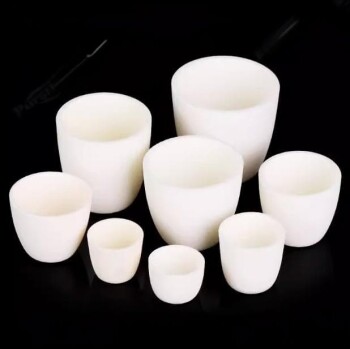
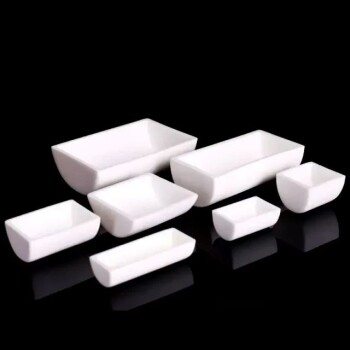
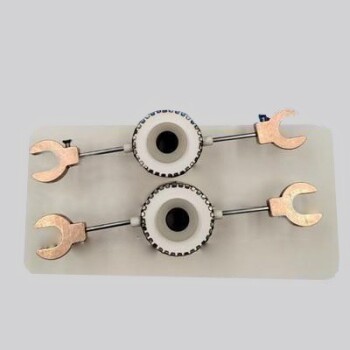
The selection of an alumina crucible for Co9S8/MoS2 sulfidation is driven by its exceptional chemical inertness and thermal resilience.
At processing temperatures between 350 °C and 650 °C, alumina provides a stable environment that does not react with sulfur vapor or acidic gases. This prevents the introduction of aluminum or metallic impurities, which is critical for maintaining the precise chemical purity of the Co9S8/MoS2 electrocatalyst and the integrity of its heterojunction interface.
An alumina crucible acts as a chemically "invisible" host that protects the sample's purity from contamination and reaction byproducts. Its high thermal stability ensures that the catalytic performance and crystal structure of the two-dimensional materials remain uncompromised during high-heat processing.
Chemical Stability in Corrosive Atmospheres
Resistance to Reactive Sulfur Vapor
During the sulfidation process, sulfur vapor is highly reactive and can easily degrade or react with lower-quality container materials. Alumina (Al2O3) is uniquely resistant to this corrosive environment, ensuring the vessel does not contribute to side reactions.
Maintaining Heterojunction Purity
The performance of the Co9S8/MoS2 heterojunction depends on the specific arrangement of atoms at the interface. Because alumina does not leach impurities into the sample, the electronic properties of the electrocatalyst remain intact and predictable.
Prevention of Acidic Gas Corrosion
Sulfidation often produces acidic gaseous byproducts that can etch or corrode standard laboratory glassware or metal containers. Alumina’s chemical inertness extends to these acidic environments, protecting the structural integrity of the crucible and the sample simultaneously.
Thermal Performance and Structural Integrity
High Refractoriness
Alumina crucibles can withstand temperatures far exceeding the 650 °C required for this process, with some variants rated up to 1800 °C. This high refractoriness ensures the crucible will not soften, deform, or melt during the prolonged heating cycles required for crystal growth.
Consistency in Vaporization Rates
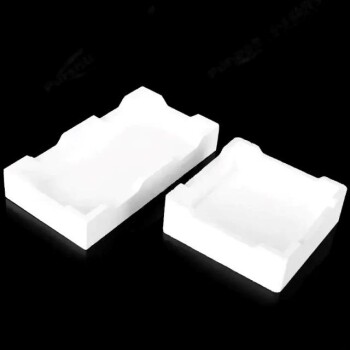
The specific geometry and stability of alumina boats allow for the stable containment of precursor powders. This consistency helps maintain constant vaporization rates and the necessary concentration gradients required for high-quality material synthesis.
Thermal Shock Resistance
High-purity alumina is designed to handle the transition from ambient to high temperatures without fracturing. This reliability is essential for maintaining the kinetic data accuracy and ensuring the safety of the experimental setup.
Understanding the Trade-offs and Limitations
Comparison with Alternative Materials
While alumina is superior to materials like mullite, which should not be used above 900 °C, it is not the only option. However, for sulfur-heavy environments, alumina is preferred over many metals that would readily form unwanted sulfides.
Risk of Specimen Adhesion
In some high-temperature oxidation or sulfidation scenarios, liquid products can cause the sample to adhere to the crucible walls. If this occurs, it may be necessary to use a sacrificial layer of alumina powder to prevent the sample from fracturing upon cooling.
Porosity and Contamination
While high-density alumina resists penetration, lower-grade alumina can be porous. Using high-purity, high-density alumina is a non-negotiable requirement to prevent molten salts or gases from penetrating the vessel walls and introducing trace contaminants.
How to Optimize Your Sulfidation Setup
Choosing the right container is only the first step in ensuring a successful material synthesis. To achieve the best results with Co9S8/MoS2 samples, consider the following tactical recommendations:
- If your primary focus is Phase Purity: Always use high-purity (99.9%+) alumina to ensure no trace metals migrate into the Co9S8/MoS2 lattice, which could poison the catalyst.
- If your primary focus is Interface Stability: Ensure the crucible is thoroughly cleaned and pre-baked to remove any moisture or organic residues before beginning the sulfidation process.
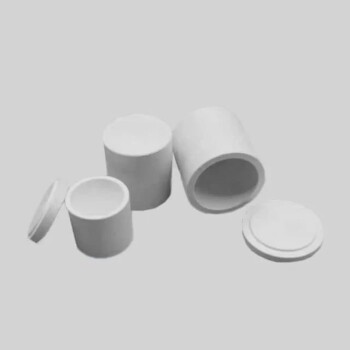
- If your primary focus is Kinetic Accuracy: Use a consistent crucible geometry (boat vs. tall-form) to maintain repeatable vapor concentrations and heat distribution across the precursor powder.
By prioritizing material stability through the use of an alumina crucible, you safeguard the delicate chemical architecture necessary for advanced electrocatalytic performance.
Summary Table:
| Feature | Benefit for Co9S8/MoS2 Synthesis |
|---|---|
| Chemical Inertness | Prevents reaction with sulfur vapor and maintains heterojunction purity. |
| High Refractoriness | Withstands temperatures up to 1800 °C without deformation or melting. |
| Acid Resistance | Protects the sample and vessel from corrosive gaseous byproducts. |
| Purity Maintenance | Eliminates leaching of metallic impurities into the electrocatalyst lattice. |
| Thermal Shock Resistance | Ensures structural integrity during rapid heating and cooling cycles. |
Elevate Your Material Synthesis with KINTEK
Achieve uncompromising precision in your electrocatalyst research with KINTEK’s high-purity laboratory solutions. Whether you are performing complex sulfidation of Co9S8/MoS2 or developing advanced 2D materials, our high-density alumina crucibles and ceramics provide the chemically inert environment necessary to safeguard your sample's integrity.
KINTEK specializes in high-performance equipment tailored for demanding lab environments, including:
- High-Temperature Furnaces: Muffle, tube, vacuum, and CVD/PECVD systems for precise thermal control.
- Specialized Ceramics: High-purity alumina and PTFE products designed for corrosive atmospheres.
- Sample Preparation: Precision crushing, milling, and hydraulic pellet presses.
- Advanced Reactors: High-pressure autoclaves and electrolytic cells for electrochemical research.
Ready to optimize your lab’s efficiency and ensure repeatable, high-purity results? Contact our technical experts today to find the perfect equipment and consumables for your specific research needs.
References
- Lili Zhang, Guangfeng Wu. Charge Redistribution of Co9S8/MoS2 Heterojunction Microsphere Enhances Electrocatalytic Hydrogen Evolution. DOI: 10.3390/biomimetics8010104
This article is also based on technical information from Kintek Solution Knowledge Base .
Related Products
- Arc-Shaped Alumina Ceramic Crucible High Temperature Resistant for Engineering Advanced Fine Ceramics
- Alumina Al2O3 Ceramic Crucible Semicircle Boat with Lid for Engineering Advanced Fine Ceramics
- Engineering Advanced Fine Ceramics Alumina Al2O3 Crucible With Lid Cylindrical Laboratory Crucible
- Engineering Advanced Fine Ceramics Alumina Crucibles (Al2O3) for Thermal Analysis TGA DTA
- Engineering Advanced Fine Alumina Al2O3 Ceramic Crucible for Laboratory Muffle Furnace
People Also Ask
- Why Use Alumina Crucibles & Powder Burial for NaSICON? Ensure Phase Purity and Prevent Elemental Volatilization
- What is the primary purpose of using alumina crucibles for LLTO ceramics? Optimize Your High-Temperature Sintering
- Why are alumina crucibles and mother powder essential for LATP sintering? Optimize Your Solid Electrolyte Performance
- Why are high-purity alumina crucibles used for liquid lead corrosion experiments? Ensure Data Accuracy at 550°C
- Primary considerations for choosing alumina crucibles and quartz tubes in indium intercalation: Ensure Material Purity