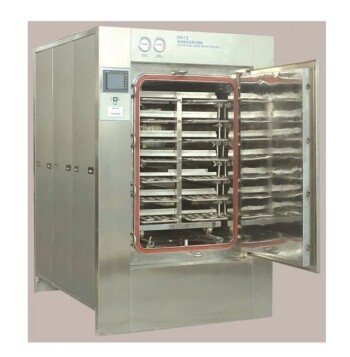
An autoclave is indispensable for coal liquefaction because it creates the specific high-temperature and high-pressure environment required to drive complex hydrogenation reactions. Without this sealed, pressurized vessel, it is impossible to achieve the effective mass transfer needed between hydrogen gas, the coal slurry, and the liquid metal catalyst.
The autoclave acts as a necessary containment system that allows liquid metal catalysts to stabilize free radicals generated during pyrolysis. Its ability to maintain high internal pressures ensures hydrogen physically reaches the reaction sites, directly improving the yield of desirable light products.
The Physics of the Reaction Environment
Achieving Critical Conditions
Coal liquefaction is not a passive process; it relies on forcing chemical changes through energy and pressure. An autoclave allows the system to reach the high temperatures necessary to initiate coal pyrolysis.
Simultaneously, the vessel maintains the high pressures required to keep reactants in the necessary phase. This environment is the foundational requirement for the hydrogenation process to begin.
Facilitating Mass Transfer
For liquefaction to be successful, three distinct components must interact effectively: hydrogen gas, the coal slurry, and the liquid metal catalyst.
The sealed, high-pressure capability of the autoclave forces these components into close contact. This ensures effective mass transfer, allowing hydrogen to penetrate the slurry and interact with the catalyst and coal fragments.
The Role of the Liquid Metal Catalyst
Stabilizing Free Radicals
As the coal undergoes pyrolysis within the heated environment, it breaks down into free radical fragments.
The liquid metal catalyst plays a specific role in stabilizing these fragments. By stabilizing them quickly, the catalyst prevents them from degrading or reacting unpredictably.
Improving Product Yield
The ultimate goal of using an autoclave with this catalyst system is to maximize output.
By combining efficient mass transfer with radical stabilization, the process significantly improves the yield of light products. The autoclave ensures the physical conditions exist for this chemical optimization to occur.
Understanding the Trade-offs
Complexity of High-Pressure Systems
While an autoclave is chemically necessary, it introduces operational complexity. Working with high-pressure vessels requires rigorous safety protocols and robust equipment design to prevent failure.
Energy and Maintenance Demands
Maintaing the high-temperature and high-pressure environment is energy-intensive. Furthermore, the interaction between liquid metal catalysts and the vessel walls at high pressures may require specialized materials to prevent corrosion or wear over time.
Optimizing Your Process Design
Understanding why the vessel is required helps in selecting the right operational parameters for your specific goals.
- If your primary focus is maximizing product yield: Prioritize autoclave settings that maximize pressure to ensure the highest rate of mass transfer between the hydrogen and the slurry.
- If your primary focus is process efficiency: Focus on temperature regulation to ensure the liquid metal catalyst optimally stabilizes free radicals without excessive energy waste.
Ultimately, the autoclave provides the essential physical constraints that allow the complex chemistry of coal liquefaction to function efficiently.
Summary Table:
| Key Feature | Role in Coal Liquefaction | Impact on Outcome |
|---|---|---|
| High-Pressure Containment | Forces hydrogen into coal slurry/catalyst contact | Maximizes mass transfer and reaction rate |
| Temperature Control | Initiates coal pyrolysis and maintains catalyst phase | Enables complex chemical transformations |
| Radical Stabilization | Liquid metal catalyst interaction with free radicals | Prevents degradation; improves light product yield |
| Sealed Environment | Prevents loss of gaseous reactants | Ensures consistent chemical stoichiometry |
Elevate Your Chemical Research with KINTEK Solutions
Maximize your light product yields and ensure safe, reliable coal liquefaction with KINTEK’s industry-leading high-temperature high-pressure reactors and autoclaves. Specifically designed to withstand the rigorous demands of liquid metal catalysis and hydrogen mass transfer, our vessels provide the precision and durability your laboratory requires.
From customizable reactors to essential PTFE and ceramic consumables, KINTEK is your partner in advancing energy research and material science.
Ready to optimize your liquefaction process?
Contact Our Technical Experts Today to find the perfect high-pressure solution for your lab.
References
- Karma Zuraiqi, Torben Daeneke. Liquid Metals in Catalysis for Energy Applications. DOI: 10.1016/j.joule.2020.10.012
This article is also based on technical information from Kintek Solution Knowledge Base .
Related Products
- Mini SS High Pressure Autoclave Reactor for Laboratory Use
- Desktop Fast High Pressure Laboratory Autoclave Sterilizer 16L 24L for Lab Use
- Desktop Fast Laboratory Autoclave Sterilizer 35L 50L 90L for Lab Use
- Portable High Pressure Laboratory Autoclave Steam Sterilizer for Lab Use
- Laboratory High Pressure Horizontal Autoclave Steam Sterilizer for Lab Use
People Also Ask
- Why use high-pressure reactors for molecular sieve synthesis? Unlock Superior Crystallinity and Framework Control
- What is the function of a high-pressure reactor autoclave? Enhancing Cu/N Co-Doped Carbon Catalyst Synthesis
- What are the advantages of using a high-pressure reactor like an autoclave? Maximize Liquefaction Speed & Yield
- Why are high-pressure reactors or autoclaves necessary for the synthesis of new functional materials? Unlock Precision.
- How are high-pressure reactors used to prepare metaphosphate electrocatalysts? Master In-Situ Precursor Growth