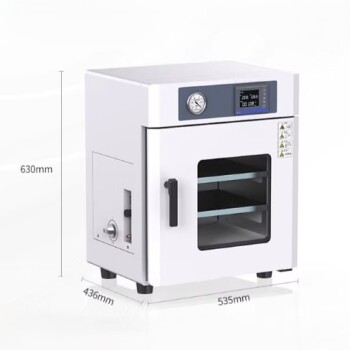
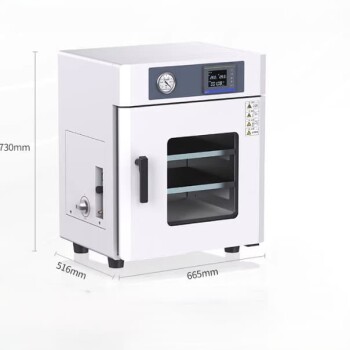
The use of an industrial-grade oven is critical to ensure the complete removal of residual moisture and solvents trapped within the complex pore structure of modified H-beta zeolites. This specific thermal treatment—maintained at 393 K for 6 hours—is required to stabilize the physical properties of the catalyst before it can be effectively used or analyzed.
The drying process is not merely about evaporation; it is about structural accessibility. By clearing the internal pores, this step exposes the active sites necessary for catalytic reactions, ensuring the material is stable and ready for accurate performance evaluation.
Securing Active Site Accessibility
Eliminating Deeply Trapped Solvents
Zeolites are defined by their intricate internal pore networks. Simple air drying is insufficient to remove the solvents and deionized water remaining after filtration. The sustained heat drives these volatiles out of the deepest recesses of the structure.
Unlocking the Catalyst's Potential
For a catalyst to function, reactants must be able to reach the active sites. If moisture remains in the pores, it acts as a physical barrier. The oven ensures these pathways are fully cleared, maximizing the internal surface area available for reactions.
Stabilizing Physical Properties
Establishing Structural Integrity
The transition from a wet filter cake to a functional solid requires controlled stabilization. The 6-hour cycle at 393 K "sets" the physical framework of the modified H-beta zeolite. This ensures the material creates a consistent, robust structure rather than a variable paste.
Consistency for Characterization
Researchers rely on precise measurements of surface area and pore volume. Any remaining moisture will skew these physical measurements. Thorough drying ensures that physicochemical characterization reflects the true nature of the zeolite, not the contaminants holding onto it.
Common Pitfalls to Avoid
The Risk of Incomplete Drying
Reducing the drying time below 6 hours is a frequent error. Even small amounts of residual solvent can lead to significant variances in performance data, making the catalyst appear less active than it actually is.
Temperature Deviation
Adhering to the 393 K standard is vital. Lower temperatures may fail to evacuate solvents from narrow pores, while uncontrolled higher temperatures could potentially alter the modified structure you worked to create.
Making the Right Choice for Your Goal
To maximize the effectiveness of your modified H-beta zeolite preparation, align your approach with your specific objectives:
- If your primary focus is physicochemical analysis: Prioritize the full 6-hour duration to guarantee that internal surface area measurements are not artificially lowered by trapped moisture.
- If your primary focus is catalytic performance: Ensure the temperature remains stable at 393 K to fully expose active sites without thermally degrading the modified structure.
Proper drying is the bridge between a raw chemical mixture and a high-performance functional material.
Summary Table:
| Parameter | Specification | Purpose |
|---|---|---|
| Temperature | 393 K (120°C) | Ensures removal of trapped volatiles without structural damage. |
| Duration | 6 Hours | Provides sufficient time for deep-pore solvent evacuation. |
| Objective | Structural Accessibility | Clears internal pathways to expose active catalytic sites. |
| Key Outcome | Physical Stabilization | Establishes integrity for accurate characterization & surface area. |
Elevate Your Catalyst Research with KINTEK Precision
Don't let residual moisture compromise your research data or catalytic activity. KINTEK specializes in high-performance laboratory solutions, providing the precise industrial-grade ovens, high-temperature furnaces, and vacuum drying systems necessary to unlock the full potential of modified zeolites and advanced materials.
From high-temperature high-pressure reactors to specialized crushing and milling systems, we empower researchers with tools that ensure consistency, structural integrity, and repeatability. Whether you are optimizing H-beta zeolite preparation or conducting complex battery research, our comprehensive portfolio of lab equipment and consumables (including PTFE and ceramics) is designed to meet the most rigorous standards.
Ready to achieve superior material stabilization? Contact KINTEK today to find the perfect drying and thermal treatment solution for your laboratory.
References
- Jianhua Li, Xiaojun Bao. Carboxylic acids to butyl esters over dealuminated–realuminated beta zeolites for removing organic acids from bio-oils. DOI: 10.1039/c7ra05298g
This article is also based on technical information from Kintek Solution Knowledge Base .
Related Products
- Laboratory Scientific Electric Heating Blast Drying Oven
- 1400℃ Muffle Oven Furnace for Laboratory
- 1700℃ Muffle Oven Furnace for Laboratory
- Graphite Vacuum Continuous Graphitization Furnace
- 23L Laboratory Vacuum Drying Oven
People Also Ask
- How does a laboratory electric drying oven contribute to the formation of the initial coating? Expert Insights
- What role does a precision laboratory drying oven play in the synthesis of GO-PANI nanocomposites? Protect Material Integrity
- What role does a laboratory drying oven play in the preparation of zinc oxide nanoparticle precursors?
- What is the necessity of using a laboratory drying oven when processing MoO3/GO composite nanopowders? Find out here.
- What is the role of a laboratory drying oven in cellulose citrate production? Ensure Material Stability & Purity