The primary function of an oxidizing atmosphere in an electric furnace is to maintain the chemical integrity of the raw materials. Specifically, it prevents the reduction of metal oxides, ensuring that the glass components retain their necessary oxygen bonds and chemical structure during the intense heat of melting.
Core Takeaway By sustaining an oxidizing environment, you prevent metal oxides from reverting to their metallic states or shifting to undesirable lower oxidation states. This chemical stability is the prerequisite for achieving the correct valence states in multi-component oxide glass.
The Chemistry of the Melt
Preventing Chemical Reduction
The high temperatures required to melt glass can naturally induce chemical changes. An oxidizing atmosphere acts as a chemical safeguard against reduction.
Without this oxidizing pressure, metal oxides within the batch could lose oxygen atoms. This would fundamentally alter the composition of the glass, potentially causing the oxides to revert to pure metals or lower-oxide forms that do not integrate into the glass network.
Maintaining Valence States
Glass properties are heavily dependent on the valence state (oxidation number) of its constituent elements. This is particularly critical in multi-component glasses where interactions between elements are complex.
The oxidizing atmosphere locks these elements into their expected valence states. This consistency ensures that the final material exhibits the intended physical, optical, and electrical characteristics designed into the batch formula.
The Role of Furnace Stability
Creating a Stable Thermal Field
While the atmosphere manages the chemistry, the electric furnace itself provides a stable thermal field. The reference highlights that this precise temperature control acts in tandem with the atmosphere.
This stability eliminates hot or cold spots that could lead to uneven melting or localized reduction. It provides the consistent environment necessary for the chemical reactions to proceed uniformly.
Facilitating Homogenization and Degassing
A controlled environment allows for the physical maturation of the glass. The stable heat provided by the electric furnace drives homogenization, ensuring the mix is uniform throughout.
Simultaneously, it aids in degassing. By maintaining a stable melt viscosity and temperature, trapped gases can escape efficiently, resulting in a clear, bubble-free final product.
The Risks of Atmospheric Imbalance
Unintended Coloration and Defects
If the atmosphere shifts towards a reducing state, the consequences are immediate. A change in valence state often results in unpredictable coloration or changes in light transmission.
Structural Inconsistencies
Beyond aesthetics, reduction can compromise the structural integrity of the glass. If metal oxides reduce to metallic precipitates, they create inclusions that act as stress points, weakening the glass and leading to potential failure.
Making the Right Choice for Your Goal
To ensure the success of your glass preparation, you must align the furnace parameters with your specific material needs.
- If your primary focus is Material Purity: Prioritize maintaining a strictly oxidizing atmosphere to prevent any shift in the valence states of your metal oxides.
- If your primary focus is Defect Elimination: Leverage the electric furnace’s precision temperature control to ensure complete homogenization and degassing of the melt.
Ultimately, the oxidizing atmosphere is the invisible structure that holds the chemistry of oxide glass together during the chaos of melting.
Summary Table:
| Key Feature | Role in Glass Melting | Primary Benefit |
|---|---|---|
| Oxidizing Atmosphere | Prevents metal oxide reduction | Maintains chemical integrity & valence states |
| Electric Heating | Provides a stable thermal field | Eliminates hot spots & ensures uniform melting |
| Valence Control | Locks oxidation numbers | Guarantees intended optical & physical properties |
| Thermal Stability | Facilitates degassing | Removes trapped bubbles for a clear final product |
Elevate Your Glass Research with KINTEK Precision
Achieving the perfect valence state and structural integrity in oxide glass requires more than just heat; it requires absolute environmental control. KINTEK specializes in advanced laboratory solutions designed for high-stakes material science. Our comprehensive range of high-temperature muffle, tube, and vacuum atmosphere furnaces provides the precise thermal stability and atmospheric control needed to prevent unintended reduction and ensure homogenization.
Whether you are developing multi-component glasses or advanced ceramics, our portfolio—including crushing systems, hydraulic presses, and specialized crucibles—supports every stage of your workflow.
Ready to eliminate defects and master your material purity? Contact KINTEK today to discover how our high-performance furnace systems can optimize your laboratory results.
References
- Jae Ho Choi, Hyeong Jun Kim. mCharacteristics of Carbon Tetrafluoride Plasma Resistance of Various Glasses. DOI: 10.4191/kcers.2016.53.6.700
This article is also based on technical information from Kintek Solution Knowledge Base .
Related Products
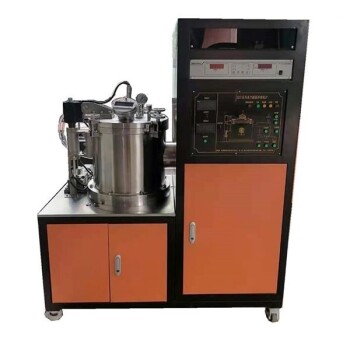
- Vacuum Heat Treat Furnace and Levitation Induction Melting Furnace
- Lab-Scale Vacuum Induction Melting Furnace
- Vacuum Arc Induction Melting Furnace
- Non Consumable Vacuum Arc Induction Melting Furnace
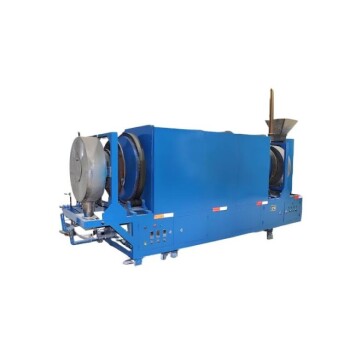
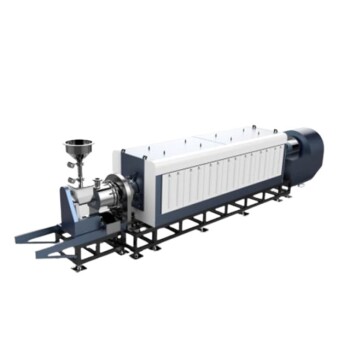
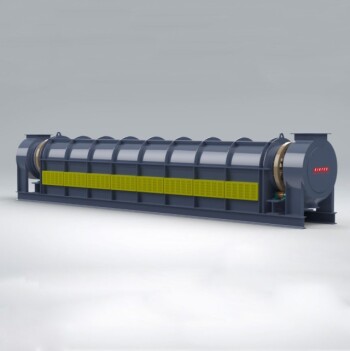
- Electric Rotary Kiln Continuous Working Small Rotary Furnace Heating Pyrolysis Plant
People Also Ask
- What are the advantages of a vacuum induction melting furnace? Achieve High-Purity Alloys with Precision VIM
- What is the function of a vacuum induction melting furnace? Essential Guide for High-Purity FeCrAl Alloy Production
- What are the key components inside the vacuum chamber of a vacuum induction melting furnace? A Guide to the Core Melting Assembly
- Why use VIM for rare earth steel? Essential Precision for Melting Reactive Lanthanum and Cerium
- What is the primary function of a vacuum induction melting furnace in Ni-Mo-Cr-Fe master alloy prep? Ensure High Purity