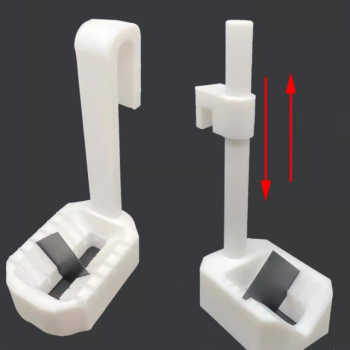
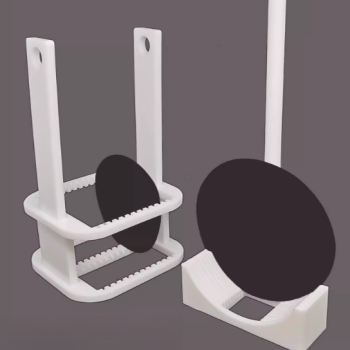
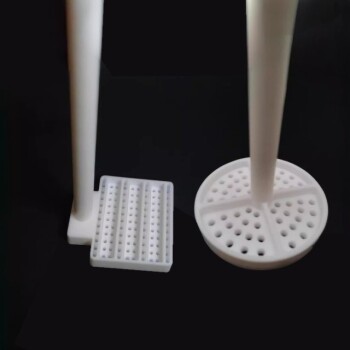
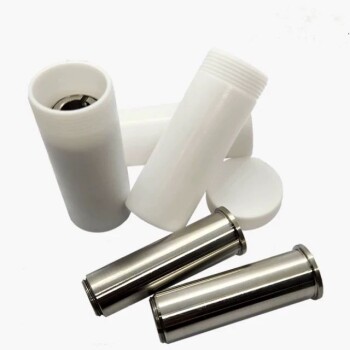
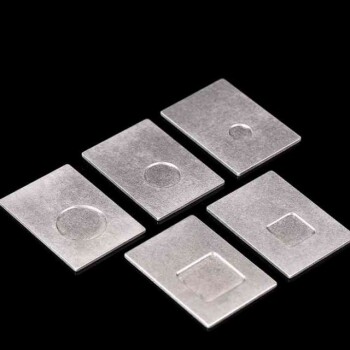
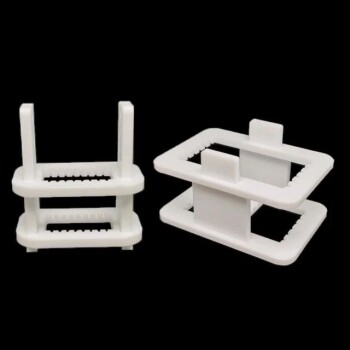
High-purity PTFE is selected primarily for its exceptional chemical inertness and ability to withstand high temperatures in harsh testing environments. When evaluating zirconium alloys in nuclear fuel reprocessing contexts—specifically involving boiling nitric acid—PTFE ensures the sample holder does not react with the solution or the sample itself. This prevents the introduction of external impurities, guaranteeing that the measured corrosion rates reflect the actual behavior of the alloy rather than environmental contamination.
Core Takeaway The validity of a corrosion test depends entirely on isolating the test material from external variables. High-purity PTFE is used because it remains chemically neutral in boiling oxidizers, ensuring that the test environment remains pure and the resulting data accurately represents the zirconium alloy's performance.
The Critical Role of Chemical Inertness
Resisting Strong Oxidizing Media
Nuclear fuel reprocessing environments often involve aggressive chemicals, such as boiling nitric acid.
Most standard materials would degrade or dissolve under these conditions. High-purity PTFE possesses a molecular structure that renders it virtually immune to attack from these strong oxidizing agents.
Preventing Cross-Contamination
The primary goal of these experiments is to measure the corrosion rate of zirconium alloys specifically.
If the sample holder were to corrode, it would release ions or particles into the acid solution. These impurities could chemically interact with the zirconium or alter the corrosivity of the solution, rendering the experimental data invalid.
High-Purity Requirements
Standard PTFE may contain fillers or additives that could leach out over time.
By utilizing high-purity PTFE, researchers eliminate the risk of leaching trace elements. This ensures that the chemical composition of the test environment remains stable throughout the duration of the test.
Stability Under Thermal and Phase Stress
Performance at High Temperatures
Corrosion tests for nuclear applications are frequently conducted at boiling temperatures to simulate real-world reprocessing conditions.
PTFE maintains its structural integrity and chemical resistance at these elevated temperatures. It does not melt or deform significantly enough to compromise the fixture during the test window.
Consistency Across Multiple Phases
In a boiling environment, the sample holder is exposed to three distinct phases: liquid acid, rising gas vapors, and condensed liquid droplets.
PTFE provides uniform resistance across the gas, liquid, and condensed phases. This ensures consistent protection regardless of where the holder physically sits within the test apparatus.
Common Pitfalls to Avoid
Understanding Mechanical Limits
While PTFE is chemically superior, it is mechanically softer than metals.
Care must be taken when designing threaded fixtures to avoid over-tightening, which can cause deformation or "creep" at high temperatures. The design relies on the material's chemical properties, but mechanical limitations must be respected to maintain a secure hold on the sample.
The Risk of Impurity Accumulation
Even with high-purity materials, surface contamination during handling can compromise results.
It is critical to ensure the PTFE fixtures are cleaned as rigorously as the samples themselves. Using high-purity material is ineffective if the surface carries oils or residues from machining or handling.
Ensuring Experimental Reliability
When designing corrosion tests for nuclear fuel reprocessing, the choice of fixture material is a decision about data integrity.
- If your primary focus is Data Accuracy: Choose high-purity PTFE to prevent impurity leaching that would skew corrosion rate measurements.
- If your primary focus is Environmental Durability: Rely on PTFE’s resistance to boiling nitric acid to maintain fixture integrity across liquid, gas, and condensed phases.
The selection of high-purity PTFE is a strategic choice to eliminate environmental variables, ensuring that your results measure the zirconium alloy, and nothing else.
Summary Table:
| Feature | Benefit for Nuclear Corrosion Testing |
|---|---|
| Chemical Inertness | Resists boiling nitric acid; prevents leaching of impurities. |
| High-Purity Grade | Eliminates trace element contamination for precise alloy analysis. |
| Thermal Stability | Maintains structural integrity at boiling temperatures (liquid/gas phases). |
| Phase Consistency | Uniform resistance across gas, liquid, and condensed droplets. |
| Non-Reactive | Ensures measured corrosion rates reflect the alloy, not the holder. |
Secure Your Research Integrity with KINTEK Precision Solutions
Don't let environmental contamination compromise your experimental results. KINTEK specializes in high-performance laboratory equipment and consumables designed for the most demanding research environments.
Whether you are conducting nuclear fuel reprocessing simulations or advanced material analysis, our high-purity PTFE products, ceramics, and crucibles provide the chemical neutrality you need. We also offer a comprehensive range of high-temperature furnaces (CVD, vacuum, muffle), high-pressure reactors, and crushing systems to streamline your workflow from sample preparation to final testing.
Ready to elevate your lab's precision? Contact KINTEK today to discuss how our expert-grade consumables and equipment can deliver the reliable data your projects demand.
References
- U. Kamachi Mudali, Baldev Raj. Application of Zirconium Alloys for Reprocessing Plant Components. DOI: 10.13182/nt12-73
This article is also based on technical information from Kintek Solution Knowledge Base .
Related Products
- Custom PTFE Wafer Holders for Lab and Semiconductor Processing
- Custom PTFE Teflon Parts Manufacturer for Sampling Solution Sample and Dry Powder Spoons
- Custom PTFE Teflon Parts Manufacturer for Reagent Wide Mouth Fine Mouth Sample High Temperature Bottles
- Custom PTFE Teflon Parts Manufacturer for Centrifuge Tube Racks
- Custom PTFE Teflon Parts Manufacturer PTFE Beaker and Lids
People Also Ask
- Why is PTFE selected for L-proline plasma degradation? Ensure Chemical Purity & Field Stability
- Why is a custom PTFE sample holder necessary for CBD of Cd(1-x)ZnxS thin films? Ensure High Purity and Uniformity
- Why is it necessary to utilize PTFE sample holders in electroless nickel plating? Ensure Process Integrity
- How does a custom PTFE electrode holder contribute to the accuracy of immersion tests? Ensure Precise Steel Analysis
- Why are PTFE containers required for PCT leaching tests? Ensure Chemical Inertness and Analytical Precision