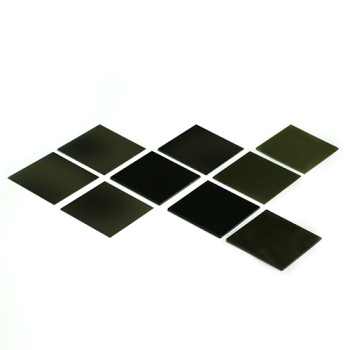
High vacuum integrity is the absolute prerequisite for synthesizing high-quality diamond films via Chemical Vapor Deposition (CVD). To ensure a successful process, vacuum systems must achieve a base pressure typically between 10⁻⁷ and 10⁻⁸ Torr before any process gases are introduced. This extreme level of evacuation is critical to remove ambient air impurities, preventing them from contaminating the Hydrogen (H₂) and Methane (CH₄) mixture and ultimately disrupting the chemical composition and crystalline structure of the diamond.
The necessity for high vacuum is not just about pressure reduction; it is about creating a "clean slate" where the only active elements are your chosen precursor gases. Without this, residual atmospheric atoms create defects that compromise the structural integrity of the diamond lattice.
The Critical Role of Purity in Diamond Growth
Eliminating Ambient Interferences
The primary function of achieving high vacuum is the total exclusion of ambient air components, such as nitrogen and oxygen.
If these elements remain in the chamber, they do not merely exist passively; they become active contaminants. By reaching 10⁻⁷ to 10⁻⁸ Torr, you ensure the environment is chemically inert before the introduction of process gases.
Preventing Unintended Side Reactions
CVD relies on precise chemical reactions between carbon-containing gases (like methane) and hydrogen.
If the vacuum level is insufficient, residual air molecules react with these precursor gases. This leads to the formation of unintended side products, which can alter the chemical pathway and degrade the quality of the film.
Impact on Crystal Structure
Preserving the Carbon Lattice
Diamond growth requires carbon atoms to diffuse and settle into a specific crystalline arrangement on the seed plates.
Impurities from a poor vacuum act as obstacles or "poisons" to this lattice formation. They can insert themselves into the growing film, disrupting the precise atomic stacking required for microcrystalline or nanocrystalline diamond structures.
Ensuring Uniformity
High-quality diamond films require uniformity in both thickness and grain size.
A consistent high-vacuum baseline ensures that the energy source, such as a microwave beam in MPCVD, interacts only with the intended gas mixture. This stability allows for the controlled growth of large-sized, uniform films without localized defects caused by pockets of contamination.
Understanding the Trade-offs
Pump-Down Time vs. Throughput
Achieving pressures as low as 10⁻⁸ Torr requires significant time and high-performance pumping systems.
The trade-off is often between cycle time and film quality. While rapid production is desirable, cutting corners on the "pump-down" phase to save time will almost invariably result in lower purity films due to residual outgassing or leaks.
System Complexity and Maintenance
Maintaining a system capable of 10⁻⁸ Torr requires rigorous maintenance.
Seals, pumps, and chamber integrity must be flawless. Any minor leak that might be negligible in standard industrial vacuum processes becomes catastrophic in diamond CVD, creating a constant demand for leak checking and system conditioning.
Making the Right Choice for Your Goal
To maximize the success of your diamond CVD process, align your vacuum protocols with your end-product requirements:
- If your primary focus is Optical or Electronic Grade Diamond: You must strictly adhere to the 10⁻⁸ Torr baseline to ensure near-zero defect density and maximum transmissivity or conductivity.
- If your primary focus is Industrial Abrasives: You may tolerate a slightly higher baseline pressure (closer to 10⁻⁷ Torr), provided that mechanical hardness is maintained despite minor impurities.
- If your primary focus is Process Consistency: Implement automated pump-down cycles that do not trigger gas introduction until the specific high-vacuum threshold is met, regardless of the time required.
Ultimately, the quality of your vacuum directly dictates the purity of your diamond; you cannot grow a flawless crystal in a dirty room.
Summary Table:
| Factor | Vacuum Requirement (Torr) | Impact on Diamond Quality |
|---|---|---|
| Base Pressure | 10⁻⁷ to 10⁻⁸ | Eliminates ambient impurities (Nitrogen/Oxygen) |
| Gas Purity | High | Prevents unintended side reactions and gas poisoning |
| Lattice Integrity | Ultra-High | Ensures precise atomic stacking and reduces defects |
| Film Uniformity | Consistent | Enables controlled growth and stable plasma interaction |
Elevate Your Diamond Synthesis with KINTEK Precision
Don't let impurities compromise your CVD diamond quality. KINTEK specializes in high-performance laboratory equipment, providing the ultra-high vacuum integrity required for superior film growth. From advanced MPCVD and CVD systems to precision high-temperature furnaces, cooling solutions, and specialized consumables, we empower researchers and industrial manufacturers to achieve flawless results.
Ready to optimize your thin-film deposition process? Contact our technical experts today to find the perfect vacuum and thermal solution for your laboratory.
References
- Orlando Auciello, Dean M. Aslam. Review on advances in microcrystalline, nanocrystalline and ultrananocrystalline diamond films-based micro/nano-electromechanical systems technologies. DOI: 10.1007/s10853-020-05699-9
This article is also based on technical information from Kintek Solution Knowledge Base .
Related Products
- HFCVD Machine System Equipment for Drawing Die Nano-Diamond Coating
- Custom CVD Diamond Coating for Lab Applications
- Microwave Plasma Chemical Vapor Deposition MPCVD Machine System Reactor for Lab and Diamond Growth
- CVD Diamond Dressing Tools for Precision Applications
- 915MHz MPCVD Diamond Machine Microwave Plasma Chemical Vapor Deposition System Reactor
People Also Ask
- What is the full form of HFCVD? A Guide to Hot Filament Chemical Vapor Deposition
- What are the disadvantages and challenges of the HFCVD method? Overcome Growth Limits and Filament Issues
- What is the function of tungsten filaments in HFCVD? Powering Diamond Film Synthesis with Thermal Excitation
- Why is Chemical Vapor Deposition (CVD) equipment uniquely suited for constructing hierarchical superhydrophobic structures?
- What is the chemical vapor deposition growth process? Build Superior Thin Films from the Atom Up