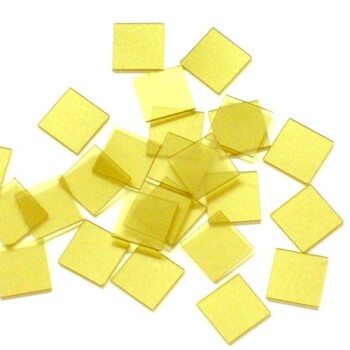
Synthetic HPHT diamond is the preferred choice for industrial tools primarily because its mechanical properties can be reproduced with exceptional reliability. While natural diamonds are subject to geological variations, synthetic manufacturing ensures a consistent, standardized material essential for predictable industrial performance.
The core advantage of synthetic HPHT diamond lies in reproducibility; it replaces the randomness of nature with engineered precision, ensuring that every tool performs exactly as expected.
The Critical Role of Reproducibility
Eliminating Material Variation
Natural diamonds are formed by chaotic geological processes. Consequently, they often contain structural irregularities, impurities, and varying physical qualities.
Synthetic HPHT (High Pressure High Temperature) diamonds are manufactured under strictly controlled conditions. This allows for the production of material that is uniform from batch to batch.
Reliability in Manufacturing
For industrial operations, predictability is as valuable as raw performance. A tool that breaks unexpectedly due to a hidden material flaw causes costly downtime.
Because synthetic diamond properties are reproducible, engineers can calculate tool life and failure points with high accuracy. This consistency allows for tighter tolerances and more efficient automated processes.
Key Performance Attributes
Mechanical Superiority
Beyond consistency, synthetic diamonds possess outstanding physical characteristics tailored for heavy use. They exhibit extreme hardness and chemical inertness.
This makes them ideal for abrasive environments, such as cutting, drilling, and grinding, where the material must resist wear and chemical degradation.
Thermal Capabilities
Heat generation is a primary cause of failure in high-speed industrial tooling. Synthetic diamond boasts the highest heat conductivity of any known material.
This allows the tool to dissipate heat rapidly away from the cutting edge, preserving structural integrity and prolonging the tool's lifespan.
Understanding the Trade-offs
The Unpredictability of Natural Sources
While natural diamond is the hardest known natural substance, its use in industry is hampered by its lack of uniformity.
Using natural stones requires extensive sorting and grading to find suitable candidates for industrial use. This introduces variability that is unacceptable in modern, high-precision manufacturing environments.
Making the Right Choice for Your Application
To determine the best material for your tooling needs, consider your operational priorities:
- If your primary focus is process stability: Choose synthetic HPHT diamond to ensure identical performance across all tools and minimize unexpected failures.
- If your primary focus is thermal management: Rely on synthetic diamond for its superior heat conductivity to protect tools during high-speed operations.
By leveraging synthetic HPHT diamond, you exchange the variability of natural resources for the reliability of engineered perfection.
Summary Table:
| Feature | Synthetic HPHT Diamond | Natural Diamond |
|---|---|---|
| Consistency | High (Engineered Reproducibility) | Low (Geological Variation) |
| Predictability | Excellent; Standardized material | Poor; Random structural flaws |
| Thermal Conductivity | Extremely High; Superior dissipation | High but variable |
| Cost Efficiency | High (Reduced downtime/sorting) | Low (Requires extensive grading) |
| Best For | High-precision automated manufacturing | Specialized, non-standardized use |
Maximize Your Lab's Precision with KINTEK's Advanced Materials
Don't let material variability compromise your results. KINTEK specializes in providing high-performance laboratory equipment and specialized consumables tailored for demanding industrial and research environments.
Whether you are scaling up with our crushing and milling systems, optimizing thermal processes with our muffle or vacuum furnaces, or conducting high-stakes experiments using our high-temperature high-pressure reactors and autoclaves, we provide the consistency you need to succeed. From hydraulic pellet presses for material preparation to MPCVD/CVD systems for advanced synthesis, KINTEK is your partner in engineered perfection.
Ready to upgrade your industrial or laboratory performance? Contact us today to discover how our comprehensive range of equipment and consumables can bring unparalleled reliability to your operations!
Related Products
- CVD Diamond for Thermal Management Applications
- CVD Diamond Optical Windows for Lab Applications
- Custom CVD Diamond Coating for Lab Applications
- Customizable Laboratory High Temperature High Pressure Reactors for Diverse Scientific Applications
People Also Ask
- How long does it take to make a CVD diamond? A Detailed Look at the Growth Timeline
- What are the optical properties of CVD diamond? Unlock Unmatched Performance for Demanding Applications
- What is the hardness of CVD diamond? The Ultimate Guide to Engineered Super-Materials
- What is the chemical vapour deposition method for diamonds? Grow a Diamond from a Gas
- How long does it take to grow a CVD diamond? A 2-4 Week Journey to a Flawless Gem