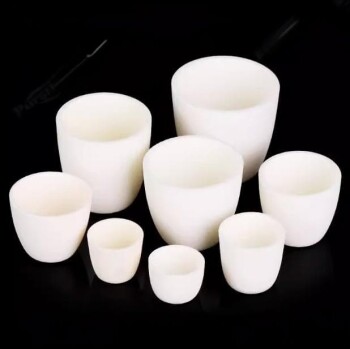
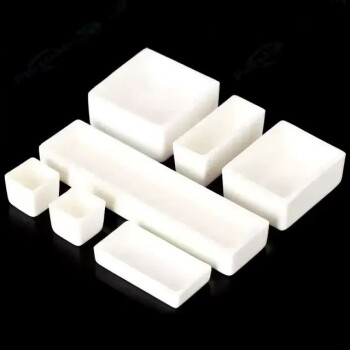
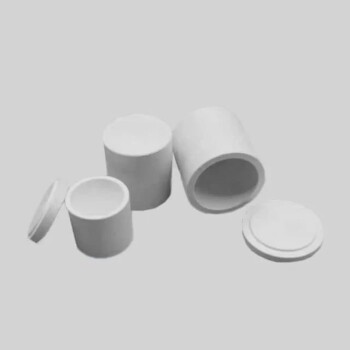
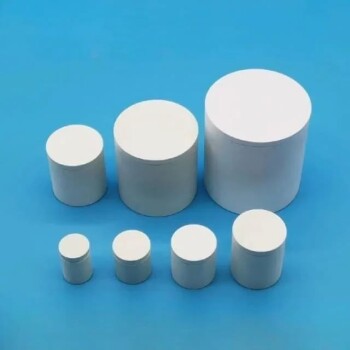
The selection of high-purity alumina crucibles for ferrochrome smelting is driven by the need for chemical stability and data precision. Unlike graphite, alumina resists slag erosion and prevents the crucible material from leaching into the melt. This ensures that the observed metal-slag separation and alloy loss rates are a result of the smelting process itself, rather than interactions with the container walls.
High-purity alumina crucibles are used to maintain sample purity and ensure experimental accuracy by providing an inert environment that resists slag erosion. This allows for the precise measurement of alloy sedimentation and loss rates without the interference common in reactive graphite containers.
Chemical Inertness and Sample Integrity
Eliminating Material Leaching
High-purity alumina crucibles are highly resistant to chemical reactions with molten ferrochrome and slag. This prevents impurities or unwanted carbon—which would be introduced by a graphite crucible—from altering the alloy’s specific composition.
Resisting Slag Erosion
High-temperature slag is often chemically aggressive and corrosive to container materials. Alumina’s superior chemical stability ensures the crucible walls remain intact, preventing wall material from entering the melt and skewing the final chemical analysis.
Maintaining Gas Signal Purity
In experiments involving gas monitoring, alumina does not release interfering gases or react with the atmosphere. This ensures that any captured signals, such as carbon monoxide or carbon dioxide, are derived exclusively from the smelting reaction and not from the oxidation of the crucible itself.
Precise Observation of Physical Dynamics
Metal and Slag Separation
A primary goal of smelting studies is observing how metal and slag separate spontaneously. Alumina’s non-reactive surface allows researchers to clearly see and measure this sedimentation performance without the physical or chemical interference of a reactive crucible surface.
Accurate Loss Rate Determination
Because alumina does not react with the melt or become "wetted" by the reactants, the mass of the final samples remains untainted. This leads to more reliable data regarding the recovery and loss of ferrochrome alloy within the slag.
Thermal Stability at Extreme Temperatures
High-purity alumina (corundum) can withstand temperatures exceeding 1600°C without deformation. This stability is essential for high-temperature smelting where the crucible must maintain its structural integrity for several hours.
Understanding the Trade-offs
Thermal Conductivity vs. Inertness
Graphite offers excellent thermal conductivity and a naturally reducing environment, which mimics some industrial conditions. However, in a controlled laboratory setting, these benefits are often sacrificed in favor of alumina's inertness to ensure "data purity."
Sensitivity to Thermal Shock
While chemically superior, high-purity alumina is more brittle and sensitive to rapid temperature changes than graphite. Experiments using alumina must be heated and cooled slowly to prevent the crucible from cracking or failing during the process.
Environment Compatibility
Alumina performs exceptionally well in oxidizing atmospheres where graphite would simply burn away. This makes alumina the only viable choice for smelting experiments that require precise control over the oxygen potential in the furnace.
Making the Right Choice for Your Research
- If your primary focus is experimental precision and purity: Choose high-purity alumina to ensure that measurements of alloy loss and inclusion behavior are not contaminated by the crucible material.
- If your primary focus is simulating carbon-saturated industrial environments: A graphite crucible may be more appropriate, provided you account for the carbon contribution to the melt.
- If your primary focus is observing physical sedimentation: Use alumina to prevent the crucible walls from "wetting" or reacting with the slag, which can disrupt the natural separation of metal and slag.
Choosing the right crucible material is the most critical step in isolating the fundamental chemistry of the smelting process from the variables of the container.
Summary Table:
| Feature | High-Purity Alumina Crucible | Graphite Crucible |
|---|---|---|
| Chemical Stability | Extremely high; inert to slag | Reactive; may leach carbon |
| Sample Purity | Maintains high alloy integrity | Potential carbon contamination |
| Slag Resistance | High resistance to erosion | Susceptible to chemical attack |
| Atmosphere | Best for oxidizing/inert | Best for reducing; burns in oxygen |
| Max Temperature | Up to 1600°C+ | Up to 3000°C (in inert gas) |
| Thermal Shock | Sensitive (needs slow heating) | Excellent resistance |
Elevate Your Smelting Precision with KINTEK
Achieving accurate experimental results in high-temperature smelting requires consumables that won't compromise your data. KINTEK specializes in providing premium high-purity alumina and ceramic crucibles designed to withstand aggressive slag and extreme temperatures without leaching impurities.
Whether you are conducting ferrochrome research or advanced materials synthesis, our comprehensive portfolio—including high-temperature muffle and tube furnaces, crushing systems, and precision hydraulic presses—ensures your lab is equipped for excellence.
Ready to optimize your high-temperature workflows? Contact our experts today to find the perfect solution for your specific research needs!
References
- Almagul Ultarakova, Zhadyra Yerzhanova. Physical and Chemical Studies of Smelting Products of Calcinated Composite Pellets Produced from Chromium Production Waste. DOI: 10.3390/jcs7090386
This article is also based on technical information from Kintek Solution Knowledge Base .
Related Products
- Arc-Shaped Alumina Ceramic Crucible High Temperature Resistant for Engineering Advanced Fine Ceramics
- High Purity Alumina Granulated Powder for Engineering Advanced Fine Ceramics
- Engineering Advanced Fine Alumina Al2O3 Ceramic Crucible for Laboratory Muffle Furnace
- Engineering Advanced Fine Ceramics Alumina Crucibles (Al2O3) for Thermal Analysis TGA DTA
- High Purity Pure Graphite Crucible for Evaporation
People Also Ask
- Why Use Alumina Crucibles & Powder Burial for NaSICON? Ensure Phase Purity and Prevent Elemental Volatilization
- What is the primary purpose of using alumina crucibles for LLTO ceramics? Optimize Your High-Temperature Sintering
- Why are alumina crucibles and mother powder essential for LATP sintering? Optimize Your Solid Electrolyte Performance
- Why are high-purity alumina crucibles used for liquid lead corrosion experiments? Ensure Data Accuracy at 550°C
- Primary considerations for choosing alumina crucibles and quartz tubes in indium intercalation: Ensure Material Purity