To achieve high-density compaction in Titanium-Aluminum (TiAl) alloys, laboratory hydraulic presses must reach pressures of 800 MPa to overcome the material's inherent low plasticity at room temperature. This extreme force is necessary to induce plastic deformation, promote cold-weld bonding between particles, and reach a relative density of up to 93%, which ensures the green body remains structurally sound during handling and sintering.
Core Takeaway: High-pressure compaction at 800 MPa is the critical threshold required to transform brittle TiAl powder into a cohesive green body by forcing particle rearrangement and mechanical interlocking that standard pressure levels cannot achieve.
Overcoming Material Resistance at Room Temperature
The Challenge of Low Plasticity
Titanium-Aluminum (TiAl) alloy particles are notoriously difficult to form because they exhibit low plasticity at room temperature. Unlike softer metals, these particles resist deformation, requiring significantly higher energy to change shape and bond.
Overcoming Internal Friction and Elasticity
High pressure is required to surpass the internal friction and elastic resistance existing between individual metal powder particles. At 800 MPa, the press provides sufficient axial force to move past the elastic limit, ensuring the particles do not simply "spring back" to their original shape once the pressure is released.
Inducing Plastic Deformation
The application of 800 MPa forces the TiAl particles to undergo plastic deformation. This process flattens the powder constituents, increasing the contact surface area and allowing particles to wedge into one another more effectively.
Enhancing Green Body Integrity and Density
The Role of Cold-Weld Bonding
As the press forces particles together, it creates cold-weld bonding between fresh, uncontaminated metal surfaces. This atomic-level contact is essential for providing the "green body" with enough splitting tensile strength to prevent it from cracking or fragmenting during subsequent transport or processing.
Maximizing Relative Density
Using 800 MPa allows the compact to reach a relative density of approximately 93%. By filling the microscopic voids and air pockets between particles, the hydraulic press creates a nearly solid mass that serves as a stable precursor for final alloy production.
Facilitating Particle Rearrangement
High-pressure control promotes the rearrangement of fine particles within the cavities left by larger particles. This "packing" effect ensures that the density is uniform throughout the cylindrical mass, which is fundamental for consistent material performance.
The Impact on Post-Processing and Sintering
Accelerating Diffusion Kinetics
A dense green body provides a tight physical contact network that is vital for solid-phase sintering. This intimacy increases the contact area for atomic diffusion, allowing the alloying elements to migrate more efficiently when heat is eventually applied.
Minimizing Sintering Defects and Shrinkage
Higher green density significantly reduces the driving force and shrinkage rate required during the sintering stage. By eliminating pores early through high-pressure compaction, the final alloy is less likely to develop cracks, voids, or dimensional inaccuracies.
Ensuring Mechanical Superiority
The high-pressure compaction process is the foundation for achieving superior mechanical properties in the final ingot. By ensuring a high-density precursor (often reaching over 99% density after sintering), the material achieves the hardness and durability required for aerospace and automotive applications.
Understanding the Trade-offs
Mold Wear and Longevity
Applying 800 MPa places extreme stress on high-precision molds. Frequent use at these pressures can lead to accelerated wear and tear, requiring specialized tool steels or carbide inserts to maintain dimensional accuracy over time.
Internal Residual Stresses
While high pressure increases density, it can also introduce internal residual stresses within the green body. If the pressure is released too quickly or if the powder distribution is uneven, these stresses can lead to "capping" or laminations where the compact splits into layers.
Energy and Equipment Requirements
Operating at 800 MPa requires robust, high-performance hydraulic systems that are more expensive to maintain than standard industrial presses. This necessitates a balance between the desired density and the operational costs of the laboratory environment.
How to Apply This to Your Project
Recommendations Based on Your Research Goals
- If your primary focus is maximizing final hardness: Prioritize the highest possible green density (800 MPa or above) to ensure a pore-free microstructure after sintering.
- If your primary focus is reducing sintering time: Use 800 MPa to create the tightest possible particle contact, which accelerates solid-state diffusion and shortens the heat treatment cycle.
- If your primary focus is mold preservation: Experiment with lubricants or slightly lower pressures (around 600-700 MPa) if the specific TiAl powder chemistry allows for sufficient bonding at lower forces.
- If your primary focus is preventing green body cracking: Ensure the press provides a slow, controlled release of pressure to allow the compact to settle and minimize elastic springback.
By precisely controlling these high-pressure parameters, researchers can transform recalcitrant TiAl powders into high-performance engineering materials with predictable and repeatable results.
Summary Table:
| Key Factor | Requirement/Impact | Benefit for TiAl Alloys |
|---|---|---|
| Compaction Pressure | 800 MPa | Overcomes low plasticity and internal friction |
| Relative Density | ~93% | Minimizes voids and ensures structural integrity |
| Bonding Mechanism | Cold-Weld Bonding | Prevents cracking and fragmentation during handling |
| Sintering Prep | Tight Physical Contact | Accelerates atomic diffusion and reduces shrinkage |
| Final Outcome | Pore-free Microstructure | Superior mechanical hardness and durability |
Precision Compaction for Advanced Material Research
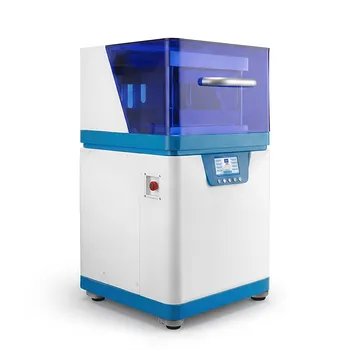
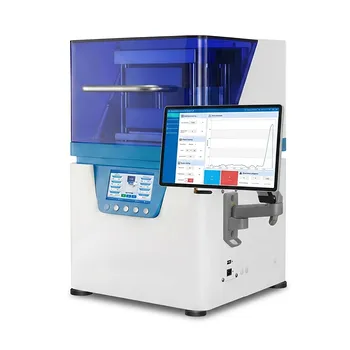
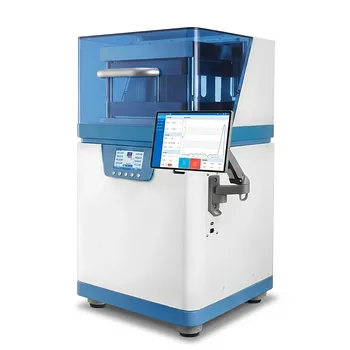
Achieving the extreme pressures required for Titanium-Aluminum (TiAl) alloy development demands equipment that combines power with precision. KINTEK specializes in high-performance laboratory solutions, offering a robust range of hydraulic presses (pellet, hot, and isostatic) capable of reaching the critical 800 MPa threshold.
Beyond compaction, we support your entire workflow with:
- High-Temperature Furnaces: Muffle, vacuum, and atmosphere furnaces for optimized sintering.
- Material Processing: Crushing, milling, and sieving systems for perfect powder preparation.
- Specialized Consumables: High-quality ceramics, crucibles, and PTFE products.
Ready to elevate your lab's capabilities and ensure repeatable, high-density results? Contact KINTEK today to discuss your specific research goals and find the perfect high-pressure solution.
References
- Bernd‐Arno Behrens, Maik Szafarska. Pressing and Sintering of Titanium Aluminide Powder after Ball Milling in Silane-Doped Atmosphere. DOI: 10.3390/jmmp7050171
This article is also based on technical information from Kintek Solution Knowledge Base .
Related Products
- Automatic Hydraulic Hot Press with 500x500mm Heating Plates and Multi Stage PLC Control for Material Sintering
- Laboratory Hydraulic Press Split Electric Lab Pellet Press
- Fully Automatic Heated Hydraulic Lab Press for Materials Sintering and Sample Preparation
- Laboratory Hydraulic Press Lab Pellet Press for Button Battery
- Laboratory Hydraulic Press Lab Pellet Press Machine for Glove Box
People Also Ask
- How do hydraulic presses facilitate material solidification in Low-Temperature LPS? Optimize Your Material Densification
- Why is 800 MPa required for TiNiPdCu alloy green bodies? Master High-Density Compaction for Superior Material Strength
- How does KBr pellet preparation facilitate FTIR of high-ash mud? Precision Sample Prep for Structural Analysis
- Why is an industrial hydraulic press with precision stainless steel molds used? For Uniform Mo-Fe Precursor Compacts.
- Purpose of Coaxial Ring Molds & Presses in EM Testing? Achieve Precise VNA Data & Fit