Knowledge Why must the reactor body in photocatalytic systems be optical quartz? Maximize Photon Efficiency and Thermal Safety
Author avatar

Tech Team · Kintek Solution

Updated 17 hours ago

Why must the reactor body in photocatalytic systems be optical quartz? Maximize Photon Efficiency and Thermal Safety


The selection of optical quartz for reactor bodies is not merely a material preference; it is a fundamental requirement for efficient photon delivery. Unlike standard glass, optical quartz offers exceptional transparency to specific wavelengths, ensuring that light energy reaches the internal catalyst bed with negligible loss.

Core Takeaway: The reactor body acts as the primary gatekeeper for energy entering the system. Optical quartz is mandatory because it combines superior thermal stability with extremely low light absorption, ensuring virtually all radiant energy is available to drive the chemical degradation process.

Maximizing Energy Transfer Efficiency

Minimizing Light Absorption

The primary function of the reactor wall is to be invisible to the energy source. Standard glass materials contain impurities that absorb a significant percentage of light energy before it enters the reaction chamber.

Optical quartz exhibits very low light absorption. This property ensures that the maximum amount of radiant energy passes through the tube walls rather than being dissipated as heat within the glass.

Activating the Catalyst Bed

Photocatalytic reactions rely on the catalyst receiving sufficient photon energy to trigger electron excitation.

In this specific system, the light must reach the N,S-TiO2/SSA catalyst bed unimpeded. Any reduction in light intensity caused by the reactor wall directly correlates to a drop in reaction efficiency and degradation rates.

Preserving Wavelength Specificity

Your reaction requires specific wavelengths of visible light to function correctly.

Optical quartz possesses extremely high light transmittance across these specific bands. It allows the precise wavelengths required for the reaction to pass through without filtering or attenuation.

Thermal Stability and Durability

Withstanding High-Intensity Radiation

Photocatalytic systems often utilize powerful light sources to maximize reaction rates.

This system utilizes a 400 W light source, which generates significant thermal stress. Optical quartz provides superior thermal stability compared to standard glass, allowing it to withstand high-intensity radiation without structural failure or deformation.

Maintaining Consistent Performance

The stability of quartz ensures that the reactor's optical properties do not degrade over time under heat stress.

This consistency allows for reliable, reproducible data regarding the degradation reactions triggered by the photocatalyst.

Understanding the Trade-offs

The Cost of Efficiency

While optical quartz is the superior technical choice, it is important to recognize the comparison to standard glass.

Standard glass is less expensive but creates a "parasitic" effect on the system. It absorbs light and handles heat poorly.

By choosing quartz, you are prioritizing reaction efficiency and safety over material cost. The trade-off is a higher initial investment for a reactor that allows the full potential of the 400 W source and the N,S-TiO2/SSA catalyst to be realized.

Ensuring Reaction Success

Making the Right Choice for Your Goal

  • If your primary focus is Reaction Efficiency: Utilizing optical quartz is non-negotiable to ensure the maximum number of photons reach the N,S-TiO2/SSA catalyst bed.
  • If your primary focus is System Safety: Optical quartz provides the necessary thermal stability to safely manage the heat load from a 400 W high-intensity light source.

The reactor body must be viewed as an integral optical component, not just a container, to ensure the success of your photocatalytic degradation process.

Summary Table:

Feature Optical Quartz Standard Glass
Light Absorption Extremely Low (Transparent) High (Parasitic Loss)
Energy Transfer Maximum Efficiency Significantly Reduced
Thermal Stability High (Supports 400W+ Sources) Low (Risk of Deformation)
Wavelength Integrity High Transmittance (Visible/UV) High Filtering/Attenuation
Primary Benefit Precise, Reproducible Results Lower Initial Material Cost

Elevate Your Photocatalytic Research with KINTEK Precision

Don't let subpar materials throttle your reaction efficiency. KINTEK specializes in high-performance laboratory equipment designed to meet the rigorous demands of advanced chemical research. Whether you are optimizing a catalyst bed or scaling up degradation processes, our premium optical quartz reactors, high-temperature furnaces, and specialized high-pressure reactors and autoclaves provide the durability and precision your data deserves.

From electrolytic cells to cooling solutions and precision crushing systems, KINTEK is your partner in laboratory excellence.

Ready to optimize your energy transfer? Contact our technical experts today to find the perfect quartz solution for your high-intensity photocatalytic systems!

References

  1. Farhad Mahmoodi, Mehraban Sadeghi. Removal of 1-naphthol from Water via Photocatalytic Degradation Over N,S-TiO2/ Silica Sulfuric Acid under visible Light. DOI: 10.32598/jaehr.10.1.1242

This article is also based on technical information from Kintek Solution Knowledge Base .

Related Products

People Also Ask

Related Products

High Temperature Resistant Optical Quartz Glass Sheet

High Temperature Resistant Optical Quartz Glass Sheet

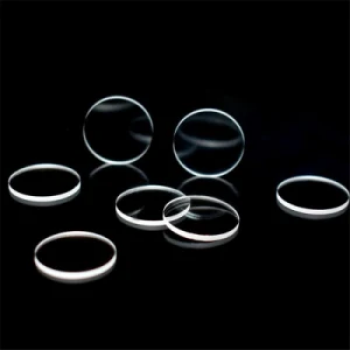
Discover the power of optical glass sheets for precise light manipulation in telecommunications, astronomy, and beyond. Unlock advancements in optical technology with exceptional clarity and tailored refractive properties.

1400℃ Laboratory High Temperature Tube Furnace with Alumina Tube

1400℃ Laboratory High Temperature Tube Furnace with Alumina Tube

Looking for a tube furnace for high-temperature applications? Our 1400℃ Tube Furnace with Alumina Tube is perfect for research and industrial use.

High Temperature Aluminum Oxide (Al2O3) Protective Tube for Engineering Advanced Fine Ceramics

High Temperature Aluminum Oxide (Al2O3) Protective Tube for Engineering Advanced Fine Ceramics

Alumina oxide protective tube, also known as high temperature resistant corundum tube or thermocouple protection tube, is a ceramic tube mainly made of alumina (aluminum oxide).

High Pressure Laboratory Vacuum Tube Furnace Quartz Tubular Furnace

High Pressure Laboratory Vacuum Tube Furnace Quartz Tubular Furnace

KT-PTF High Pressure Tube Furnace: Compact split tube furnace with strong positive pressure resistance. Working temp up to 1100°C and pressure up to 15Mpa. Also works under controller atmosphere or high vacuum.

Custom PTFE Teflon Parts Manufacturer for Centrifuge Tubes

Custom PTFE Teflon Parts Manufacturer for Centrifuge Tubes

PTFE centrifugal tubes are highly valued for their exceptional chemical resistance, thermal stability, and non-stick properties, making them indispensable in various high-demand sectors. These tubes are particularly useful in environments where exposure to corrosive substances, high temperatures, or stringent cleanliness requirements are prevalent.

Optical Ultra-Clear Glass Sheet for Laboratory K9 B270 BK7

Optical Ultra-Clear Glass Sheet for Laboratory K9 B270 BK7

Optical glass, while sharing many characteristics with other types of glass, is manufactured using specific chemicals that enhance properties crucial for optics applications.

Float Soda-Lime Optical Glass for Laboratory Use

Float Soda-Lime Optical Glass for Laboratory Use

Soda-lime glass, widely favored as an insulating substrate for thin/thick film deposition, is created by floating molten glass on molten tin. This method ensures uniform thickness and exceptionally flat surfaces.

Multi Heating Zones CVD Tube Furnace Machine Chemical Vapor Deposition Chamber System Equipment

Multi Heating Zones CVD Tube Furnace Machine Chemical Vapor Deposition Chamber System Equipment

KT-CTF14 Multi Heating Zones CVD Furnace - Precise Temperature Control and Gas Flow for Advanced Applications. Max temp up to 1200℃, 4 channels MFC mass flow meter, and 7" TFT touch screen controller.

Hexagonal Boron Nitride HBN Thermocouple Protection Tube

Hexagonal Boron Nitride HBN Thermocouple Protection Tube

Hexagonal boron nitride ceramics is an emerging industrial material. Because of its similar structure to graphite and many similarities in performance, it is also called "white graphite".

High Temperature Alumina (Al2O3) Furnace Tube for Engineering Advanced Fine Ceramics

High Temperature Alumina (Al2O3) Furnace Tube for Engineering Advanced Fine Ceramics

High temperature alumina furnace tube combines the advantages of high hardness of alumina, good chemical inertness and steel, and has excellent wear resistance, thermal shock resistance and mechanical shock resistance.

Custom PTFE Teflon Parts Manufacturer for PTFE Bottle Oil Fume Sampling Tube

Custom PTFE Teflon Parts Manufacturer for PTFE Bottle Oil Fume Sampling Tube

PTFE products are generally called "non-stick coating", which is a synthetic polymer material that replaces all hydrogen atoms in polyethylene with fluorine.

1200℃ Split Tube Furnace with Quartz Tube Laboratory Tubular Furnace

1200℃ Split Tube Furnace with Quartz Tube Laboratory Tubular Furnace

KT-TF12 split tube furnace: high-purity insulation, embedded heating wire coils, and max. 1200C. Widely used for new materials and chemical vapour deposition.

Vacuum Sealed Continuous Working Rotary Tube Furnace Rotating Tube Furnace

Vacuum Sealed Continuous Working Rotary Tube Furnace Rotating Tube Furnace

Experience efficient material processing with our vacuum-sealed rotary tube furnace. Perfect for experiments or industrial production, equipped with optional features for controlled feeding and optimized results. Order now.

Electric Rotary Kiln Continuous Working Small Rotary Furnace Heating Pyrolysis Plant

Electric Rotary Kiln Continuous Working Small Rotary Furnace Heating Pyrolysis Plant

Efficiently calcine and dry bulk powder and lump fluid materials with an electric heating rotary furnace. Ideal for processing lithium ion battery materials and more.

Custom PTFE Teflon Parts Manufacturer for Non-Standard Insulator Customization

Custom PTFE Teflon Parts Manufacturer for Non-Standard Insulator Customization

PTFE insulator PTFE has excellent electrical insulation properties in a wide temperature and frequency range.

Custom PTFE Teflon Parts Manufacturer for Acid and Alkali Resistant Chemical Powder Material Scoops

Custom PTFE Teflon Parts Manufacturer for Acid and Alkali Resistant Chemical Powder Material Scoops

Known for its excellent thermal stability, chemical resistance and electrical insulating properties, PTFE is a versatile thermoplastic material.

Glassy Carbon Sheet RVC for Electrochemical Experiments

Glassy Carbon Sheet RVC for Electrochemical Experiments

Discover our Glassy Carbon Sheet - RVC. Perfect for your experiments, this high-quality material will elevate your research to the next level.

1800℃ Muffle Oven Furnace for Laboratory

1800℃ Muffle Oven Furnace for Laboratory

KT-18 muffle furnace with Japan Al2O3 polycrystalline fibe and Silicon Molybdenum heating element, up to 1900℃, PID temperature control and 7" smart touch screen. Compact design, low heat loss, and high energy efficiency. Safety interlock system and versatile functions.

Laboratory Oscillating Orbital Shaker

Laboratory Oscillating Orbital Shaker

Mixer-OT orbital shaker uses brushless motor, which can run for a long time. It is suitable for vibration tasks of culture dishes, flasks and beakers.

Custom PTFE Teflon Parts Manufacturer Laboratory High Temperature Mixing Paddle Mixer

Custom PTFE Teflon Parts Manufacturer Laboratory High Temperature Mixing Paddle Mixer

The PTFE mixing paddle mixer is a versatile and robust tool designed for laboratory use, particularly in environments requiring high resistance to chemicals and extreme temperatures. Crafted from high-quality PTFE, this mixer boasts several key features that enhance its functionality and durability.


Leave Your Message