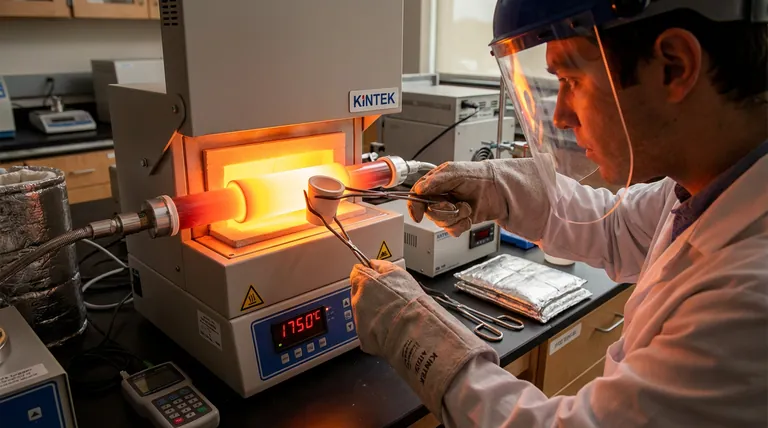
The most common question we receive about tube furnaces is also the most misleading.
"How hot does it get?"
It seems like a simple specification. A number on a datasheet. But in thermal engineering, a single number is rarely the whole story. Asking for the high temperature of a tube furnace is like asking for the top speed of a car. It tells you what is possible in a burst, not what is sustainable for the journey.
There is no single maximum temperature. There is only a series of thresholds defined by the weakest link in the system.
While basic models hover around 1000°C, high-performance units from KINTEK can breach the 1800°C barrier. But the gap between those two numbers is filled with physics, material science, and the inevitable trade-offs of engineering.
The Anatomy of Heat
A furnace is a system of dependencies. If you want to understand the limit, you have to look at the components that are under the most stress.
The maximum temperature is strictly defined by two things: The Engine (heating elements) and The Vessel (the process tube).
1. The Engine: Heating Elements
The heating element is the heart of the furnace. It is the component fighting the fiercest battle against entropy.
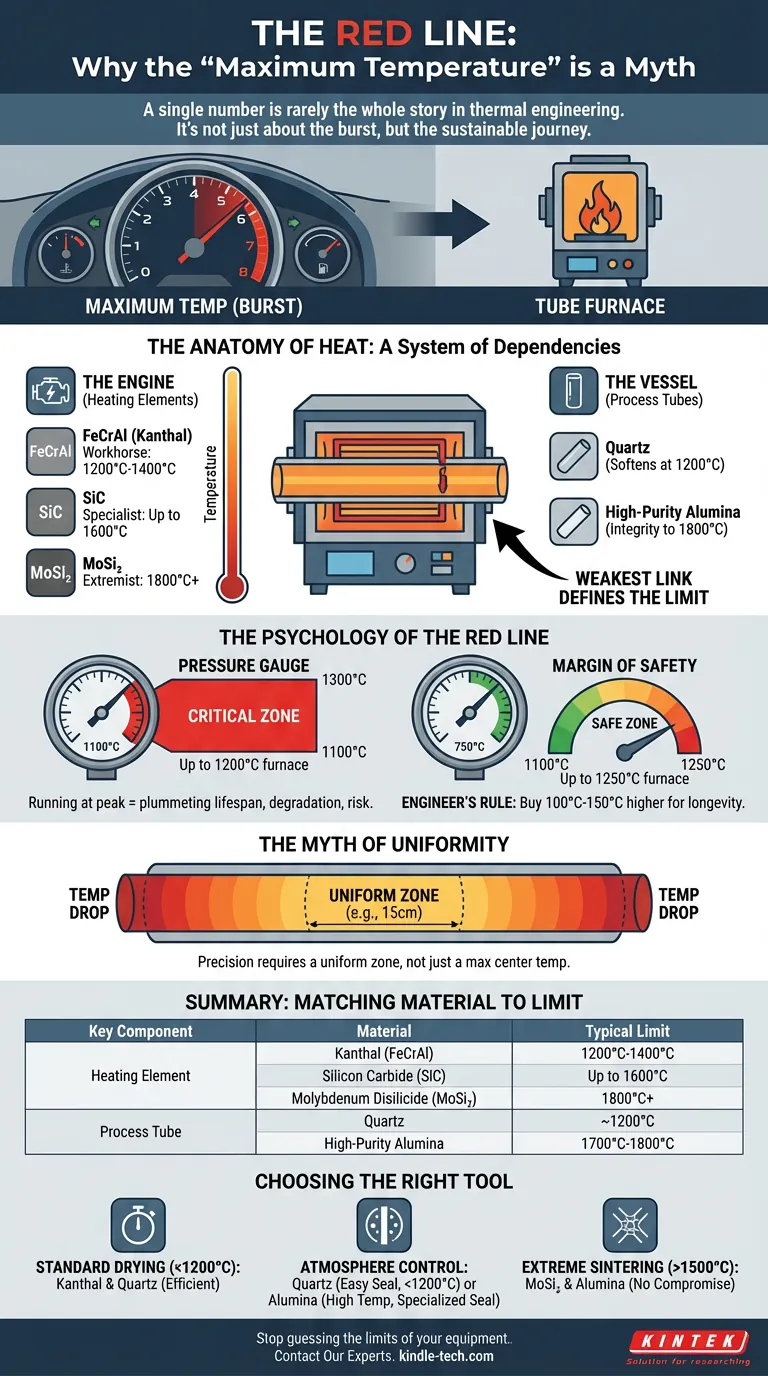
- The Workhorse (FeCrAl Alloys): Often referred to as Kanthal, these are the standard for general labs. They are cost-effective and reliable, but they hit a wall between 1200°C and 1400°C. Push them further, and they degrade rapidly.
- The Specialist (Silicon Carbide - SiC): When the process demands more energy, we switch to SiC. These ceramic-based elements are robust and can operate comfortably up to 1600°C.
- The Extremist (Molybdenum Disilicide - MoSi₂): For the frontiers of material science—sintering advanced ceramics or growing crystals—MoSi₂ is the standard. These elements do not flinch at temperatures of 1800°C or higher.
2. The Vessel: Process Tubes
You can have an engine capable of 1800°C, but if the chassis melts, you have a failure. The tube holding your sample is often the limiting factor.
- Quartz: Transparent and chemically pure, quartz is beloved in the lab. But it has a hard ceiling. Above 1200°C, it begins to soften. Gravity takes over, and the tube deforms.
- High-Purity Alumina: To go higher, you need ceramics. Alumina tubes are the heavy lifters, maintaining structural integrity up to 1800°C.
The Psychology of the Red Line
In finance, there is a concept called the "Margin of Safety." It is the gap between what a system can handle and what you ask it to handle.
This applies perfectly to thermal dynamics.
Buying a 1200°C furnace to run a 1200°C process is a mistake. It is the equivalent of driving your car at the red line, hour after hour.
When you run a furnace at its absolute peak:
- Heating element lifespan plummets.
- Insulation degrades faster.
- Thermal shock risks increase.
The Engineer’s Rule of Thumb: Always buy a furnace rated for 100°C to 150°C higher than your daily operating temperature. If you need to work at 1100°C, buy a 1250°C or 1300°C model. You are paying for longevity, not just heat.
The Myth of Uniformity
Another nuance often missed is the geography of heat.
A specification sheet lists the temperature at the geometric center of the hot zone. But heat is not a stagnant pool; it flows. The temperature drops as you move toward the ends of the tube.
If your process requires precision—sintering zirconia for dental applications or annealing semiconductors—the "maximum temperature" matters less than the "uniform zone." A 1200°C furnace might only be 1200°C for a span of 15 centimeters in the middle.
Summary: Matching Material to Limit
To simplify the selection process, we can map the components to their thermal ceilings.
| Key Component | Material | Typical Limit |
|---|---|---|
| Heating Element | Kanthal (FeCrAl) | 1200°C - 1400°C |
| Heating Element | Silicon Carbide (SiC) | Up to 1600°C |
| Heating Element | Molybdenum Disilicide (MoSi₂) | 1800°C+ |
| Process Tube | Quartz | ~1200°C |
| Process Tube | High-Purity Alumina | 1700°C - 1800°C |
Choosing the Right Tool
Don't just buy a number. Buy the capability that matches your specific scientific goal.
- For standard drying and ash determination (<1200°C): Stick with Kanthal elements and quartz tubes. It is efficient and cost-effective.
- For atmosphere control: If you need a vacuum or inert gas, the tube material dictates your limit. Quartz seals easily but limits you to 1200°C. Alumina goes higher but requires specialized sealing flanges.
- For extreme sintering (>1500°C): There is no compromise here. You require MoSi₂ elements and high-purity alumina.
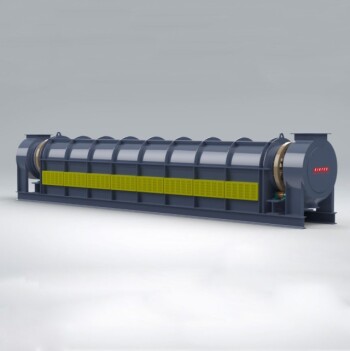
At KINTEK, we don't just sell equipment; we help you engineer a margin of safety. Whether you need a simple rotary furnace for powder processing or a high-precision static unit for advanced ceramics, we ensure the "maximum" on the spec sheet translates to reliability in your lab.
Stop guessing the limits of your equipment.
Visual Guide
Related Products
- Graphite Vacuum Furnace High Thermal Conductivity Film Graphitization Furnace
- High Temperature Muffle Oven Furnace for Laboratory Debinding and Pre Sintering
- 1700℃ Controlled Atmosphere Furnace Nitrogen Inert Atmosphere Furnace
- Vertical High Temperature Graphite Vacuum Graphitization Furnace
- 1700℃ Muffle Oven Furnace for Laboratory
Related Articles
- Optimizing Performance with Graphite Vacuum Furnaces: A Comprehensive Guide
- Maximizing Efficiency and Precision with Vacuum Graphite Furnaces
- Unveiling Vacuum Graphite Furnaces: Performance, Applications, and Expert Insights
- The Hidden Enemy in Your Furnace: Why Your Heat-Treated Parts Have Scale and Discoloration—And How to Fix It for Good
- Why Your Furnace Experiments Fail: The Hidden Mismatch in Your Lab