Blog The Silent Vessel: Why the Material of Your Furnace Tube Defines Your Science
The Silent Vessel: Why the Material of Your Furnace Tube Defines Your Science

The Silent Vessel: Why the Material of Your Furnace Tube Defines Your Science

17 hours ago

The Illusion of the Container

In laboratory science, we obsess over the variables we can control. We measure the sample weight to the microgram. We calibrate the temperature ramp to the second. We purify the gas flow to the part per million.

Yet, we often overlook the one variable that literally holds it all together: the furnace tube.

It is easy to view the tube as a passive vessel—a mere bucket for holding high-temperature events. This is a dangerous oversimplification. In thermal processing, the tube is not a bucket; it is a boundary condition. It is the only thing separating your pristine sample from the chaotic, dirty environment of the heating elements.

If the tube fails, the experiment doesn't just stop; it lies to you. It introduces impurities that mimic results, or it cracks, destroying weeks of preparation.

Understanding what your tube is made of—and why—is not a procurement detail. It is an engineering necessity.

The Engineering of Isolation

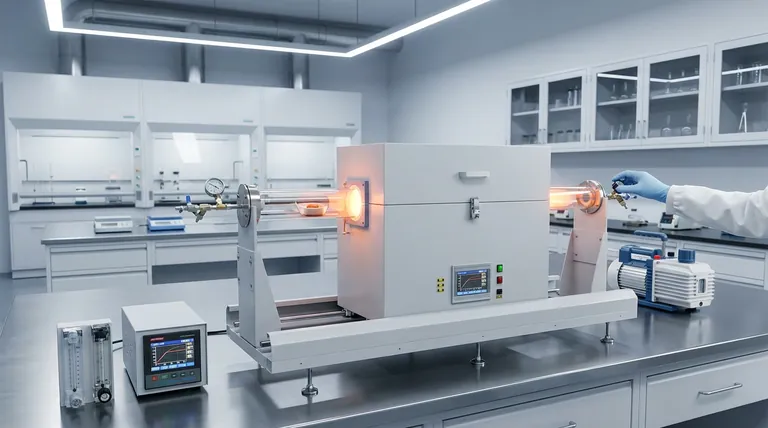
The furnace body is built for insulation and structure, typically crafted from stainless steel and ceramic fiber boards. But the process tube? The process tube is built for survival.

Its role is twofold:

  1. Containment: It holds the specific atmosphere (vacuum, argon, nitrogen) your chemistry requires.
  2. Exclusion: It blocks the contaminants shedding from the heating coils.

To achieve this, we rely on three primary materials. Each offers a distinct "personality" regarding thermal limits and chemical interaction.

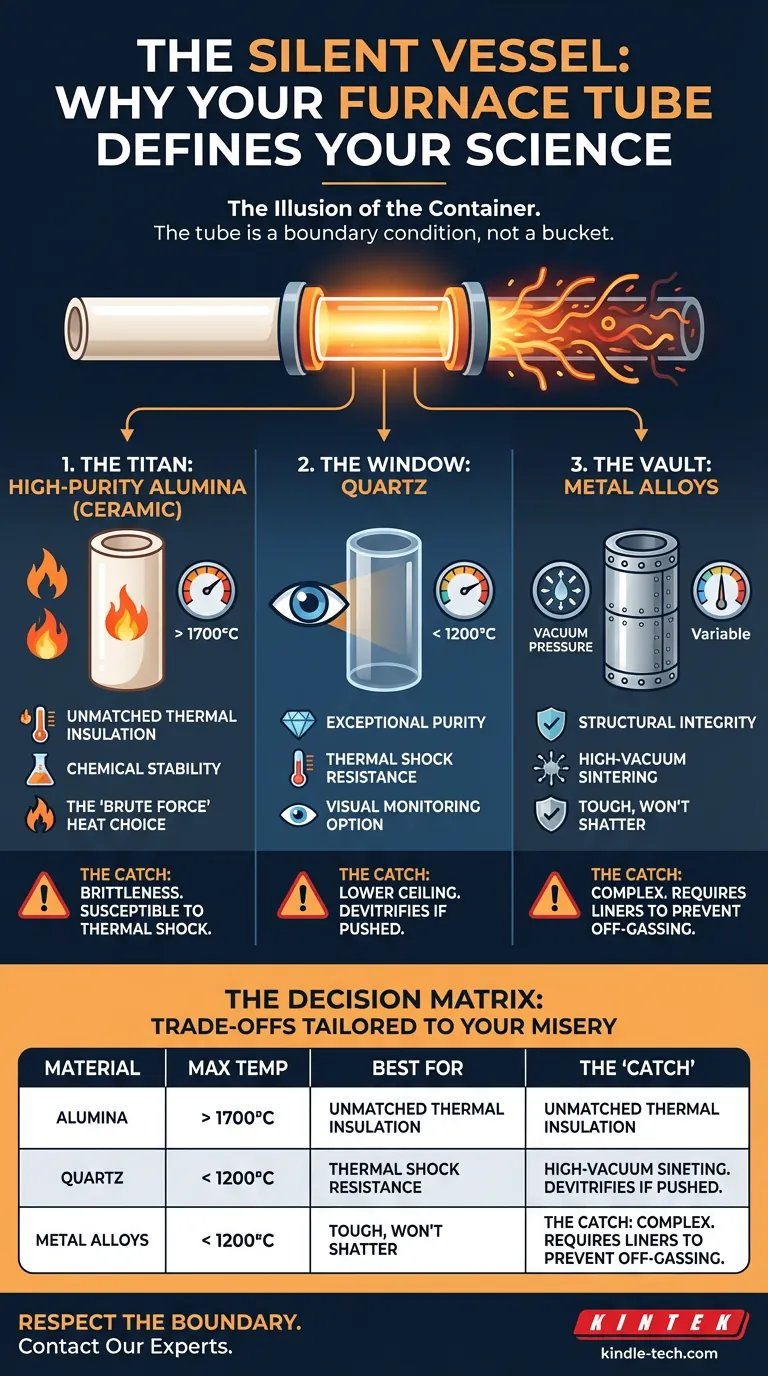
1. The Titan: High-Purity Alumina (Ceramic)

When your experiment demands the extreme, you turn to Alumina ($Al_2O_3$).

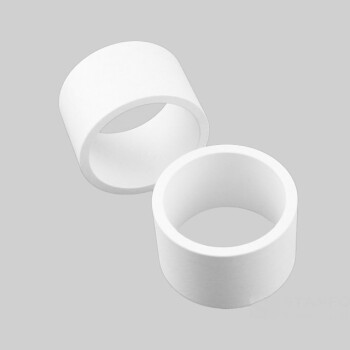
It is the heavy lifter of the laboratory. High-purity alumina is a refractory ceramic designed to operate comfortably at temperatures where other materials liquefy or degrade—often well above 1700°C.

The Psychology of Alumina:

  • The Strength: Unmatched thermal insulation and chemical stability. It is the choice for "brute force" heat.
  • The Cost: Brittleness. Like many strong things, it does not bend; it breaks. It is highly susceptible to thermal shock. If you heat it or cool it too fast, it will crack. It demands patience.

2. The Window: Quartz

Quartz is the material of clarity.

Its primary advantage is transparency. In research scenarios where you need to visually monitor the sample as it reacts—watching for phase changes or melting points—quartz is the only viable option.

The Psychology of Quartz:

  • The Strength: Exceptional purity and thermal shock resistance. Unlike alumina, it handles rapid temperature changes with grace.
  • The Limit: It has a ceiling. Generally limited to 1200°C, quartz will begin to devitrify (turn cloudy and brittle) if pushed too hard or too long. It is perfect for the middle-ground, but it cannot touch the extremes.

3. The Vault: Metal Alloys

Sometimes, the challenge isn't just heat; it is pressure.

For processes like vacuum sintering, standard ceramics may be porous or difficult to seal. Specialized heat-resistant metal alloys are engineered for structural integrity under high vacuum.

The Psychology of Alloys:

  • The Strength: They are tough. They don't shatter like glass or ceramic.
  • The Nuance: At high temperatures, metals want to react. To prevent the tube from off-gassing and contaminating the sample, these tubes often require non-metallic inner liners. It is a complex solution for a complex problem.

The Economics of Trade-offs

There is no "perfect" tube material. There are only trade-offs tailored to your specific misery.

In engineering, as in life, optimizing for one variable usually stresses another.

  • If you want visibility (Quartz), you sacrifice maximum temperature.
  • If you want extreme heat (Alumina), you sacrifice mechanical toughness (thermal shock resistance).
  • If you want vacuum integrity (Metal), you often sacrifice simplicity and cost.

The most common failure mode in selecting furnace tubes is not buying "bad" quality; it is buying the wrong tool for the environment. Using quartz for a 1500°C sintering run isn't ambitious; it's physics-defying. Using alumina for a process requiring rapid cooling is asking for a pile of shards.

The Decision Matrix

To simplify the selection process, match your constraint to the material properties below:

| Material | Max Temperature | Best For | The "Catch" | | :--- | :--- | :--- | :--- | | **Alumina Ceramic** | > 1700°C | Extreme heat & chemical stability | Brittle; hates rapid temp changes | | **Quartz** | < 1200°C | Visual monitoring & high purity | Lower temp limit; devitrifies over time | | **Metal Alloy** | Varies | High-vacuum sintering | Expensive; may require liners |

Conclusion: Respect the Boundary

The success of your thermal processing is defined by the weakest link in the chain. Often, that link is the tube.

Don't treat the tube material as an afterthought. It is a critical component dictated by your experiment's maximum temperature, chemical environment, and required atmosphere.

At KINTEK, we understand the engineering romance of high-temperature physics. We know that the difference between a breakthrough and a breakdown is often just a few degrees—and the right ceramic composition.

We specialize in matching the ideal tube material to your specific purity and thermal goals. whether you need the transparency of quartz or the resilience of alumina.

Are you pushing the limits of your current equipment? Contact Our Experts today to ensure your invisible boundary is strong enough to hold your science.

Visual Guide
The Silent Vessel: Why the Material of Your Furnace Tube Defines Your Science Visual Guide

Related Products

Related Articles

Related Products

Laboratory Rapid Thermal Processing (RTP) Quartz Tube Furnace

Laboratory Rapid Thermal Processing (RTP) Quartz Tube Furnace

Get lightning-fast heating with our RTP Rapid Heating Tube Furnace. Designed for precise, high-speed heating and cooling with convenient sliding rail and TFT touch screen controller. Order now for ideal thermal processing!

1400℃ Laboratory High Temperature Tube Furnace with Alumina Tube

1400℃ Laboratory High Temperature Tube Furnace with Alumina Tube

Looking for a tube furnace for high-temperature applications? Our 1400℃ Tube Furnace with Alumina Tube is perfect for research and industrial use.

1700℃ Laboratory High Temperature Tube Furnace with Alumina Tube

1700℃ Laboratory High Temperature Tube Furnace with Alumina Tube

Looking for a high-temperature tube furnace? Check out our 1700℃ Tube Furnace with Alumina Tube. Perfect for research and industrial applications up to 1700C.

1200℃ Split Tube Furnace with Quartz Tube Laboratory Tubular Furnace

1200℃ Split Tube Furnace with Quartz Tube Laboratory Tubular Furnace

KT-TF12 split tube furnace: high-purity insulation, embedded heating wire coils, and max. 1200C. Widely used for new materials and chemical vapour deposition.

High Pressure Laboratory Vacuum Tube Furnace Quartz Tubular Furnace

High Pressure Laboratory Vacuum Tube Furnace Quartz Tubular Furnace

KT-PTF High Pressure Tube Furnace: Compact split tube furnace with strong positive pressure resistance. Working temp up to 1100°C and pressure up to 15Mpa. Also works under controller atmosphere or high vacuum.

Multi-zone Laboratory Tube Furnace

Multi-zone Laboratory Tube Furnace

Experience precise, efficient thermal testing with our Multi Zone Tube Furnace. Independent heating zones and temperature sensors allow for controlled high-temperature gradient heating fields. Order now for advanced thermal analysis!

Laboratory Vacuum Tilt Rotary Tube Furnace Rotating Tube Furnace

Laboratory Vacuum Tilt Rotary Tube Furnace Rotating Tube Furnace

Discover the versatility of Laboratory Rotary Furnace: Ideal for calcination, drying, sintering, and high-temperature reactions. Adjustable rotating and tilting functions for optimal heating. Suitable for vacuum and controlled atmosphere environments. Learn more now!

Multi Heating Zones CVD Tube Furnace Machine Chemical Vapor Deposition Chamber System Equipment

Multi Heating Zones CVD Tube Furnace Machine Chemical Vapor Deposition Chamber System Equipment

KT-CTF14 Multi Heating Zones CVD Furnace - Precise Temperature Control and Gas Flow for Advanced Applications. Max temp up to 1200℃, 4 channels MFC mass flow meter, and 7" TFT touch screen controller.

1800℃ Muffle Oven Furnace for Laboratory

1800℃ Muffle Oven Furnace for Laboratory

KT-18 muffle furnace with Japan Al2O3 polycrystalline fibe and Silicon Molybdenum heating element, up to 1900℃, PID temperature control and 7" smart touch screen. Compact design, low heat loss, and high energy efficiency. Safety interlock system and versatile functions.

Vacuum Sealed Continuous Working Rotary Tube Furnace Rotating Tube Furnace

Vacuum Sealed Continuous Working Rotary Tube Furnace Rotating Tube Furnace

Experience efficient material processing with our vacuum-sealed rotary tube furnace. Perfect for experiments or industrial production, equipped with optional features for controlled feeding and optimized results. Order now.

High Temperature Alumina (Al2O3) Furnace Tube for Engineering Advanced Fine Ceramics

High Temperature Alumina (Al2O3) Furnace Tube for Engineering Advanced Fine Ceramics

High temperature alumina furnace tube combines the advantages of high hardness of alumina, good chemical inertness and steel, and has excellent wear resistance, thermal shock resistance and mechanical shock resistance.

1200℃ Controlled Atmosphere Furnace Nitrogen Inert Atmosphere Furnace

1200℃ Controlled Atmosphere Furnace Nitrogen Inert Atmosphere Furnace

Discover our KT-12A Pro Controlled atmosphere furnace - high precision, heavy duty vacuum chamber, versatile smart touch screen controller, and excellent temperature uniformity up to 1200C. Ideal for both laboratory and industrial application.

High Temperature Aluminum Oxide (Al2O3) Protective Tube for Engineering Advanced Fine Ceramics

High Temperature Aluminum Oxide (Al2O3) Protective Tube for Engineering Advanced Fine Ceramics

Alumina oxide protective tube, also known as high temperature resistant corundum tube or thermocouple protection tube, is a ceramic tube mainly made of alumina (aluminum oxide).

Controlled Nitrogen Inert Hydrogen Atmosphere Furnace

Controlled Nitrogen Inert Hydrogen Atmosphere Furnace

KT-AH Hydrogen atmosphere furnace - induction gas furnace for sintering/annealing with built-in safety features, dual housing design, and energy-saving efficiency. Ideal for lab and industrial use.

Mesh belt controlled atmosphere furnace

Mesh belt controlled atmosphere furnace

Discover our KT-MB mesh belt sintering furnace - perfect for high-temperature sintering of electronic components & glass insulators. Available for open air or controlled atmosphere environments.

Hexagonal Boron Nitride HBN Thermocouple Protection Tube

Hexagonal Boron Nitride HBN Thermocouple Protection Tube

Hexagonal boron nitride ceramics is an emerging industrial material. Because of its similar structure to graphite and many similarities in performance, it is also called "white graphite".

Electric Rotary Kiln Continuous Working Small Rotary Furnace Heating Pyrolysis Plant

Electric Rotary Kiln Continuous Working Small Rotary Furnace Heating Pyrolysis Plant

Efficiently calcine and dry bulk powder and lump fluid materials with an electric heating rotary furnace. Ideal for processing lithium ion battery materials and more.

Custom PTFE Teflon Parts Manufacturer for Centrifuge Tubes

Custom PTFE Teflon Parts Manufacturer for Centrifuge Tubes

PTFE centrifugal tubes are highly valued for their exceptional chemical resistance, thermal stability, and non-stick properties, making them indispensable in various high-demand sectors. These tubes are particularly useful in environments where exposure to corrosive substances, high temperatures, or stringent cleanliness requirements are prevalent.

1700℃ Controlled Atmosphere Furnace Nitrogen Inert Atmosphere Furnace

1700℃ Controlled Atmosphere Furnace Nitrogen Inert Atmosphere Furnace

KT-17A Controlled atmosphere furnace: 1700℃ heating, vacuum sealing technology, PID temperature control, and versatile TFT smart touch screen controller for laboratory and industrial use.

1700℃ Muffle Oven Furnace for Laboratory

1700℃ Muffle Oven Furnace for Laboratory

Get superior heat control with our 1700℃ Muffle Furnace. Equipped with intelligent temperature microprocessor, TFT touch screen controller & advanced insulation materials for precise heating up to 1700C. Order now!


Leave Your Message