Blog Why Do Your Nickel Alloys Discolor? The Four Hidden Culprits in Your Furnace and How to Defeat Them
Why Do Your Nickel Alloys Discolor? The Four Hidden Culprits in Your Furnace and How to Defeat Them

Why Do Your Nickel Alloys Discolor? The Four Hidden Culprits in Your Furnace and How to Defeat Them

2 weeks ago

You’ve followed the heat treatment protocol to the letter. The component, a critical nickel-based alloy part, was machined perfectly. Yet, as you open the furnace, the pristine metallic sheen is gone, replaced by an inconsistent patchwork of brown, black, or gray. This isn't just a cosmetic issue; it's a red flag for compromised material properties, potential part failure, and costly rework. The question is, what went wrong?

The answer is rarely a single mistake. More often, it's a battle against an invisible enemy—a complex interplay of factors that turn your controlled process into an unpredictable outcome.

The Four Saboteurs of Heat Treatment
Customized high-temperature furnace

Discoloration is simply a chemical reaction. Elements on the alloy's surface (like chromium, nickel, and aluminum) react with microscopic contaminants in the furnace environment to form colored oxides and compounds. Understanding these contaminants is the first step to defeating them. This challenge isn't about one giant foe, but four distinct saboteurs that can infiltrate your process.

Saboteur #1: The Atmosphere

This is the most critical battlefield. The "vacuum" or "inert gas" in your furnace is never perfectly pure.

  • Residual Oxygen: Even trace amounts cause damage. With oxygen levels above just 50 parts per million (ppm), chromium in the alloy will oxidize, forming a brown film (Cr₂O₃). If levels exceed 100 ppm, the nickel itself oxidizes, creating a tell-tale black surface (NiO).
  • Moisture (H₂O): A tiny leak in a furnace seal or impure argon/nitrogen gas (with moisture >10 ppm) introduces water vapor. At high temperatures, this leads to "oxygen-hydrogen corrosion," creating oxides and, more dangerously, potentially releasing hydrogen that can penetrate the material and cause hydrogen embrittlement.
  • Carbon & Sulfur Contamination: Volatile organic compounds from residual cutting fluids or oils in the furnace create a carbon-rich atmosphere. This can form a black or dark gray "carburized layer" on your part. Similarly, trace sulfur can react with nickel to form nickel sulfide (NiS), which not only causes a dark brown surface but also leads to "hot brittleness"—a catastrophic loss of strength at high temperatures.

Saboteur #2: The Process Parameters

How you heat and cool is as important as the atmosphere itself.

  • Heating/Cooling Rate: A rapid heating rate (>20℃/min) can cause the part's surface to oxidize before the core reaches temperature, creating uneven, localized discoloration. Conversely, slow cooling prolongs the time the part spends at high temperatures, allowing oxide layers to thicken and darken.
  • Temperature and Time: The higher the temperature and the longer the holding time, the more intense the reactions. Even in a low-oxygen environment, excessive time at temperature (e.g., >4 hours) allows for cumulative oxidation, leading to a darker finish.

Saboteur #3: Surface Preparation

The battle begins before the part even enters the furnace.

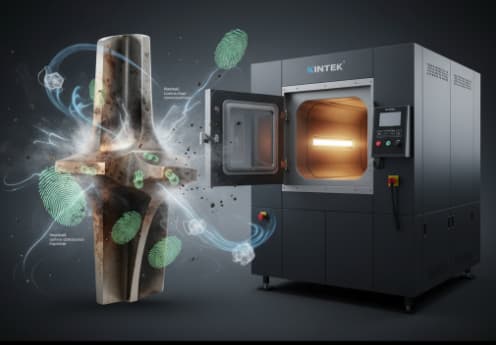
  • Residual Impurities: Incomplete pre-cleaning leaves a minefield of contaminants. Fingerprints contain salts and grease. Cutting fluids leave behind oils. At high temperatures, these residues carbonize or react with the alloy, creating black films and localized corrosion spots.

Saboteur #4: The Equipment Itself

Your furnace can become an unwilling accomplice.

  • Furnace Leaks: Aging seals or improperly closed doors are open invitations for air to seep into the furnace chamber, constantly feeding oxygen to your process and undermining any atmospheric control.
  • Internal Contamination: Over time, furnace components like heating elements can degrade. An oxidizing molybdenum foil heating element, for example, can volatilize and deposit gray MoO₃ onto your part's surface, causing contamination.

From Reactive Fixes to Proactive Control

The breakthrough against discoloration isn't a magical new alloy; it's a systematic victory over these four saboteurs. Engineers who achieve consistent, flawless results don't just hope for the best. They wage a deliberate campaign of control, ensuring that every variable is managed with precision.

They achieve this by moving from a reactive mindset ("What caused this discoloration?") to a proactive one ("How do we build a process where discoloration is impossible?"). This requires eliminating uncertainty at every stage—from part cleaning to atmospheric purity to thermal profiling. But this level of control is impossible without the right tools.

The Equipment That Makes Predictable Outcomes Possible
Customized high-temperature furnace

Achieving this level of process integrity isn't about guesswork; it's about deploying laboratory equipment designed for precision and reliability. This is where the theory of heat treatment meets the reality of execution.

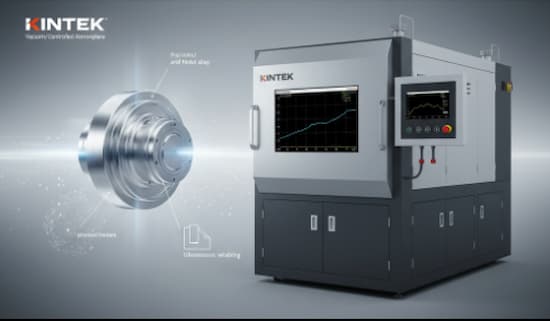
  • To defeat atmospheric saboteurs: You need more than just a box that gets hot. A high-integrity vacuum or controlled-atmosphere furnace is essential. The key is verifiable low leak rates to starve the oxidation reaction of oxygen and moisture. This is complemented by high-purity gas delivery systems and purifiers that ensure the inert gas you introduce isn't a source of contamination itself.

  • To master process parameters: Repeatability is paramount. Modern furnaces with programmable, high-precision temperature controllers allow you to execute exact heating, soaking, and cooling profiles every single time, eliminating the variability that leads to inconsistent oxide layers.

  • To guarantee surface cleanliness: The foundation of a good result is a perfectly clean surface. Professional-grade ultrasonic cleaners, paired with appropriate laboratory-grade cleaning consumables, are the only way to reliably remove the microscopic oils and salts that manual cleaning can miss.

By investing in equipment that provides this fundamental level of control, you are not just buying a furnace or a cleaner. You are acquiring the capability to eliminate the root causes of discoloration and failure.

From Consistent Parts to a Competitive Edge

Eliminating discoloration is more than just an aesthetic victory. It's a direct indicator of a well-controlled process, which translates into tangible business value. A process that consistently prevents discoloration also prevents the underlying issues of intergranular corrosion and hydrogen embrittlement. This means higher component reliability, dramatically reduced scrap and rework rates, and faster delivery of critical parts for industries like aerospace, medical, and energy. Ultimately, mastering the heat treatment process isn't just about technical excellence—it's about building a reputation for uncompromising quality and creating a durable competitive advantage.

Every failed part tells a story about a process that has fallen short. If you're tired of unpredictable outcomes and want to transform your heat treatment process from a source of problems into a pillar of reliability, it's time to look at the tools you're using. Whether you're struggling with discoloration, aiming for specific mechanical properties, or scaling your production, the root cause of success or failure often lies in the precision of your process control. Our specialists can help you diagnose the unique challenges in your workflow and identify the right equipment to overcome them. To build a more predictable and profitable heat treatment process.
Related Products

Related Articles

Related Products

Vacuum Heat Treat Furnace with Ceramic Fiber Liner

Vacuum Heat Treat Furnace with Ceramic Fiber Liner

Vacuum furnace with polycrystalline ceramic fiber insulation liner for excellent heat insulation and uniform temperature field. Choose from 1200℃ or 1700℃ max. working temperature with high vacuum performance and precise temperature control.

1400℃ Controlled Atmosphere Furnace with Nitrogen and Inert Atmosphere

1400℃ Controlled Atmosphere Furnace with Nitrogen and Inert Atmosphere

Achieve precise heat treatment with KT-14A controlled atmosphere furnace. Vacuum sealed with a smart controller, it's ideal for lab and industrial use up to 1400℃.

1200℃ Controlled Atmosphere Furnace Nitrogen Inert Atmosphere Furnace

1200℃ Controlled Atmosphere Furnace Nitrogen Inert Atmosphere Furnace

Discover our KT-12A Pro Controlled atmosphere furnace - high precision, heavy duty vacuum chamber, versatile smart touch screen controller, and excellent temperature uniformity up to 1200C. Ideal for both laboratory and industrial application.

1700℃ Controlled Atmosphere Furnace Nitrogen Inert Atmosphere Furnace

1700℃ Controlled Atmosphere Furnace Nitrogen Inert Atmosphere Furnace

KT-17A Controlled atmosphere furnace: 1700℃ heating, vacuum sealing technology, PID temperature control, and versatile TFT smart touch screen controller for laboratory and industrial use.

Vacuum Heat Treat Sintering Brazing Furnace

Vacuum Heat Treat Sintering Brazing Furnace

A vacuum brazing furnace is a type of industrial furnace used for brazing, a metalworking process that joins two pieces of metal using a filler metal that melts at a lower temperature than the base metals. Vacuum brazing furnaces are typically used for high-quality applications where a strong, clean joint is required.

Vertical Laboratory Quartz Tube Furnace Tubular Furnace

Vertical Laboratory Quartz Tube Furnace Tubular Furnace

Elevate your experiments with our Vertical Tube Furnace. Versatile design allows for operation under various environments and heat treatment applications. Order now for precise results!

Molybdenum Vacuum Heat Treat Furnace

Molybdenum Vacuum Heat Treat Furnace

Discover the benefits of a high-configuration molybdenum vacuum furnace with heat shield insulation. Ideal for high-purity, vacuum environments like sapphire crystal growth and heat treatment.

Vacuum Heat Treat and Molybdenum Wire Sintering Furnace for Vacuum Sintering

Vacuum Heat Treat and Molybdenum Wire Sintering Furnace for Vacuum Sintering

A vacuum molybdenum wire sintering furnace is a vertical or bedroom structure, which is suitable for withdrawal, brazing, sintering and degassing of metal materials under high vacuum and high temperature conditions. It is also suitable for dehydroxylation treatment of quartz materials.

1400℃ Laboratory Quartz Tube Furnace with Alumina Tube Tubular Furnace

1400℃ Laboratory Quartz Tube Furnace with Alumina Tube Tubular Furnace

Looking for a tube furnace for high-temperature applications? Our 1400℃ Tube Furnace with Alumina Tube is perfect for research and industrial use.

Vacuum Heat Treat and Sintering Furnace with 9MPa Air Pressure

Vacuum Heat Treat and Sintering Furnace with 9MPa Air Pressure

The air pressure sintering furnace is a high-tech equipment commonly used for the sintering of advanced ceramic materials. It combines vacuum sintering and pressure sintering techniques to achieve high-density and high-strength ceramics.

2200 ℃ Tungsten Vacuum Heat Treat and Sintering Furnace

2200 ℃ Tungsten Vacuum Heat Treat and Sintering Furnace

Experience the ultimate refractory metal furnace with our Tungsten vacuum furnace. Capable of reaching 2200℃, perfect for sintering advanced ceramics and refractory metals. Order now for high-quality results.

1700℃ Laboratory Quartz Tube Furnace with Alumina Tube Tubular Furnace

1700℃ Laboratory Quartz Tube Furnace with Alumina Tube Tubular Furnace

Looking for a high-temperature tube furnace? Check out our 1700℃ Tube Furnace with Alumina Tube. Perfect for research and industrial applications up to 1700C.

Laboratory Quartz Tube Furnace Tubular RTP Heating Furnace

Laboratory Quartz Tube Furnace Tubular RTP Heating Furnace

Get lightning-fast heating with our RTP Rapid Heating Tube Furnace. Designed for precise, high-speed heating and cooling with convenient sliding rail and TFT touch screen controller. Order now for ideal thermal processing!

High Pressure Laboratory Vacuum Tube Furnace Quartz Tubular Furnace

High Pressure Laboratory Vacuum Tube Furnace Quartz Tubular Furnace

KT-PTF High Pressure Tube Furnace: Compact split tube furnace with strong positive pressure resistance. Working temp up to 1100°C and pressure up to 15Mpa. Also works under controller atmosphere or high vacuum.

High Temperature Muffle Oven Furnace for Laboratory Debinding and Pre Sintering

High Temperature Muffle Oven Furnace for Laboratory Debinding and Pre Sintering

KT-MD High temperature debinding and pre-sintering furnace for ceramic materials with various molding processes. Ideal for electronic components such as MLCC and NFC.

1800℃ Muffle Oven Furnace for Laboratory

1800℃ Muffle Oven Furnace for Laboratory

KT-18 muffle furnace with Japan Al2O3 polycrystalline fibe and Silicon Molybdenum heating element, up to 1900℃, PID temperature control and 7" smart touch screen. Compact design, low heat loss, and high energy efficiency. Safety interlock system and versatile functions.

Laboratory Vacuum Tilt Rotary Tube Furnace Rotating Tube Furnace

Laboratory Vacuum Tilt Rotary Tube Furnace Rotating Tube Furnace

Discover the versatility of Laboratory Rotary Furnace: Ideal for calcination, drying, sintering, and high-temperature reactions. Adjustable rotating and tilting functions for optimal heating. Suitable for vacuum and controlled atmosphere environments. Learn more now!

Laboratory Muffle Oven Furnace Bottom Lifting Muffle Furnace

Laboratory Muffle Oven Furnace Bottom Lifting Muffle Furnace

Efficiently produce batches with excellent temperature uniformity using our Bottom Lifting Furnace. Features two electric lifting stages and advanced temperature control up to 1600℃.

Small Vacuum Heat Treat and Tungsten Wire Sintering Furnace

Small Vacuum Heat Treat and Tungsten Wire Sintering Furnace

The small vacuum tungsten wire sintering furnace is a compact experimental vacuum furnace specially designed for universities and scientific research institutes. The furnace features a CNC welded shell and vacuum piping to ensure leak-free operation. Quick-connect electrical connections facilitate relocation and debugging, and the standard electrical control cabinet is safe and convenient to operate.

1200℃ Split Tube Furnace with Quartz Tube Laboratory Tubular Furnace

1200℃ Split Tube Furnace with Quartz Tube Laboratory Tubular Furnace

KT-TF12 split tube furnace: high-purity insulation, embedded heating wire coils, and max. 1200C. Widely used for new materials and chemical vapour deposition.


Leave Your Message