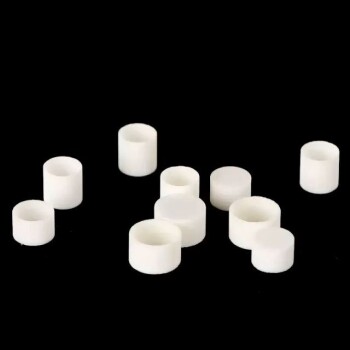
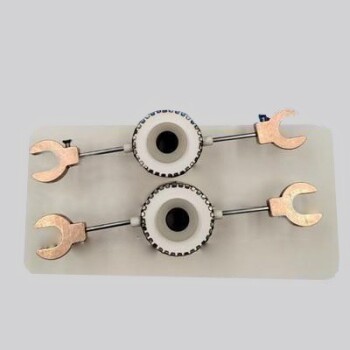
It’s a familiar, sinking feeling for anyone working with high-temperature processes. A critical run is underway, and then, a sudden alarm or an erratic reading on the monitor. A quick inspection confirms your fear: a cracked process tube, a melted sensor sheath, or a discolored, contaminated sample. Weeks of work, valuable materials, and tight deadlines are instantly compromised. You're left wondering, "What went wrong this time?"
The Expensive Cycle of 'Repair and Repeat'
If this scenario sounds familiar, you're not alone. Laboratories and industrial facilities worldwide are caught in a frustrating and expensive cycle. A component fails, it gets replaced, and the process runs again—until the next inevitable failure.
In response, teams often resort to a few common, but ultimately flawed, strategies:
- The "One-Off" Gamble: You replace the broken part with an identical one, hoping the last failure was just a fluke or a defective unit.
- The "Slight Upgrade": You switch to a slightly more expensive specialty metal alloy, hoping a higher melting point will solve the problem.
- The "Compromise": You dial back the process parameters—lowering the maximum temperature or extending ramp-up times—sacrificing ideal conditions for a fragile sense of stability.
These approaches don't just fail to solve the problem; they create significant business consequences. Project timelines are delayed, R&D budgets are consumed by replacement parts and wasted materials, and the unreliability of the process casts doubt on data integrity and final product quality. You're spending more time firefighting than innovating.
It's Not Bad Luck, It's Bad Materials: The Physics of Failure
Here is the crucial turning point: These are not random equipment failures. They are the predictable results of a fundamental material science mismatch. The problem isn’t your furnace; it’s what you’re putting inside it.
Most conventional materials, including many metals, are simply not built for extreme environments. Here's why they fail:
- Thermal Weakness: At high temperatures, the atoms in a metal lattice vibrate intensely, loosening the bonds that give the material its structure. It softens, warps, and eventually melts.
- Electrical Conductivity: Heat excites electrons. Even materials that are poor conductors at room temperature can become conductive enough at 1000°C to cause electrical shorts, endangering sensitive electronics and creating safety hazards.
- Chemical Reactivity: Extreme heat acts as a catalyst. Metals will readily oxidize or react with chemicals in the atmosphere or the sample itself, leading to component degradation and sample contamination.
This is why replacing a failed metal tube with another metal tube—even a "better" one—is like using a thicker paper towel to fix a persistent leak. You might delay the failure, but you haven't addressed the root cause. You're fighting physics, and physics always wins.
Engineered for Extremes: The Ceramic Solution
To permanently break this cycle, you don't need a slightly stronger part. You need a material that operates on a completely different set of principles—one engineered from the atomic level to be indifferent to extreme conditions.
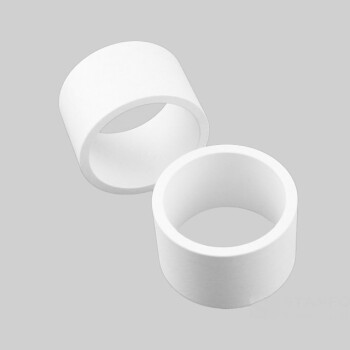
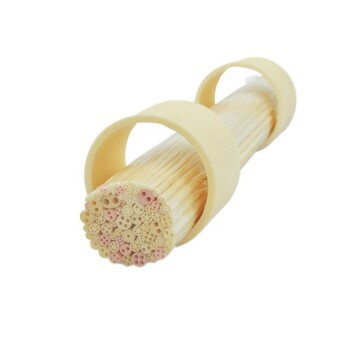
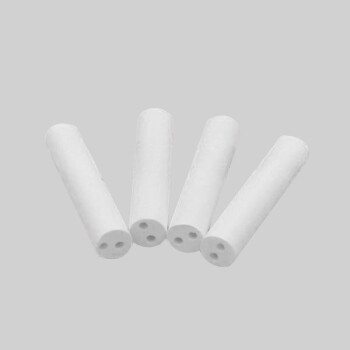
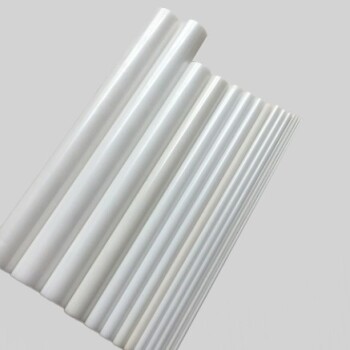
This is the core purpose of high-performance ceramic tubes. Their stability isn't an accident; it's a direct result of their fundamental structure. Unlike the loose metallic bonds in metals, the powerful ionic and covalent bonds in ceramics lock atoms into a rigid, stable lattice.
This inherent stability is what makes them the ideal tool for the job, directly solving the root causes of failure:
-
Problem: Structural failure from heat.
- Ceramic Solution: Materials like Alumina and Zirconia maintain their strength and shape at temperatures far beyond the melting point of steel. They provide a stable, unchanging environment for your process.
-
Problem: Electrical shorts at high temperatures.
- Ceramic Solution: Ceramics are exceptional electrical insulators, and they stay insulators even when red-hot. They allow you to safely pass wiring for heating elements or sensors through a furnace wall without fear of short circuits.
-
Problem: Contamination and chemical attack.
- Ceramic Solution: High-purity ceramics are chemically inert. They won't react with your samples, corrode in aggressive atmospheres, or leach impurities into your process, ensuring the integrity of your data and the quality of your product.
A KINTEK ceramic tube isn't just another replacement part. It is a solution designed from a deep understanding of why other materials fail.
From Firefighting to Innovation: What's Possible with Unfailing Reliability?
When you stop worrying about your equipment failing, a new world of possibilities opens up. Resolving this chronic issue isn't just about reducing costs; it's about unleashing potential.
With a system built on the reliability of the right ceramic components, you can now:
- Run More Ambitious Processes: Push your experiments to higher temperatures and for longer durations to explore new frontiers in material science or process chemistry.
- Achieve Unshakeable Consistency: Drastically improve production yields by ensuring every run occurs under the exact same stable, clean conditions.
- Trust Your Data: Eliminate contamination as a variable and rely on temperature readings that are accurate because the sensor is properly protected.
- Accelerate Your Timeline: Reallocate the time and budget once spent on repairs and re-runs toward actual research, development, and innovation.
Solving chronic equipment failure is the first step toward more ambitious research and more efficient production. If you're ready to move beyond temporary fixes and build a truly robust high-temperature system, our team is here to help. We can help you analyze your specific process conditions—from temperature ramps to chemical exposure—to specify the exact material that will turn a point of failure into a pillar of strength. Let's discuss your project's unique challenges. Contact Our Experts.
Visual Guide

Related Products
- Boron Nitride (BN) Ceramic Tube
- High Temperature Alumina (Al2O3) Furnace Tube for Engineering Advanced Fine Ceramics
- High Temperature Aluminum Oxide (Al2O3) Protective Tube for Engineering Advanced Fine Ceramics
- Hexagonal Boron Nitride HBN Thermocouple Protection Tube
- Precision Machined Yttrium Stabilized Zirconia Ceramic Rod for Engineering Advanced Fine Ceramics
Related Articles
- Why Your Ceramic Furnace Tubes Keep Cracking—And How to Choose the Right One
- Hexagonal Boron Nitride: Enhancing Performance in Composite Ceramic Materials
- Guidelines for the Use of Boron Nitride Crucibles
- The Silent Partner: Why Your Furnace Tube Defines Your Experiment
- Cracked Tubes, Contaminated Samples? Your Furnace Tube Is The Hidden Culprit