Knowledge thermal elements Do heating elements lose power over time? The science behind inevitable performance decline
Author avatar

Tech Team · Kintek Solution

Updated 3 months ago

Do heating elements lose power over time? The science behind inevitable performance decline


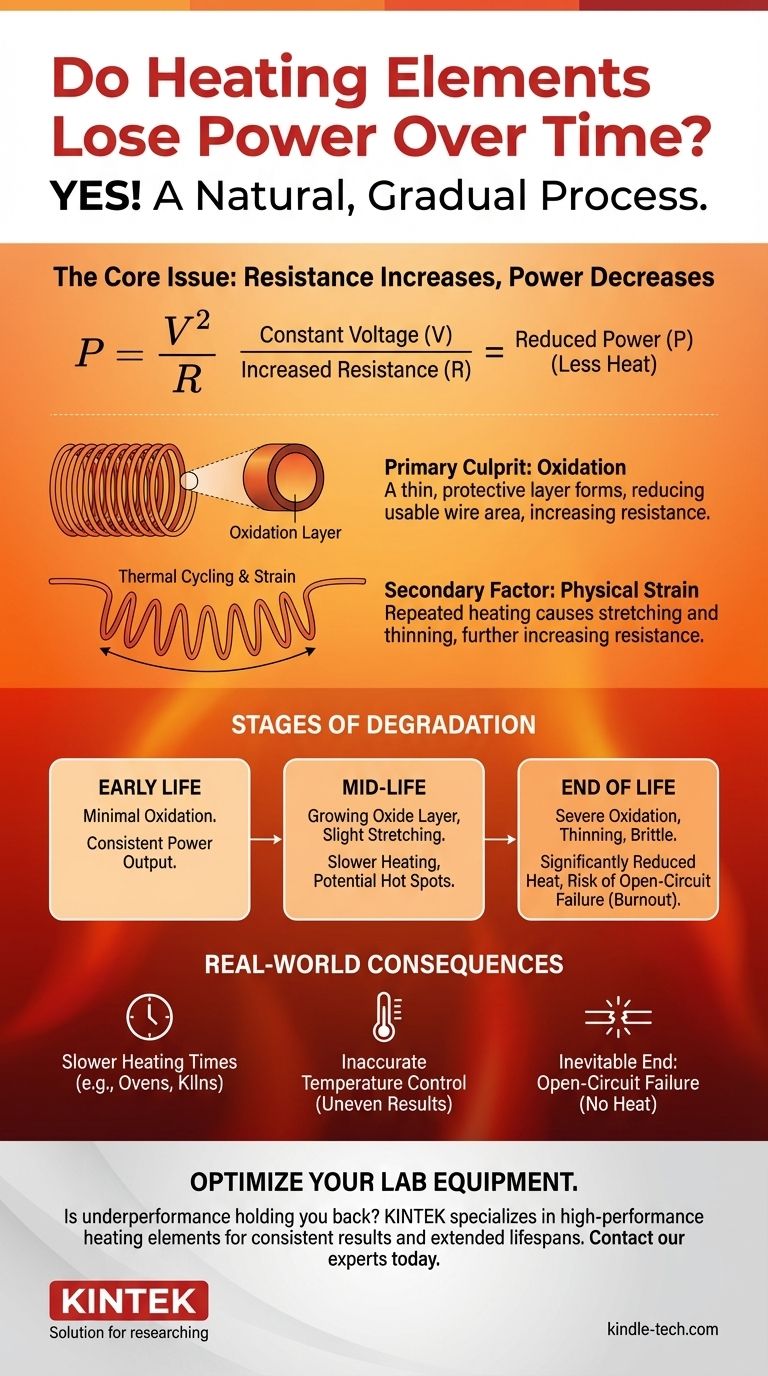
Yes, heating elements gradually lose power over their entire lifespan. This is not a defect but a natural and expected consequence of how they work. The process is slow and often goes unnoticed for years, but it is a fundamental aspect of their design and material science.

The core issue is that the element's electrical resistance increases over time. Because the voltage from your wall outlet is constant, Ohm's law dictates that an increase in resistance will inevitably lead to a decrease in power output, which you experience as less heat.
Do heating elements lose power over time? The science behind inevitable performance decline

The Physics of an Aging Heating Element

To understand why power drops, we must first look at the physical changes happening to the element's wire, which is typically made from a material like Nichrome (a nickel-chromium alloy).

The Role of Resistance

A heating element works by converting electrical energy into heat. Its inherent electrical resistance is what makes this conversion possible. When new, this resistance is at a specific, engineered value to produce the desired amount of heat.

The Primary Culprit: Oxidation

Every time the element heats up, it reacts with oxygen in the air. This process, called oxidation, forms a thin, protective layer on the wire's surface.

While this layer protects the core metal from rapid decay, it slowly builds up over countless heating and cooling cycles. This effectively reduces the usable cross-sectional area of the metal wire, forcing the electrical current through a narrower path.

The Secondary Factor: Physical Strain

The reference to "elongation of the loops" points to a mechanical process. Extreme temperature changes cause the element to expand when hot and contract when cool.

Over time, this thermal cycling, combined with gravity, can cause the coiled wire to stretch, sag, or "creep." This stretching also thins the wire, further contributing to the problem.

How This Reduces Power Output

A thinner, more constricted wire has a higher electrical resistance. The relationship between power, voltage, and resistance is defined by the formula: Power = Voltage² / Resistance.

Since the voltage supplied by your electrical system is constant (e.g., 120V or 240V), if the Resistance (R) on the bottom of the equation goes up, the resulting Power (P) must go down. This directly translates to less heat production.

Understanding the Consequences of Degradation

This slow decline in power isn't just an academic concept; it has clear, real-world effects on any appliance that uses a resistive heating element.

Slower Heating Times

This is the most common symptom. An oven that used to preheat in 10 minutes might now take 15. A kiln may struggle to reach its target temperature, or a water heater may take longer to recover after use.

Inaccurate Temperature Control

As the element ages, it may not degrade uniformly. Some spots may oxidize or stretch more than others, leading to hot spots and cold spots. This can result in uneven cooking in an oven or inconsistent results in a kiln.

The Inevitable End: Open-Circuit Failure

Eventually, a spot on the wire becomes so thin and brittle from oxidation that it simply breaks. This creates an open circuit, interrupting the flow of electricity entirely.

At this point, the element is "burned out" and produces no heat whatsoever. This is the "ultimate failure" that marks the end of the element's normal life.

Making the Right Choice for Your Goal

Recognizing that heating elements are consumable parts allows you to plan for their eventual failure instead of being surprised by it.

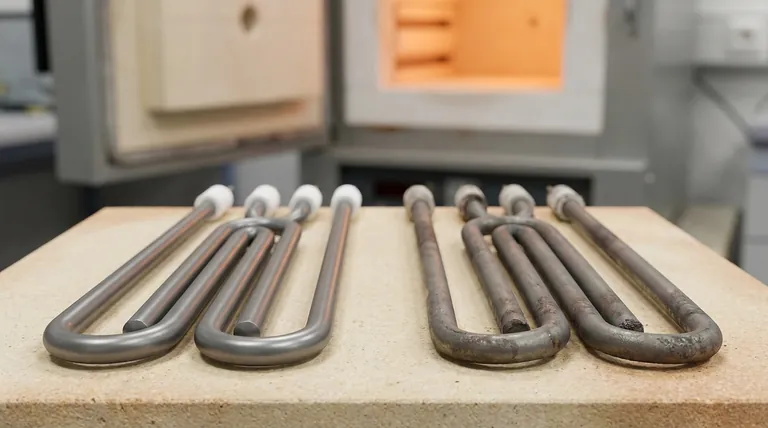
  • If your primary focus is diagnosing a slow appliance: A significantly longer heat-up time is a classic symptom of an aging element nearing the end of its life. Visually inspect it for sagging, bulging, cracks, or a dull, chalky appearance instead of a metallic one.
  • If your primary focus is maintaining critical equipment (like a kiln): Proactively replace elements based on a maintenance schedule (e.g., usage hours) rather than waiting for an in-process failure that could ruin your work.
  • If your primary focus is repairing an appliance: Replacing the heating element is often a straightforward and cost-effective repair that can restore the appliance to its original performance.

Understanding this degradation process transforms a frustrating failure into a predictable maintenance event.

Summary Table:

Stage Primary Cause Effect on Performance
Early Life Minimal oxidation Consistent power output
Mid-Life Growing oxide layer, slight stretching Slower heating times, potential hot spots
End of Life Severe oxidation, wire thinning Significantly reduced heat, risk of burnout

Is your lab equipment underperforming due to aging heating elements? KINTEK specializes in high-performance lab equipment and consumables, including durable heating elements designed for consistent results. Our experts can help you select the right components to maintain precise temperature control and extend your equipment's lifespan. Contact us today to optimize your laboratory's heating systems!

Visual Guide
Do heating elements lose power over time? The science behind inevitable performance decline Visual Guide

Related Products

People Also Ask

Related Products

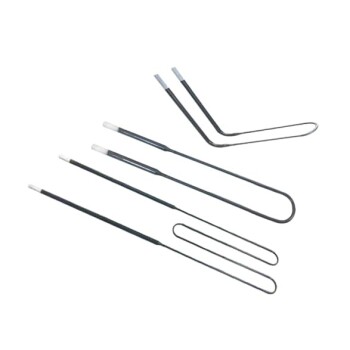
Molybdenum Disilicide (MoSi2) Thermal Elements Electric Furnace Heating Element

Molybdenum Disilicide (MoSi2) Thermal Elements Electric Furnace Heating Element

Discover the power of Molybdenum Disilicide (MoSi2) Heating Element for high-temperature resistance. Unique oxidation resistance with stable resistance value. Learn more about its benefits now!

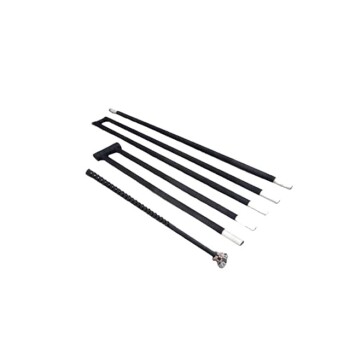
Silicon Carbide SiC Thermal Heating Elements for Electric Furnace

Silicon Carbide SiC Thermal Heating Elements for Electric Furnace

Experience the advantages of Silicon Carbide (SiC) Heating Element: Long service life, high corrosion and oxidation resistance, fast heating speed, and easy maintenance. Learn more now!

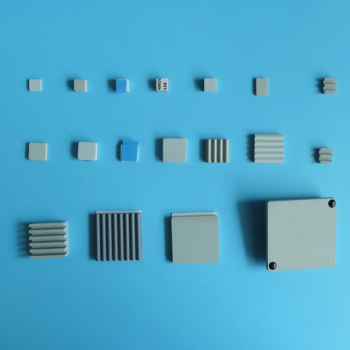
Engineering Advanced Fine Ceramics Aluminum Oxide Al2O3 Heat Sink for Insulation

Engineering Advanced Fine Ceramics Aluminum Oxide Al2O3 Heat Sink for Insulation

The hole structure of the ceramic heat sink increases the heat dissipation area in contact with the air, which greatly enhances the heat dissipation effect, and the heat dissipation effect is better than that of super copper and aluminum.

Silicon Carbide (SIC) Ceramic Sheet Flat Corrugated Heat Sink for Engineering Advanced Fine Ceramics

Silicon Carbide (SIC) Ceramic Sheet Flat Corrugated Heat Sink for Engineering Advanced Fine Ceramics

Silicon carbide (sic) ceramic heat sink not only does not generate electromagnetic waves, but also can isolate electromagnetic waves and absorb part of electromagnetic waves.

Double Plate Heating Press Mold for Lab

Double Plate Heating Press Mold for Lab

Discover precision in heating with our Double Plate Heating Mold, featuring high-quality steel and uniform temperature control for efficient lab processes. Ideal for various thermal applications.

10L Heating Chilling Circulator Cooling Water Bath Circulator for High and Low Temperature Constant Temperature Reaction

10L Heating Chilling Circulator Cooling Water Bath Circulator for High and Low Temperature Constant Temperature Reaction

Experience efficient lab performance with KinTek KCBH 10L Heating Chilling Circulator. Its all-in-one design offers reliable heating, chilling, and circulating functions for industrial and lab use.

50L Heating Chilling Circulator Cooling Water Bath Circulator for High and Low Temperature Constant Temperature Reaction

50L Heating Chilling Circulator Cooling Water Bath Circulator for High and Low Temperature Constant Temperature Reaction

Experience versatile heating, chilling, and circulating capabilities with our KinTek KCBH 50L Heating Chilling Circulator. Ideal for labs and industrial settings, with efficient and reliable performance.

High Temperature Constant Temperature Heating Circulator Water Bath Chiller Circulator for Reaction Bath

High Temperature Constant Temperature Heating Circulator Water Bath Chiller Circulator for Reaction Bath

Efficient and reliable, KinTek KHB Heating Circulator is perfect for your lab needs. With a max. heating temperature of up to 300℃, it features accurate temperature control and fast heating.

5L Heating Chilling Circulator Cooling Water Bath Circulator for High and Low Temperature Constant Temperature Reaction

5L Heating Chilling Circulator Cooling Water Bath Circulator for High and Low Temperature Constant Temperature Reaction

KinTek KCBH 5L Heating Chilling Circulator - Ideal for labs and industrial conditions with multi-functional design and reliable performance.

100L Heating Chilling Circulator Cooling Water Bath Circulator for High and Low Temperature Constant Temperature Reaction

100L Heating Chilling Circulator Cooling Water Bath Circulator for High and Low Temperature Constant Temperature Reaction

Get all-in-one heating, chilling, and circulating capabilities with our KinTek KCBH 80L Heating Chilling Circulator. High efficiency, reliable performance for labs and industrial applications.

30L Heating Chilling Circulator Cooling Water Bath Circulator for High and Low Temperature Constant Temperature Reaction

30L Heating Chilling Circulator Cooling Water Bath Circulator for High and Low Temperature Constant Temperature Reaction

Get versatile lab performance with KinTek KCBH 30L Heating Chilling Circulator. With max. heating temp of 200℃ and max. chilling temp of -80℃, it's perfect for industrial needs.

20L Heating Chilling Circulator Cooling Water Bath Circulator for High and Low Temperature Constant Temperature Reaction

20L Heating Chilling Circulator Cooling Water Bath Circulator for High and Low Temperature Constant Temperature Reaction

Maximize lab productivity with KinTek KCBH 20L Heating Chilling Circulator. Its all-in-one design offers reliable heating, chilling, and circulating functions for industrial and lab use.

Molybdenum Vacuum Heat Treat Furnace

Molybdenum Vacuum Heat Treat Furnace

Discover the benefits of a high-configuration molybdenum vacuum furnace with heat shield insulation. Ideal for high-purity, vacuum environments like sapphire crystal growth and heat treatment.

Automatic High Temperature Heated Hydraulic Press Machine with Heated Plates for Lab

Automatic High Temperature Heated Hydraulic Press Machine with Heated Plates for Lab

The High Temperature Hot Press is a machine specifically designed for pressing, sintering and processing materials in a high temperature environment. It is capable of operating in the range of hundreds of degrees Celsius to thousands of degrees Celsius for a variety of high temperature process requirements.

Manual High Temperature Heated Hydraulic Press Machine with Heated Plates for Lab

Manual High Temperature Heated Hydraulic Press Machine with Heated Plates for Lab

The High Temperature Hot Press is a machine specifically designed for pressing, sintering and processing materials in a high temperature environment. It is capable of operating in the range of hundreds of degrees Celsius to thousands of degrees Celsius for a variety of high temperature process requirements.

Laboratory Rapid Thermal Processing (RTP) Quartz Tube Furnace

Laboratory Rapid Thermal Processing (RTP) Quartz Tube Furnace

Get lightning-fast heating with our RTP Rapid Heating Tube Furnace. Designed for precise, high-speed heating and cooling with convenient sliding rail and TFT touch screen controller. Order now for ideal thermal processing!

Evaporation Boat for Organic Matter

Evaporation Boat for Organic Matter

The evaporation boat for organic matter is an important tool for precise and uniform heating during the deposition of organic materials.

Reference Electrode Calomel Silver Chloride Mercury Sulfate for Laboratory Use

Reference Electrode Calomel Silver Chloride Mercury Sulfate for Laboratory Use

Find high-quality reference electrodes for electrochemical experiments with complete specifications. Our models offer resistance to acid and alkali, durability, and safety, with customization options available to meet your specific needs.

Laboratory Scientific Electric Heating Blast Drying Oven

Laboratory Scientific Electric Heating Blast Drying Oven

The desktop fast autoclave sterilizer is a compact and reliable device used for rapid sterilization of medical, pharmaceutical, and research items.

Electric Rotary Kiln Continuous Working Small Rotary Furnace Heating Pyrolysis Plant

Electric Rotary Kiln Continuous Working Small Rotary Furnace Heating Pyrolysis Plant

Efficiently calcine and dry bulk powder and lump fluid materials with an electric heating rotary furnace. Ideal for processing lithium ion battery materials and more.


Leave Your Message