Chemical Vapor Deposition (CVD) processes are primarily categorized based on the activation source used to initiate the chemical reaction. The two fundamental types defined by this criteria are Thermally Activated CVD and Plasma-Enhanced CVD.
Core Takeaway: While CVD can be classified by pressure or precursor state, the most critical distinction lies in how energy is applied to drive the reaction. This choice dictates the processing temperature and ultimately determines which substrate materials can be safely used without damage.
Categorization by Activation Source
This is the primary method of classification. It differentiates processes based on how the energy required to break chemical bonds is supplied.
Thermally Activated CVD
This is the traditional method where high temperatures are used to drive the chemical reaction. The heat energy activates the precursor gases, causing them to react and deposit a film on the substrate.
Plasma-Enhanced CVD (PECVD)
In this category, electrical energy is used to generate a plasma (a partially ionized gas). The high-energy electrons in the plasma activate the precursor gases, allowing the deposition process to occur at significantly lower temperatures than thermal methods.
Categorization by Operating Conditions
Beyond the energy source, industry professionals often categorize CVD based on the pressure environment, as this heavily influences film uniformity and deposition rates.
Atmospheric Pressure CVD (APCVD)
These processes operate at normal atmospheric pressure. They do not require complex vacuum systems, allowing for high deposition rates and simpler equipment setups.
Low-Pressure CVD (LPCVD)
Operating at sub-atmospheric pressures reduces unwanted gas-phase reactions. This generally results in films with better uniformity and step coverage compared to atmospheric processes.
Ultrahigh Vacuum CVD (UHVCVD)
These processes occur at extremely low pressures (typically below 10⁻⁶ Pa). This is used for specialized applications requiring high purity and precise control over the molecular growth of the film.
Additional Classification Parameters
Secondary classifications exist to describe specific hardware configurations or the physical state of the chemicals used.
Physical Characteristics of Vapor
Processes are sometimes named by how the precursor is delivered. Aerosol-assisted CVD (AACVD) uses an aerosol mist, while Direct liquid injection CVD (DLICVD) introduces liquid precursors directly into the vaporization chamber.
Substrate Heating Method
Classifications also depend on which part of the chamber is heated. Hot wall CVD heats the entire chamber (and the substrate), whereas Cold wall CVD heats only the substrate, keeping the chamber walls cool to reduce contamination.
Understanding the Trade-offs
Selecting a CVD category involves balancing thermal budgets against film quality.
Temperature vs. Substrate Integrity
Thermally Activated CVD generally yields dense, high-quality films but requires high temperatures that can melt or damage sensitive substrates. PECVD solves the heat problem but may introduce plasma damage or different film stoichiometries.
Rate vs. Uniformity
APCVD offers speed but struggles with uniformity across large wafers. LPCVD sacrifices deposition speed and requires expensive vacuum pumps to achieve the superior uniformity required for modern microelectronics.
Making the Right Choice for Your Goal
To select the correct CVD process, you must prioritize your project's limiting factors.
- If your primary focus is protecting temperature-sensitive substrates: Choose Plasma-Enhanced CVD (PECVD) to deposit films without exceeding the thermal budget of the underlying material.
- If your primary focus is film purity and uniform step coverage: Choose Low-Pressure CVD (LPCVD), as the vacuum environment minimizes contamination and gas-phase reactions.
- If your primary focus is high-speed deposition with simple tooling: Choose Atmospheric Pressure CVD (APCVD) for robust coating applications where ultra-precision is secondary to throughput.
Successful CVD implementation requires matching the activation energy source to the thermal tolerance of your device architecture.
Summary Table:
| Category Type | Process Types | Key Characteristics |
|---|---|---|
| Activation Source | Thermal CVD, PECVD | Defines reaction energy & temperature limits |
| Operating Pressure | APCVD, LPCVD, UHVCVD | Influences film uniformity and deposition rates |
| Vapor Delivery | AACVD, DLICVD | Determines how precursors enter the chamber |
| Heating Method | Hot Wall, Cold Wall | Impacts contamination levels and chamber design |
Optimize Your Thin Film Deposition with KINTEK
Choosing the right CVD process is critical to the integrity of your substrates and the quality of your coatings. At KINTEK, we specialize in providing high-performance laboratory equipment tailored for advanced material research. Whether you need precise PECVD or LPCVD systems, or specialized high-temperature tube and vacuum furnaces, our technical experts are here to help you match the ideal technology to your project goals.
From CVD and MPCVD systems to essential high-purity ceramics and crucibles, we offer a comprehensive portfolio for global research facilities. Let us help you achieve superior film uniformity and thermal control.
Contact KINTEK Today for a Professional Consultation
Related Products
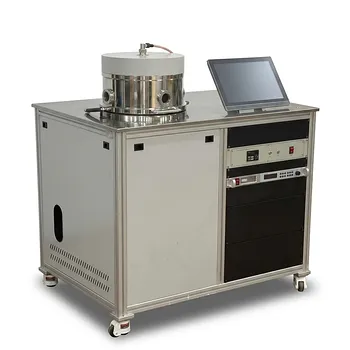
- Chemical Vapor Deposition CVD Equipment System Chamber Slide PECVD Tube Furnace with Liquid Gasifier PECVD Machine
- Customer Made Versatile CVD Tube Furnace Chemical Vapor Deposition Chamber System Equipment
- Microwave Plasma Chemical Vapor Deposition MPCVD Machine System Reactor for Lab and Diamond Growth
- 915MHz MPCVD Diamond Machine Microwave Plasma Chemical Vapor Deposition System Reactor
- Custom CVD Diamond Coating for Lab Applications
People Also Ask
- What are the advantages of chemical vapor deposition? Achieve Superior Thin Films for Your Lab
- What types of substrates are used in CVD to facilitate graphene films? Optimize Graphene Growth with the Right Catalyst
- What is the chemical vapor deposition growth process? Build Superior Thin Films from the Atom Up
- How expensive is chemical vapor deposition? Understanding the True Cost of High-Performance Coating
- Why is Chemical Vapor Deposition (CVD) equipment uniquely suited for constructing hierarchical superhydrophobic structures?