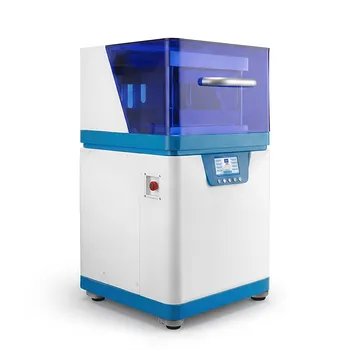
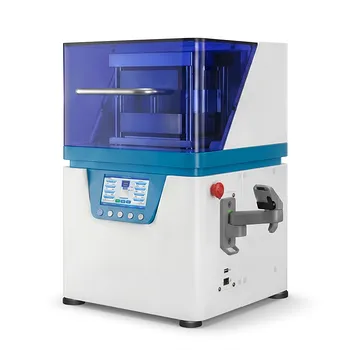
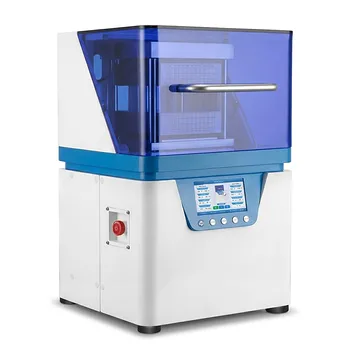
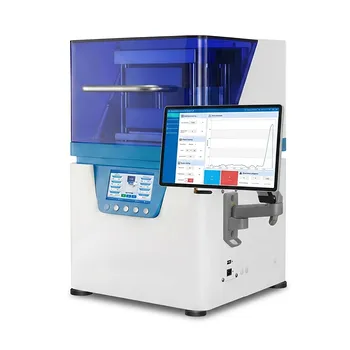
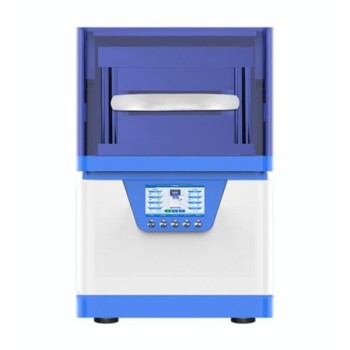
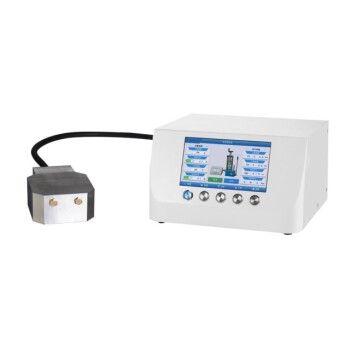
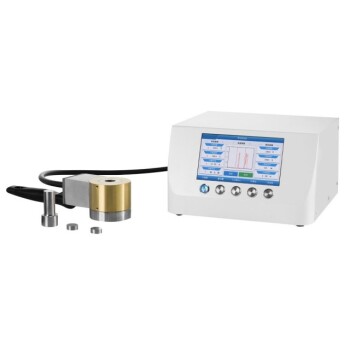
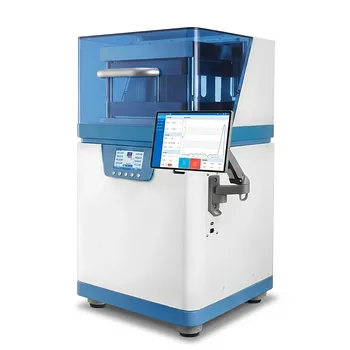
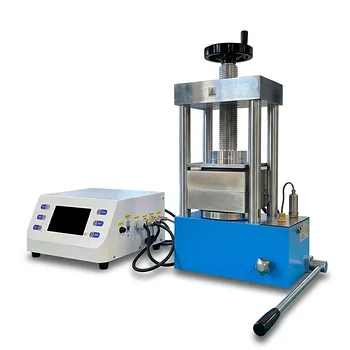
Thermal compression bonding uses a laboratory press and heating stage to create a seamless interface between copper foil and a substrate. Specifically, a laboratory press applies a uniform pressure of 100 kg/cm² while a heating stage maintains a constant 50 °C, ensuring the single-crystal copper foil adheres perfectly to a polyimide substrate. This physical bond is the critical precursor for successful transfer-free chemical vapor deposition (CVD) growth.
Utilizing precise mechanical pressure and thermal control allows for the direct integration of a metal catalyst onto a substrate, effectively bypassing the traditional, damage-prone graphene transfer process.
The Role of Thermal Compression Bonding
Achieving Intimate Contact
The primary function of the laboratory press is to eliminate any microscopic air gaps between the copper foil and the polyimide substrate. By applying 100 kg/cm² of pressure, the press forces the materials into "intimate contact," which is essential for uniform heat distribution during later stages.
The Synergistic Effect of Heat and Pressure
While the press provides the mechanical force, the heating stage maintains a steady 50 °C to facilitate the bonding process. This relatively low temperature softens the substrate interface just enough to allow the metal catalyst to seat firmly without causing thermal degradation to the polyimide.
Preparing for Transfer-Free Growth
This bonding step is a prerequisite for in-situ growth, where graphene is synthesized directly on the final substrate. By securing the copper catalyst before it enters the CVD system, researchers can ensure the graphene layer forms exactly where it is needed.
Enabling Transfer-Free CVD Integration
Eliminating the Transfer Process
In conventional graphene production, graphene is grown on metal and then "transferred" to a final substrate, a process that often introduces wrinkles and impurities. The bonded copper-substrate unit allows the growth to happen in-place, significantly improving the structural integrity of the final material.
Functionality in Multi-Zone CVD Systems
Once the copper foil is bonded, the entire assembly is placed into a multi-zone CVD system. The secure bond established by the press ensures the copper remains stable under high-temperature vacuum conditions, allowing carbon atoms to rearrange into graphene at the interface.
The Importance of Single-Crystal Copper
Using single-crystal copper foil during the bonding process is vital for high-quality results. The uniform lattice structure of the single-crystal foil acts as a superior template, guiding the graphene to grow with fewer defects than polycrystalline alternatives.
Understanding the Trade-offs and Pitfalls
Pressure Sensitivity
If the laboratory press applies less than 100 kg/cm², the bond may be insufficient, leading to delamination during the CVD process. Conversely, excessive pressure can cause mechanical deformation of the polyimide substrate, ruining the sample's dimensions.
Thermal Control Limitations
Maintaining the heating stage at exactly 50 °C is a delicate balance. If the temperature fluctuates too high, the polyimide may begin to outgas or lose its structural rigidity, which contaminates the growth environment.
Contamination Risks
The surfaces of both the copper and the substrate must be pristine before the bonding process begins. Any dust or oils trapped during the pressing stage will become permanent defects in the graphene lattice once the CVD process starts.
How to Apply This to Your Project
When utilizing thermal compression for graphene growth, your approach should vary based on your specific technical objectives:
- If your primary focus is maximizing graphene quality: Ensure you are using high-purity single-crystal copper and verify the cleanliness of the bonding surfaces to prevent lattice defects.
- If your primary focus is substrate integrity: Monitor the heating stage closely to ensure the 50 °C threshold is not exceeded, as polyimide can be sensitive to prolonged thermal stress.
- If your primary focus is process repeatability: Calibrate your laboratory press to maintain a consistent 100 kg/cm² across the entire surface area of the foil to ensure uniform bonding.
Mastering the precision of the initial bonding stage is the most effective way to ensure the success of subsequent in-situ graphene synthesis.
Summary Table:
| Component | Role in Bonding Process | Key Parameters / Benefits |
|---|---|---|
| Laboratory Press | Applies uniform mechanical force | 100 kg/cm² pressure for intimate contact |
| Heating Stage | Provides precise thermal control | Steady 50 °C to facilitate interface adhesion |
| Single-Crystal Copper | Metal catalyst & growth template | Minimizes lattice defects compared to poly-crystal |
| In-Situ Growth | Direct synthesis on final substrate | Eliminates damage-prone transfer steps |
Elevate Your Graphene Research with KINTEK
Precision is the foundation of high-quality material synthesis. At KINTEK, we specialize in providing the advanced laboratory equipment necessary for successful in-situ graphene growth and thermal compression bonding. Whether you need high-performance hydraulic presses (pellet, hot, isostatic) to achieve perfect substrate contact or sophisticated multi-zone CVD, PECVD, and vacuum furnaces for high-purity synthesis, our solutions are engineered for excellence.
By choosing KINTEK, you benefit from:
- Reliable Mechanical Control: Durable presses designed for consistent pressure application.
- Comprehensive Thermal Systems: From heating stages to high-temperature reactors and cooling solutions.
- Integrated Laboratory Supplies: A full range of consumables, including PTFE products, ceramics, and crucibles, to support your entire workflow.
Ready to eliminate wrinkles and impurities in your graphene production? Contact our technical experts today to discuss how our custom laboratory solutions can drive your next breakthrough.
References
- Liangchen Hu, Chen Xu. In Situ Growth of Graphene on Polyimide for High-Responsivity Flexible PbS–Graphene Photodetectors. DOI: 10.3390/nano13081339
This article is also based on technical information from Kintek Solution Knowledge Base .
Related Products
- Automatic Hydraulic Hot Press with 500x500mm Heating Plates and Multi Stage PLC Control for Material Sintering
- Automatic Laboratory Hot Press Machine with Heated Platens 200x200mm Program Control Dual Heating Plates
- 30T 40T Split Automatic Heated Hydraulic Press Machine with Heated Plates for Laboratory Hot Press
- Automatic Heated Hydraulic Press Machine with Heated Plates for Laboratory Hot Press
- Automatic Laboratory Hot Press Dual Plate Heating Sintering Compaction System 120x120mm
People Also Ask
- How do hydraulic presses facilitate material solidification in Low-Temperature LPS? Optimize Your Material Densification
- Why is 800 MPa required for TiNiPdCu alloy green bodies? Master High-Density Compaction for Superior Material Strength
- How does KBr pellet preparation facilitate FTIR of high-ash mud? Precision Sample Prep for Structural Analysis
- Why is an industrial hydraulic press with precision stainless steel molds used? For Uniform Mo-Fe Precursor Compacts.
- Purpose of Coaxial Ring Molds & Presses in EM Testing? Achieve Precise VNA Data & Fit