Knowledge mpcvd machine How can you tell the difference between a diamond and a CVD? The Expert's Guide to Identification
Author avatar

Tech Team · Kintek Solution

Updated 2 months ago

How can you tell the difference between a diamond and a CVD? The Expert's Guide to Identification


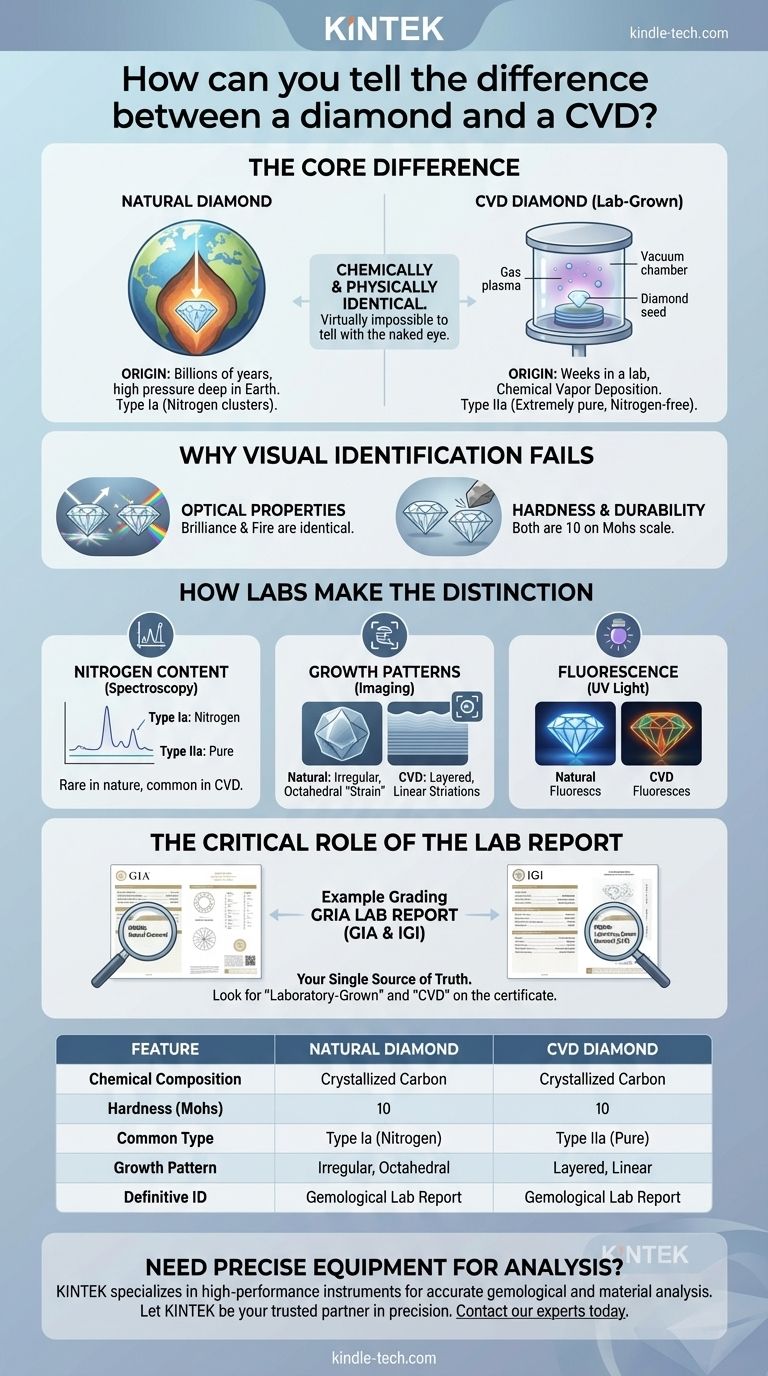
At its core, a CVD diamond is chemically and physically identical to a natural diamond, making it virtually impossible for a consumer to tell the difference with the naked eye. The only definitive way for a non-expert to distinguish them is by reviewing a grading report from a reputable gemological laboratory, such as the GIA or IGI, which will explicitly state if the diamond is laboratory-grown.

The fundamental difference between a natural diamond and a CVD lab-grown diamond is not in their substance, but in their origin. This origin story leaves behind microscopic clues in the diamond's atomic structure and growth patterns, which can only be deciphered using highly specialized laboratory equipment.

What is a CVD Diamond?

A True Diamond, Born in a Lab

First, it is crucial to understand that a CVD (Chemical Vapor Deposition) diamond is a real diamond. It is not a simulant like cubic zirconia or moissanite.

CVD diamonds share the same chemical composition (crystallized carbon) and physical properties as natural diamonds, including maximum hardness (10 on the Mohs scale), brilliance, and fire.

The CVD Growth Process

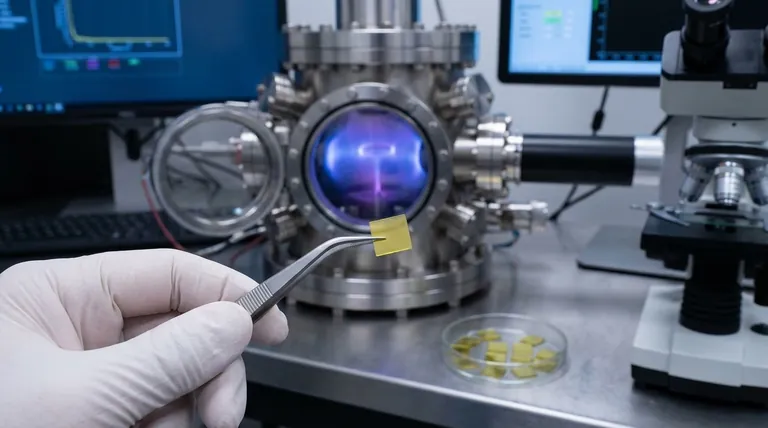
The CVD process mimics the way diamonds form in interstellar gas clouds. A thin slice of a pre-existing diamond, known as a "seed," is placed in a vacuum chamber.

This chamber is then filled with carbon-rich gases (like methane) and heated to extreme temperatures. Microwave energy ionizes the gases, causing carbon atoms to break free and deposit onto the diamond seed, growing the diamond layer by layer over several weeks.

Why Visual Identification Fails

Identical Optical Properties

Because they are chemically the same, light behaves identically whether it passes through a natural diamond or a CVD diamond. This means key characteristics like brilliance (white light reflection) and fire (dispersion of light into colors) will appear the same.

No Difference in Hardness or Durability

You cannot use a scratch test or any traditional hardness test to differentiate between them. Both will scratch any other mineral and will resist damage in the same way during daily wear.

How Gemological Labs Make the Distinction

Gemologists do not rely on standard jeweler's loupes. They use advanced spectroscopic and imaging instruments to find the subtle markers left behind by the diamond’s unique growth environment.

The Telltale Sign: Nitrogen Content

Nearly all natural diamonds (around 98%) are Type Ia, meaning they contain nitrogen atoms in small clusters. This nitrogen was present in the earth as the diamond formed over billions of years.

CVD diamonds, however, are grown in a nitrogen-free environment and are almost always Type IIa. Type IIa diamonds are exceptionally pure and rare in nature, making this a powerful primary indicator for labs.

Uncovering Growth Patterns

Natural diamonds grow in an octahedral (eight-sided) crystal shape. Under specialized imaging equipment, this creates a distinct, somewhat irregular "strain" pattern.

CVD diamonds grow in one direction, layer by layer, which can create a subtle, linear "striation" or layered pattern that is not found in natural stones.

Analyzing Fluorescence

When exposed to ultraviolet (UV) light, diamonds can fluoresce, or glow. While many natural diamonds fluoresce blue, CVD diamonds often exhibit unique fluorescence in shades of orange, yellow, or green, sometimes in very regular, geometric patterns that betray their artificial origin.

The Critical Role of the Lab Report

Your Single Source of Truth

Since specialized equipment is required for a definitive analysis, the grading report is the consumer's most important tool. Reputable labs like the GIA (Gemological Institute of America) and IGI (International Gemological Institute) invest millions in the research and technology to make this distinction.

What to Look For on the Certificate

A modern lab report will not be ambiguous. Look for clear statements in the "Origin" or "Comments" sections.

Key terms include "Laboratory-Grown Diamond" and a specific mention of the growth method, such as "CVD". The report for a natural diamond will simply state "Natural Diamond."

Making an Informed Decision

Choosing between a natural and a CVD diamond depends entirely on your personal priorities. The key is transparency.

  • If your primary focus is provenance and rarity: A natural diamond with a GIA report confirming its origin is the correct choice.
  • If your primary focus is budget and size: A CVD diamond offers the same visual beauty and durability as a natural stone, often at a significantly lower price, allowing you to get a larger stone for your budget.
  • If you are verifying a stone you already own: The only way to be certain of its origin is to submit it to a reputable gemological lab for testing.

Ultimately, understanding the science behind diamond identification empowers you to purchase with confidence, ensuring you know the precise origin of your stone.
How can you tell the difference between a diamond and a CVD? The Expert's Guide to Identification

Summary Table:

Feature Natural Diamond CVD Diamond
Chemical Composition Crystallized Carbon Crystallized Carbon
Hardness (Mohs Scale) 10 10
Common Type Type Ia (Nitrogen clusters) Type IIa (Extremely pure)
Growth Pattern Irregular, Octahedral Layered, Linear Striations
Definitive Identification Gemological Lab Report (e.g., GIA) Gemological Lab Report (e.g., IGI)

Need precise, reliable equipment for advanced material analysis?

The sophisticated techniques described in this article—like spectroscopy and imaging—require high-performance lab equipment to execute. KINTEK specializes in providing the precise, durable instruments and consumables that laboratories need for accurate gemological, chemical, and material analysis.

Let KINTEK be your trusted partner in precision. Whether you're a gemological lab, a research institution, or an industrial facility, our range of equipment is designed to deliver the accuracy and reliability your work demands.

Contact our experts today to discuss how we can support your specific laboratory needs and help you achieve unparalleled analytical results.

Visual Guide
How can you tell the difference between a diamond and a CVD? The Expert's Guide to Identification Visual Guide

Related Products

People Also Ask

Related Products

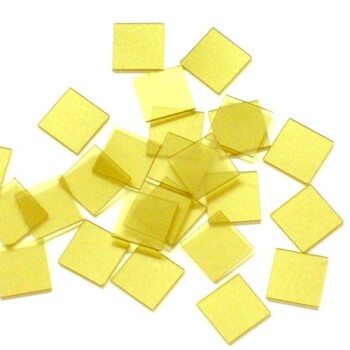
CVD Diamond for Thermal Management Applications

CVD Diamond for Thermal Management Applications

CVD diamond for thermal management: High-quality diamond with thermal conductivity up to 2000 W/mK, ideal for heat spreaders, laser diodes, and GaN on Diamond (GOD) applications.

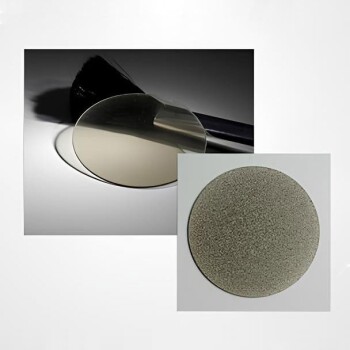
CVD Diamond Optical Windows for Lab Applications

CVD Diamond Optical Windows for Lab Applications

Diamond optical windows: exceptional broad band infrared transparency, excellent thermal conductivity & low scattering in infrared, for high-power IR laser & microwave windows applications.

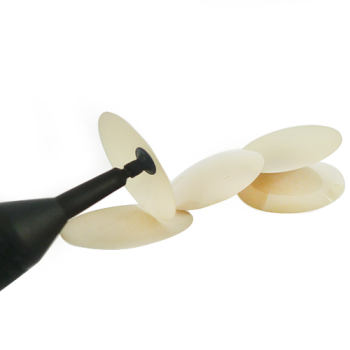
CVD Diamond Domes for Industrial and Scientific Applications

CVD Diamond Domes for Industrial and Scientific Applications

Discover CVD diamond domes, the ultimate solution for high-performance loudspeakers. Made with DC Arc Plasma Jet technology, these domes deliver exceptional sound quality, durability, and power handling.

CVD Diamond Dressing Tools for Precision Applications

CVD Diamond Dressing Tools for Precision Applications

Experience the Unbeatable Performance of CVD Diamond Dresser Blanks: High Thermal Conductivity, Exceptional Wear Resistance, and Orientation Independence.

Custom CVD Diamond Coating for Lab Applications

Custom CVD Diamond Coating for Lab Applications

CVD Diamond Coating: Superior Thermal Conductivity, Crystal Quality, and Adhesion for Cutting Tools, Friction, and Acoustic Applications

CVD Diamond Cutting Tool Blanks for Precision Machining

CVD Diamond Cutting Tool Blanks for Precision Machining

CVD Diamond Cutting Tools: Superior Wear Resistance, Low Friction, High Thermal Conductivity for Non-Ferrous Materials, Ceramics, Composites Machining

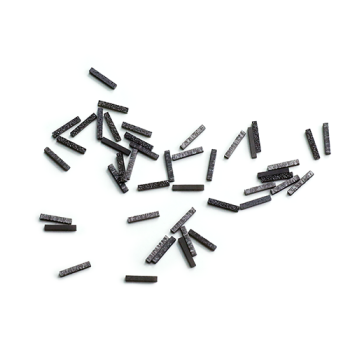
CVD Diamond Wire Drawing Die Blanks for Precision Applications

CVD Diamond Wire Drawing Die Blanks for Precision Applications

CVD diamond wire drawing die blanks: superior hardness, abrasion resistance, and applicability in wire drawing various materials. Ideal for abrasive wear machining applications like graphite processing.

Laboratory CVD Boron Doped Diamond Materials

Laboratory CVD Boron Doped Diamond Materials

CVD boron-doped diamond: A versatile material enabling tailored electrical conductivity, optical transparency, and exceptional thermal properties for applications in electronics, optics, sensing, and quantum technologies.

915MHz MPCVD Diamond Machine Microwave Plasma Chemical Vapor Deposition System Reactor

915MHz MPCVD Diamond Machine Microwave Plasma Chemical Vapor Deposition System Reactor

915MHz MPCVD Diamond Machine and its multi-crystal effective growth, the maximum area can reach 8 inches, the maximum effective growth area of single crystal can reach 5 inches. This equipment is mainly used for the production of large-size polycrystalline diamond films, the growth of long single crystal diamonds, the low-temperature growth of high-quality graphene, and other materials that require energy provided by microwave plasma for growth.

HFCVD Machine System Equipment for Drawing Die Nano-Diamond Coating

HFCVD Machine System Equipment for Drawing Die Nano-Diamond Coating

The nano-diamond composite coating drawing die uses cemented carbide (WC-Co) as the substrate, and uses the chemical vapor phase method ( CVD method for short ) to coat the conventional diamond and nano-diamond composite coating on the surface of the inner hole of the mold.

Cylindrical Resonator MPCVD Machine System Reactor for Microwave Plasma Chemical Vapor Deposition and Lab Diamond Growth

Cylindrical Resonator MPCVD Machine System Reactor for Microwave Plasma Chemical Vapor Deposition and Lab Diamond Growth

Learn about Cylindrical Resonator MPCVD Machine, the microwave plasma chemical vapor deposition method used for growing diamond gemstones and films in the jewelry and semi-conductor industries. Discover its cost-effective advantages over traditional HPHT methods.

Microwave Plasma Chemical Vapor Deposition MPCVD Machine System Reactor for Lab and Diamond Growth

Microwave Plasma Chemical Vapor Deposition MPCVD Machine System Reactor for Lab and Diamond Growth

Get high-quality diamond films with our Bell-jar Resonator MPCVD machine designed for lab and diamond growth. Discover how Microwave Plasma Chemical Vapor Deposition works for growing diamonds using carbon gas and plasma.

Multi Heating Zones CVD Tube Furnace Machine Chemical Vapor Deposition Chamber System Equipment

Multi Heating Zones CVD Tube Furnace Machine Chemical Vapor Deposition Chamber System Equipment

KT-CTF14 Multi Heating Zones CVD Furnace - Precise Temperature Control and Gas Flow for Advanced Applications. Max temp up to 1200℃, 4 channels MFC mass flow meter, and 7" TFT touch screen controller.

High Precision Diamond Wire Cutting Machine Laboratory Saw Precision Wire EDM Cutting Machine

High Precision Diamond Wire Cutting Machine Laboratory Saw Precision Wire EDM Cutting Machine

The high precision diamond wire cutting machine is a versatile and precise cutting tool designed specifically for material researchers. It utilizes a continuous diamond wire cutting mechanism, enabling precise cutting of brittle materials such as ceramics, crystals, glass, metals, rocks, and various other materials.

Precision Wire Saw Laboratory Cutting Machine with 800mm x 800mm Workbench for Diamond Single Wire Circular Small Cutting

Precision Wire Saw Laboratory Cutting Machine with 800mm x 800mm Workbench for Diamond Single Wire Circular Small Cutting

Diamond wire cutting machines are mainly used for precision cutting of ceramics, crystals, glass, metals, rocks, thermoelectric materials, infrared optical materials, composite materials, biomedical materials and other material analysis samples. Especially suitable for precision cutting of ultra-thin plates with thickness up to 0.2mm.

RF PECVD System Radio Frequency Plasma-Enhanced Chemical Vapor Deposition RF PECVD

RF PECVD System Radio Frequency Plasma-Enhanced Chemical Vapor Deposition RF PECVD

RF-PECVD is an acronym for "Radio Frequency Plasma-Enhanced Chemical Vapor Deposition." It deposits DLC (Diamond-like carbon film) on germanium and silicon substrates. It is utilized in the 3-12um infrared wavelength range.

12 Inch 24 Inch High Precision Automatic Diamond Wire Cutting Machine Laboratory Saw Precision Wire EDM Cutting Machine

12 Inch 24 Inch High Precision Automatic Diamond Wire Cutting Machine Laboratory Saw Precision Wire EDM Cutting Machine

The high precision automatic diamond wire cutting machine is a versatile cutting tool that uses a diamond wire to cut through a wide range of materials, including conductive and non-conductive materials, ceramics, glass, rocks, gems, jade, meteorites, monocrystalline silicon, silicon carbide, polycrystalline silicon, refractory bricks, epoxy boards, and ferrite bodies. It is especially suitable for cutting various brittle crystals with high hardness, high value, and easy to break.

Cylindrical Press Mold with Scale for Lab

Cylindrical Press Mold with Scale for Lab

Discover precision with our Cylindrical Press Mold. Ideal for high-pressure applications, it molds various shapes and sizes, ensuring stability and uniformity. Perfect for lab use.


Leave Your Message