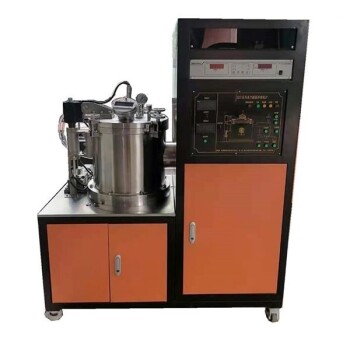
Atmosphere and vacuum furnaces protect sulfide electrolytes by isolating the material in a strictly controlled environment, typically composed of inert argon gas or a high-vacuum state. This isolation is the only barrier preventing the electrolyte from reacting with ambient moisture and oxygen during the heating process.
Core Takeaway The primary function of these furnaces is dual-purpose: ensuring safety and preserving performance. They prevent the generation of toxic hydrogen sulfide gas caused by moisture exposure while enabling the precise thermal conditions required to convert amorphous precursors into high-conductivity crystalline structures.
The Mechanism of Protection
Creating a Controlled Environment
Sulfide electrolytes are chemically unstable in standard atmospheric conditions. To counter this, specialized furnaces replace normal air with a strictly controlled inert gas, such as argon, or evacuate the chamber to create a high-vacuum environment.
Preventing Chemical Hydrolysis
The most critical protective function is blocking moisture. When sulfide materials contact moisture in the air at high temperatures, they undergo hydrolysis.
This reaction not only destroys the material but generates hydrogen sulfide ($H_2S$), a highly toxic and dangerous gas. The furnace’s sealed environment eliminates the moisture source, ensuring operator safety.
Avoiding Oxidation and Degradation
Beyond safety, the furnace prevents oxidation and structural degradation. Exposure to oxygen during thermal treatment would degrade the electrolyte, rendering it useless for battery applications.
Enabling Advanced Material Properties
Precise Crystallization Control
Protection is not just about preventing damage; it is about enabling growth. These furnaces allow for precise control of annealing temperature curves.
Achieving High Conductivity
This thermal precision drives the transformation of amorphous precursors into highly ordered structures. Specifically, it facilitates the formation of Argyrodite crystal structures, which are essential for achieving high ionic conductivity.
Critical Operational Risks
The Necessity of Strict Control
The protection offered by these furnaces is binary; it works only if the environment is strictly controlled.
Consequences of Seal Failure
If the inert atmosphere is compromised or the vacuum seal fails, the damage is immediate. You risk an immediate release of toxic gas and the complete loss of the material's conductive properties due to oxidation.
Making the Right Choice for Your Goal
Using atmosphere or vacuum furnaces is not optional for sulfide-based solid-state battery materials. However, your focus will dictate your operational priorities.
- If your primary focus is Safety: Prioritize furnace integrity and gas purity to absolutely prevent moisture ingress and the subsequent release of toxic hydrogen sulfide gas.
- If your primary focus is Performance: Focus on the furnace's ability to maintain precise annealing curves under protection to maximize crystallinity and conductivity.
Success in sulfide electrolyte synthesis relies entirely on maintaining an uncompromised thermal environment.
Summary Table:
| Feature | Atmosphere/Vacuum Furnace Protection | Benefit to Sulfide Electrolytes |
|---|---|---|
| Environment Control | Inert gas (Argon) or High-Vacuum | Prevents oxidation and material degradation. |
| Moisture Blocking | Hermetically sealed chamber | Inhibits hydrolysis and toxic $H_2S$ gas release. |
| Thermal Precision | Controlled annealing temperature curves | Promotes formation of high-conductivity Argyrodite structures. |
| Safety Integrity | Strict atmospheric isolation | Protects laboratory personnel from hazardous chemical reactions. |
Elevate Your Battery Research with KINTEK Precision
Protect your sensitive materials and achieve peak ionic conductivity with KINTEK’s advanced atmosphere and vacuum furnaces. Whether you are developing next-generation solid-state batteries or refining sulfide electrolytes, our equipment provides the rigorous environmental control necessary to prevent hydrolysis and ensure high-purity crystallization.
Why choose KINTEK?
- Advanced Furnace Solutions: Specialized tube, muffle, and vacuum furnaces designed for inert gas processing.
- Comprehensive Lab Support: From crushing and milling systems to high-pressure reactors and hydraulic pellet presses for electrolyte characterization.
- End-to-End Excellence: We provide the cooling solutions, ceramics, and crucibles required for a seamless thermal workflow.
Don’t compromise on safety or material performance. Contact KINTEK today to discuss your specific laboratory requirements!
Related Products
- Molybdenum Vacuum Heat Treat Furnace
- Vacuum Heat Treat Sintering Brazing Furnace
- 2200 ℃ Graphite Vacuum Heat Treat Furnace
- Vacuum Heat Treat Furnace with Ceramic Fiber Liner
- Vacuum Heat Treat Furnace and Levitation Induction Melting Furnace
People Also Ask
- Why do you heat treat in a vacuum? Achieve Perfect Surface Finish and Material Integrity
- What is the process of vacuum heat treating? Achieve Superior Hardening with a Clean, Bright Finish
- How does heat transmit in a vacuum? Mastering Thermal Radiation for Purity & Precision
- How does a vacuum heat treat furnace work? Achieve Pristine, Oxide-Free Metal Parts
- What is a vacuum heat treatment furnace? The Ultimate Guide to Controlled Atmosphere Processing