Knowledge How do graphite paper and gaskets aid Al/B4C sintering? Protect Your Molds and Ensure Clean Demolding
Author avatar

Tech Team · Kintek Solution

Updated 2 days ago

How do graphite paper and gaskets aid Al/B4C sintering? Protect Your Molds and Ensure Clean Demolding


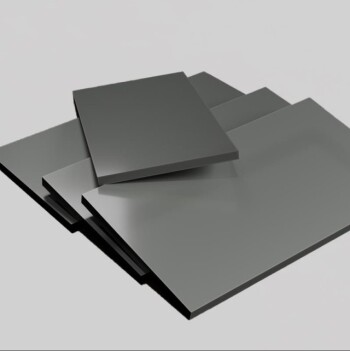
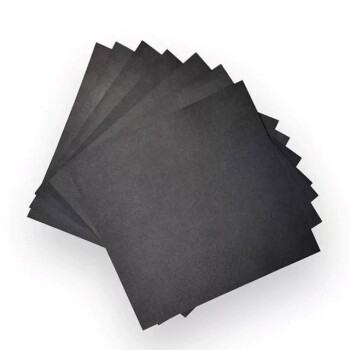
Graphite paper and graphite gaskets act as essential protective interfaces during the assembly and sintering of Al/B4C composites. Positioned between the composite powder and the internal surfaces of the mold and punches, they function primarily as isolation and release agents. Their presence prevents molten aluminum from chemically reacting with or adhering to the graphite mold, ensuring the sample can be removed cleanly without damaging the mold's interior.

Core Insight: In the context of Al/B4C liquid-phase sintering, these components are not merely spacers; they are critical barrier layers. They decouple the chemical reactivity of the molten matrix from the structural containment of the mold, preventing the fusion of the workpiece to the tooling.

The Engineering Challenge: Liquid-Phase Sintering

The Aggressive Nature of Molten Aluminum

During the sintering of Al/B4C composites, the process often involves a liquid phase. Molten aluminum is highly reactive and has a strong tendency to wet and adhere to carbon-based materials.

Risks to the Graphite Mold

Without a barrier, the liquid aluminum would come into direct contact with the graphite mold walls. This would lead to adhesion or chemical reaction, compromising the mold's surface finish and geometry.

Function of the Isolation Layer

Acting as a Release Agent

The primary function of graphite paper and gaskets is to facilitate demolding. By creating a non-bonding interface, they ensure the sintered sample can be ejected ("released") from the mold successfully.

Preserving Mold Integrity

The graphite mold acts as the load-bearing component, responsible for defining the final geometry of the disk-like bulk. It must withstand external mechanical pressures (up to 30 MPa for Al/B4C) and maintain dimensional stability.

Preventing Structural Damage

If the composite bonds to the mold, the force required to eject the sample would likely result in catastrophic damage to the mold’s interior walls, rendering the expensive tooling unusable for future cycles.

Understanding the Systemic Trade-offs

Thermal and Mechanical Transparency

While the graphite paper acts as a barrier, it must not impede the mold's primary functions. The mold is responsible for transmitting axial pressure (densification) and heat (thermal conductivity) to the powder.

The Balance of Isolation and Conductivity

Because the barrier layers are also made of graphite, they retain the necessary thermal conductivity. This ensures that while they isolate the material chemically, they do not insulate it thermally, allowing the uniform temperature field required for successful densification.

Assembly Precision

The use of gaskets and paper introduces additional interfaces in the assembly. Care must be taken to ensure these layers are fitted precisely to prevent powder leakage or uneven pressure distribution, which could affect the structural homogeneity of the final product.

Making the Right Choice for Your Goal

To ensure high-quality Al/B4C composites and prolonged tool life, apply these principles:

  • If your primary focus is Mold Longevity: Prioritize the complete coverage of all internal mold surfaces with graphite paper to prevent localized pitting or aluminum infiltration into the mold pores.
  • If your primary focus is Dimensional Precision: Ensure the graphite gaskets and paper are cut to exact tolerances; overlaps or wrinkles in the paper will imprint onto the final sintered disk, compromising its surface flatness.

By treating the isolation layer as a critical process variable, you protect the integrity of both your sintered component and your manufacturing infrastructure.

Summary Table:

Feature Role in Al/B4C Sintering Benefit
Isolation Layer Prevents chemical reaction between molten Al and graphite mold Preserves mold surface integrity
Release Agent Creates a non-bonding interface at high temperatures Facilitates easy sample ejection
Thermal Conductivity Maintains uniform heat transfer to the powder Ensures consistent material densification
Mechanical Interface Transmits axial pressure up to 30 MPa Protects punches from structural damage

Maximize Your Material Synthesis Efficiency with KINTEK

Don't let mold adhesion or structural damage compromise your research outcomes. At KINTEK, we understand the nuances of high-temperature material processing. Our comprehensive range of high-temperature furnaces, hydraulic pellet presses, and precision-engineered graphite consumables are designed to meet the rigorous demands of Al/B4C composite assembly and sintering.

Whether you need specialized PTFE and ceramic components or advanced sintering systems, our expert team is ready to provide the high-performance laboratory equipment and consumables your facility requires for consistent, high-quality results.

Ready to elevate your laboratory capabilities? Contact KINTEK today for a tailored solution!

Related Products

People Also Ask

Related Products

Zirconia Ceramic Gasket Insulating Engineering Advanced Fine Ceramics

Zirconia Ceramic Gasket Insulating Engineering Advanced Fine Ceramics

Zirconia insulating ceramic gasket has high melting point, high resistivity, low thermal expansion coefficient and other properties, making it an important high temperature resistant material, ceramic insulating material and ceramic sunscreen material.

Ultra-High Temperature Graphite Vacuum Graphitization Furnace

Ultra-High Temperature Graphite Vacuum Graphitization Furnace

The ultra-high temperature graphitization furnace utilizes medium frequency induction heating in a vacuum or inert gas environment. The induction coil generates an alternating magnetic field, inducing eddy currents in the graphite crucible, which heats up and radiates heat to the workpiece, bringing it to the desired temperature. This furnace is primarily used for graphitization and sintering of carbon materials, carbon fiber materials, and other composite materials.

Vertical High Temperature Graphite Vacuum Graphitization Furnace

Vertical High Temperature Graphite Vacuum Graphitization Furnace

Vertical high temperature graphitization furnace for carbonization and graphitization of carbon materials up to 3100℃.Suitable for shaped graphitization of carbon fiber filaments and other materials sintered in a carbon environment.Applications in metallurgy, electronics, and aerospace for producing high-quality graphite products like electrodes and crucibles.

Custom PTFE Teflon Parts Manufacturer Laboratory High Temperature Mixing Paddle Mixer

Custom PTFE Teflon Parts Manufacturer Laboratory High Temperature Mixing Paddle Mixer

The PTFE mixing paddle mixer is a versatile and robust tool designed for laboratory use, particularly in environments requiring high resistance to chemicals and extreme temperatures. Crafted from high-quality PTFE, this mixer boasts several key features that enhance its functionality and durability.

Graphite Vacuum Furnace Negative Material Graphitization Furnace

Graphite Vacuum Furnace Negative Material Graphitization Furnace

Graphitization furnace for battery production has uniform temperature and low energy consumption. Graphitization furnace for negative electrode materials: an efficient graphitization solution for battery production and advanced functions to enhance battery performance.

Graphite Vacuum Furnace High Thermal Conductivity Film Graphitization Furnace

Graphite Vacuum Furnace High Thermal Conductivity Film Graphitization Furnace

The high thermal conductivity film graphitization furnace has uniform temperature, low energy consumption and can operate continuously.

Custom PTFE Teflon Parts Manufacturer for Culture Dish and Evaporation Dish

Custom PTFE Teflon Parts Manufacturer for Culture Dish and Evaporation Dish

The PTFE culture dish evaporating dish is a versatile laboratory tool known for its chemical resistance and high-temperature stability. PTFE, a fluoropolymer, offers exceptional non-stick properties and durability, making it ideal for various applications in research and industry, including filtration, pyrolysis, and membrane technology.

Warm Isostatic Press WIP Workstation 300Mpa for High Pressure Applications

Warm Isostatic Press WIP Workstation 300Mpa for High Pressure Applications

Discover Warm Isostatic Pressing (WIP) - A cutting-edge technology that enables uniform pressure to shape and press powdered products at a precise temperature. Ideal for complex parts and components in manufacturing.

Electrode Polishing Material for Electrochemical Experiments

Electrode Polishing Material for Electrochemical Experiments

Looking for a way to polish your electrodes for electrochemical experiments? Our polishing materials are here to help! Follow our easy instructions for best results.

Ultra-Vacuum Electrode Feedthrough Connector Flange Power Electrode Lead for High-Precision Applications

Ultra-Vacuum Electrode Feedthrough Connector Flange Power Electrode Lead for High-Precision Applications

Discover the Ultra-Vacuum Electrode Feedthrough Connector Flange, perfect for high-precision applications. Ensure reliable connections in ultra-vacuum environments with advanced sealing and conductive technology.

Metallographic Specimen Mounting Machine for Laboratory Materials and Analysis

Metallographic Specimen Mounting Machine for Laboratory Materials and Analysis

Precision metallographic mounting machines for labs—automated, versatile, and efficient. Ideal for sample prep in research and quality control. Contact KINTEK today!

Precision Machined Zirconia Ceramic Ball for Engineering Advanced Fine Ceramics

Precision Machined Zirconia Ceramic Ball for Engineering Advanced Fine Ceramics

zirconia ceramic ball have the characteristics of high strength, high hardness, PPM wear level, high fracture toughness, good wear resistance, and high specific gravity.

MgF2 Magnesium Fluoride Crystal Substrate Window for Optical Applications

MgF2 Magnesium Fluoride Crystal Substrate Window for Optical Applications

Magnesium fluoride (MgF2) is a tetragonal crystal that exhibits anisotropy, making it imperative to treat it as a single crystal when engaging in precision imaging and signal transmission.

Infrared Heating Quantitative Flat Plate Press Mold

Infrared Heating Quantitative Flat Plate Press Mold

Discover advanced infrared heating solutions with high-density insulation and precise PID control for uniform thermal performance in various applications.

kbr pellet press 2t

kbr pellet press 2t

Introducing the KINTEK KBR Press - a handheld laboratory hydraulic press designed for entry-level users.

Laboratory Vortex Mixer Orbital Shaker Multifunctional Rotation Oscillation Mixer

Laboratory Vortex Mixer Orbital Shaker Multifunctional Rotation Oscillation Mixer

The inching mixer is small in size, mixes quickly and thoroughly, and the liquid is in a vortex shape, which can mix all the test solutions attached to the tube wall.

Custom PTFE Teflon Parts Manufacturer for Acid and Alkali Resistant Chemical Powder Material Scoops

Custom PTFE Teflon Parts Manufacturer for Acid and Alkali Resistant Chemical Powder Material Scoops

Known for its excellent thermal stability, chemical resistance and electrical insulating properties, PTFE is a versatile thermoplastic material.

Vacuum Hot Press Furnace Machine for Lamination and Heating

Vacuum Hot Press Furnace Machine for Lamination and Heating

Experience clean and precise lamination with Vacuum Lamination Press. Perfect for wafer bonding, thin-film transformations, and LCP lamination. Order now!

Glassy Carbon Sheet RVC for Electrochemical Experiments

Glassy Carbon Sheet RVC for Electrochemical Experiments

Discover our Glassy Carbon Sheet - RVC. Perfect for your experiments, this high-quality material will elevate your research to the next level.

Custom PTFE Teflon Parts Manufacturer for Non-Standard Insulator Customization

Custom PTFE Teflon Parts Manufacturer for Non-Standard Insulator Customization

PTFE insulator PTFE has excellent electrical insulation properties in a wide temperature and frequency range.


Leave Your Message