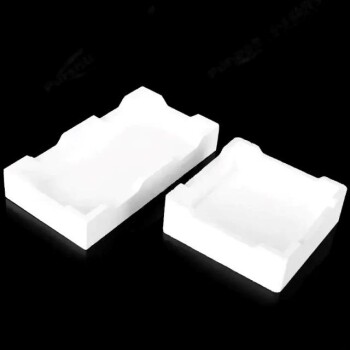
A ceramic high-temperature furnace ensures validity by creating a rigorously stable isothermal environment. By maintaining high-precision temperature control, typically limiting fluctuations to within ±1 °C, the furnace eliminates thermal variables that could distort corrosion data over long durations. This stability is the baseline requirement for distinguishing true material performance from experimental noise.
Molten salt corrosion is a thermally activated process, meaning even minor temperature deviations can drastically alter reaction kinetics. The furnace's primary role is to lock in a constant thermal field, ensuring that chemical potential remains steady and that observed corrosion rates reflect the material's properties rather than environmental inconsistencies.
The Foundation of Experimental Validity
To understand why the furnace is critical, you must look beyond simple heating. You must look at how temperature dictates the chemistry of the experiment.
Stabilizing Chemical Potential
The core function of the furnace is to maintain a specific setpoint, such as 700 °C, without deviation. High-precision control ensures that the chemical potential of the corrosion reactions remains constant throughout the 100-hour test.
If the temperature shifts, the energy available for the reaction changes. This alters the thermodynamic balance, rendering long-term data inconsistent.
Controlling Mass Transfer Processes
Corrosion in molten salts often involves the physical movement of elements, known as mass transfer. These processes are highly sensitive to temperature gradients.
A ceramic furnace provides a stable thermal field that minimizes these gradients. This ensures that the movement of corrosion products is driven by the experiment's parameters, not by uneven heating zones within the chamber.
Eliminating Kinetic Errors
In long-duration exposure tests, the validity of your results depends on your ability to isolate variables.
Managing Thermally Activated Kinetics
Because molten salt corrosion is a thermally activated process, reaction rates accelerate exponentially with temperature. A furnace that allows significant fluctuations introduces "kinetic errors."
By keeping fluctuations within ±1 °C, the furnace ensures that the depth of corrosion is a result of time and chemistry, not accidental heat spikes.
Accurate Attribution of Effects
When testing variables such as irradiation against a control group, precise temperature control is non-negotiable. You must be certain that differences in corrosion depth are due to irradiation effects.
Without strict thermal stability, it is impossible to prove whether damage was caused by the radiation or simply by one sample getting hotter than the other.
Understanding Experimental Limitations
While a high-quality furnace is essential, reliance on equipment alone does not guarantee validity. You must be aware of potential pitfalls.
Internal Thermal Gradients
Even with a stable furnace, the arrangement of graphite crucibles can create localized thermal gradients. Crowding samples can disrupt the thermal field, leading to uneven heating despite the furnace sensor reading a steady temperature.
Sensor Drift Over Time
In 100-hour tests, thermocouples can degrade or drift. A furnace controller is only as accurate as its input data. If the sensor drifts, the furnace may unknowingly overheat or underheat the samples while displaying a "correct" temperature.
Securing Data Integrity for Long-Duration Tests
To ensure your molten salt corrosion tests stand up to scrutiny, you must match your equipment settings to your specific research goals.
- If your primary focus is Reaction Kinetics: Prioritize a furnace system with a proven fluctuation range of ±1 °C to prevent exponential rate errors.
- If your primary focus is Mass Transfer Analysis: Ensure the furnace chamber provides a large, uniform thermal zone to prevent temperature gradients from driving artificial convection.
The furnace transforms temperature from a chaotic variable into a fixed constant, providing the bedrock for reproducible scientific data.
Summary Table:
| Feature | Impact on Validity | Importance in 100-Hour Tests |
|---|---|---|
| ±1 °C Precision | Eliminates kinetic errors and reaction rate spikes | Critical for long-term data consistency |
| Isothermal Zone | Minimizes mass transfer gradients & artificial convection | Ensures material-driven corrosion profiles |
| Thermal Field Stability | Maintains constant chemical potential | Essential for isolating variables like irradiation |
| Advanced Controllers | Prevents sensor drift & accidental overheating | Secures data integrity over long durations |
Maximize Your Research Precision with KINTEK
Ensure the integrity of your long-duration experiments with KINTEK’s high-performance thermal solutions. Whether you are conducting molten salt corrosion studies or advanced material synthesis, our comprehensive range of high-temperature muffle, tube, and vacuum furnaces provides the ±1 °C stability required to eliminate experimental noise.
From high-precision crushing and milling systems for sample preparation to high-temperature high-pressure reactors and PTFE/ceramic consumables, KINTEK specializes in equipping world-class laboratories with the tools they need for reproducible results.
Ready to elevate your lab's performance? Contact our technical experts today to find the perfect thermal or pressure solution for your specific research needs.
References
- Kevin J. Chan, Preet M. Singh. Carburization effects on the corrosion of Cr, Fe, Ni, W, and Mo in fluoride-salt cooled high temperature reactor (FHR) coolant. DOI: 10.1016/j.anucene.2018.05.013
This article is also based on technical information from Kintek Solution Knowledge Base .
Related Products
- High Temperature Alumina (Al2O3) Furnace Tube for Engineering Advanced Fine Ceramics
- 1400℃ Laboratory High Temperature Tube Furnace with Alumina Tube
- 1700℃ Laboratory High Temperature Tube Furnace with Alumina Tube
- High Temperature Muffle Oven Furnace for Laboratory Debinding and Pre Sintering
- Ultra-High Temperature Graphite Vacuum Graphitization Furnace
People Also Ask
- What is the primary function of an Alumina (Al2O3) tube in LLZTO sintering? Optimize Your Thermal Processing
- What role does a high-alumina furnace tube play in high-temperature nickel slag reduction? Ensure 1400°C Precision
- How does an alumina tube furnace with a controlled atmosphere simulate conditions in CSP environments? Master Accuracy.
- How do you clean an alumina tube furnace? Extend Tube Life with Proper Maintenance
- How to clean an alumina tube furnace? Extend Tube Life and Ensure Experimental Purity