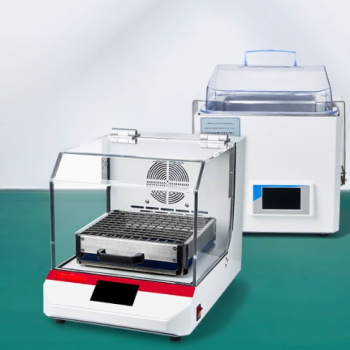
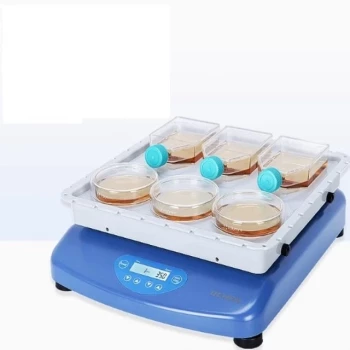
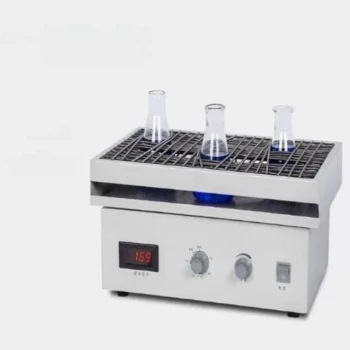
A constant temperature reciprocating shaker critically influences adsorption by generating precise fluid shear forces that reduce the liquid film thickness surrounding the Magnetic Composite Carbon. This mechanical action minimizes external mass transfer resistance, allowing pollutant molecules like acetaminophen to migrate rapidly from the bulk solution to the adsorbent surface, while precise temperature control ensures the data reflects true kinetic rates rather than environmental fluctuations.
The shaker serves as a dual-function control tool: it mechanically strips away the stagnant boundary layer inhibiting particle contact and thermally isolates the reaction. This ensures that the measured adsorption rates reflect the material's intrinsic capability, not the limitations of diffusion or ambient temperature shifts.
The Role of Mechanical Agitation
Overcoming Film Diffusion
The primary mechanism at work is the generation of fluid shear force through reciprocating motion.
Surrounding every particle of Magnetic Composite Carbon is a stagnant layer of water known as the liquid film.
This film acts as a barrier, slowing down the movement of acetaminophen molecules. The shaker's agitation thins this film, significantly reducing external mass transfer resistance and accelerating the adsorption process.
Ensuring Active Suspension
Beyond film diffusion, the shaker ensures the composite materials remain in a suspended state.
If the magnetic carbon particles settle or clump together due to magnetic attraction, the available surface area for adsorption decreases.
Constant agitation overcomes this, ensuring thorough contact at the solid-liquid interface and maintaining the maximum number of active sites for pollutant removal.
The Necessity of Thermal Stability
Eliminating Environmental Variables
Adsorption is a temperature-dependent process; fluctuations in ambient heat can artificially skew reaction rates.
By strictly controlling the thermal environment, the shaker ensures that any observed changes in adsorption speed are due to the interaction between the acetaminophen and the carbon, not external weather conditions.
This isolation is essential for calculating accurate thermodynamic parameters.
Reproducibility of Kinetic Data
For scientific analysis, data must be repeatable under identical conditions.
The constant temperature function guarantees a uniform kinetic environment.
This stability allows researchers to simulate specific environmental scenarios and obtain high-quality, reproducible data necessary for validating the efficiency of the Magnetic Composite Carbon.
Understanding the Trade-offs
The Threshold of Efficiency
While agitation is necessary, increasing the speed indefinitely does not always yield faster results.
Once the mixing speed is high enough to minimize the liquid film resistance, the process becomes limited by intraparticle diffusion (movement inside the carbon's pores).
At this stage, increasing the shaker speed further wastes energy without improving the adsorption rate.
Physical Integrity of the Composite
Magnetic Composite Carbon can be susceptible to physical stress.
Excessive reciprocating speeds may cause particle attrition or breakage, creating smaller fines that are difficult to recover.
It is vital to find an agitation speed that maintains suspension and reduces film thickness without physically degrading the adsorbent structure.
Making the Right Choice for Your Experiment
To maximize the reliability of your adsorption study, align your shaker settings with your specific analytical goals:
- If your primary focus is determining reaction speed (Kinetics): Prioritize finding the minimum agitation speed required to fully suspend the particles and overcome film diffusion resistance.
- If your primary focus is understanding energy changes (Thermodynamics): Prioritize precise thermal calibration to ensure the reaction occurs at a stable, specific temperature without fluctuation.
By balancing mechanical force with thermal stability, you transform variable environmental conditions into a controlled, scientifically rigorous dataset.
Summary Table:
| Factor | Influence Mechanism | Impact on Adsorption |
|---|---|---|
| Reciprocating Motion | Fluid shear force generation | Reduces liquid film thickness & mass transfer resistance |
| Mechanical Agitation | Particle suspension | Prevents clumping; maximizes solid-liquid interface area |
| Thermal Control | Temperature stabilization | Ensures reproducible kinetic data & accurate thermodynamics |
| Speed Optimization | Threshold management | Balances film diffusion reduction with particle integrity |
Elevate Your Adsorption Research with KINTEK Precision
Achieving scientifically rigorous results requires the perfect balance of mechanical force and thermal stability. KINTEK specializes in high-performance laboratory equipment designed to meet the demanding needs of researchers working on pollutant removal and material science.
Our extensive portfolio includes:
- Precision Shakers & Homogenizers: Ensure uniform suspension and optimized mass transfer for your kinetic studies.
- Advanced Thermal Solutions: From ULT freezers to high-temperature furnaces (muffle, tube, vacuum, and CVD) for material synthesis.
- Specialized Reactors: High-temperature high-pressure reactors and autoclaves for complex chemical interactions.
- Processing Tools: Crushing, milling, and hydraulic presses (pellet, isostatic) for adsorbent preparation.
Ready to optimize your lab's efficiency and data reproducibility? Contact KINTEK today to discover how our premium laboratory equipment and consumables can support your next breakthrough.
References
- Pascal S. Thue, Éder C. Lima. Magnetic Composite Carbon from Microcrystalline Cellulose to Tackle Paracetamol Contamination: Kinetics, Mass Transfer, Equilibrium, and Thermodynamic Studies. DOI: 10.3390/polym16243538
This article is also based on technical information from Kintek Solution Knowledge Base .
Related Products
- 50L Chiller Water Bath Cooling Circulator Low Temperature Constant Temperature Reaction Bath
- High Temperature Constant Temperature Heating Circulator Water Bath Chiller Circulator for Reaction Bath
- Laboratory Small Constant Temperature Heated Magnetic Stirrer Heater and Stirrer
- 100L Heating Chilling Circulator Cooling Water Bath Circulator for High and Low Temperature Constant Temperature Reaction
- 5L Heating Chilling Circulator Cooling Water Bath Circulator for High and Low Temperature Constant Temperature Reaction
People Also Ask
- For which types of substances are water baths and chillers considered ideal? Essential Care for Sensitive Samples
- What is the necessity of a circulating water bath in chlorate production? Optimize Yield & Purity with Precision
- Why is a circulating water chiller required for Prussian Blue nanoparticles? Ensure Stability & Batch Reproducibility
- What function does a circulating cooling chiller perform during the gas adsorption isotherm testing of nanoporous carbon?
- What is the primary function of water baths and chillers? Mastering Precise Thermal Stability for Liquid Samples