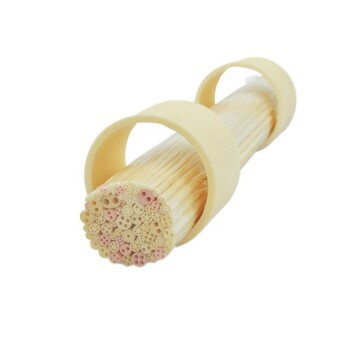
The corundum tube functions as a critical, high-temperature thermal bridge within the furnace's reduction system. It physically connects the reaction crucible situated in the high-temperature zone to the condensation collector located in the low-temperature zone. Its primary role is to transport magnesium vapor safely while withstanding extreme heat that would destroy standard metallic piping.
The corundum tube serves as a directed transport channel capable of withstanding 1723 K, ensuring volatile vapors are guided exclusively from the reaction crucible to the condenser without contaminating the rest of the furnace.
The Mechanics of the Connection System
Bridging Extreme Temperature Zones
The fundamental purpose of the corundum tube is to link two distinct thermal environments.
It connects the reaction crucible, which sits in the furnace's hottest region, directly to the condensation collector in the cooler zone. This physical connection allows for the seamless transition of materials across a steep temperature gradient.
Controlled Vapor Transport
During the reduction process, the system generates magnesium vapor.
The corundum tube acts as a containment vessel, guiding this vapor straight into the condenser. By enclosing the flow path, it prevents the vapor from diffusing into the broader furnace chamber or contaminating other components.
Withstanding Reaction Conditions
The reduction environment creates conditions that standard materials cannot survive.
Reaction temperatures in this zone often reach up to 1723 K. While standard metal pipes would melt or degrade under this thermal load, the corundum tube maintains structural integrity to ensure the process continues without failure.
Operational Context
Integration with Vacuum Systems
While the tube handles transport, it operates within a high-vacuum environment.
The surrounding system utilizes high-speed diffusion pumps to maintain low pressures (down to 1 x 10^-6 Torr). The corundum tube must withstand these vacuum pressures while simultaneously enduring high thermal stress.
Isolation of Process Artifacts
In a vertical tube furnace, the material to be processed is inserted directly into the tube.
This ensures that the artifact remains within the designated heating region. The tube acts as the primary barrier between the reaction materials and the heating elements of the furnace.
Understanding the Trade-offs
Thermal Shock Sensitivity
While corundum offers exceptional heat resistance, it is a ceramic material.
Unlike metals, corundum can be susceptible to thermal shock if temperatures change too rapidly. Users must carefully control heating and cooling ramps to prevent cracking the tube.
Mechanical Fragility
The rigidity that allows corundum to withstand 1723 K also makes it brittle.
It lacks the ductility of metal components. Great care is required during the insertion of the crucible or the connection of the condensation system to avoid mechanical fracture.
Making the Right Choice for Your Goal
To optimize the performance of your vacuum vertical tube furnace, consider how the tube aligns with your specific processing needs.
- If your primary focus is High-Temperature Resilience: Rely on the corundum tube for processes exceeding 1200 K, as it provides the necessary stability up to 1723 K where metals fail.
- If your primary focus is Vapor Purity: Ensure the tube connections are perfectly sealed to leverage its ability to isolate vapors and prevent cross-contamination within the furnace chamber.
By utilizing the corundum tube as a dedicated transport channel, you ensure the safe and efficient transfer of magnesium vapor in even the most aggressive thermal environments.
Summary Table:
| Feature | Function in Reduction System |
|---|---|
| Material | High-purity Corundum (Ceramic) |
| Max Temperature | Up to 1723 K |
| Primary Role | Thermal bridge between reaction crucible and condenser |
| Transport Medium | Magnesium vapor containment and guidance |
| Environment | High vacuum (down to 1 x 10^-6 Torr) |
| Key Benefit | Prevents vapor diffusion and furnace contamination |
Optimize Your Thermal Processes with KINTEK Precision
Maximize the efficiency and purity of your high-temperature reactions with KINTEK’s industry-leading laboratory solutions. Whether you are performing complex magnesium reduction or advanced material synthesis, our comprehensive range of vacuum, CVD, and tube furnaces provides the thermal stability you require.
Beyond furnaces, we specialize in high-performance consumables—including corundum tubes, ceramics, and crucibles—designed to withstand extreme conditions up to 1723 K. From high-pressure reactors to crushing and milling systems, KINTEK is your partner in laboratory excellence.
Ready to upgrade your lab equipment? Contact our technical experts today to find the perfect fit for your research and production needs!
Related Products
- High Temperature Aluminum Oxide (Al2O3) Protective Tube for Engineering Advanced Fine Ceramics
- Vertical Laboratory Tube Furnace
- Vacuum Sealed Continuous Working Rotary Tube Furnace Rotating Tube Furnace
- Laboratory Vacuum Tilt Rotary Tube Furnace Rotating Tube Furnace
- Laboratory High Pressure Vacuum Tube Furnace
People Also Ask
- What is the process of alumina tube manufacturing? From Powder to High-Performance Ceramic
- What is the heating rate for alumina tubes? A Variable Schedule to Prevent Thermal Shock
- How do alumina ceramic tubes address technical challenges in electrochemical devices? Ensure Peak Signal Integrity.
- What is the working temperature of alumina tube? Achieve Safe & Reliable High-Temp Processing
- What is the maximum temperature for alumina tube? Unlock Its Full Potential with High Purity