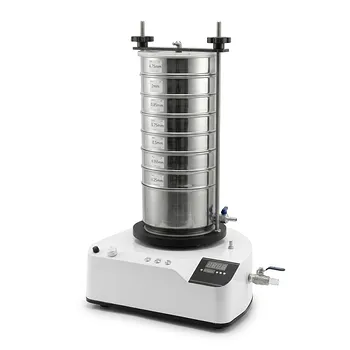
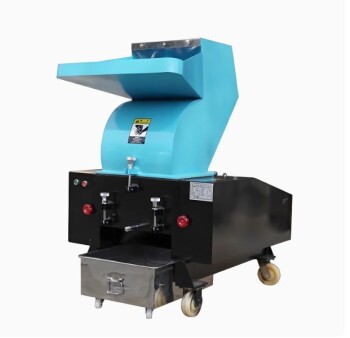
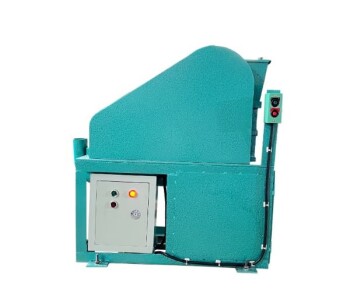
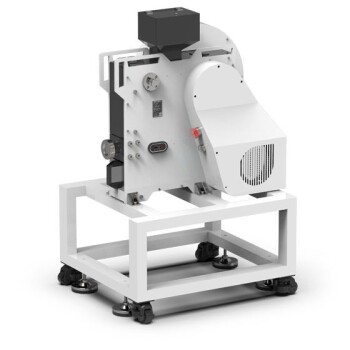
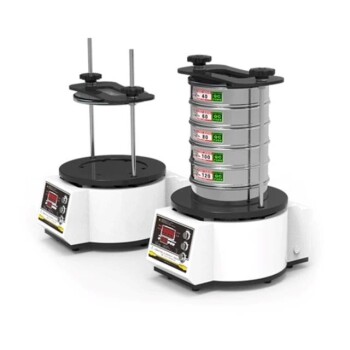
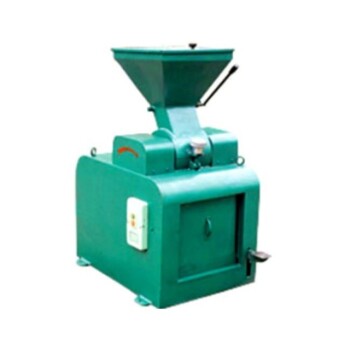
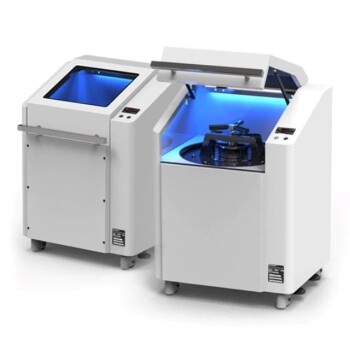
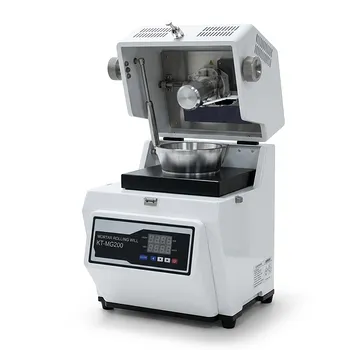
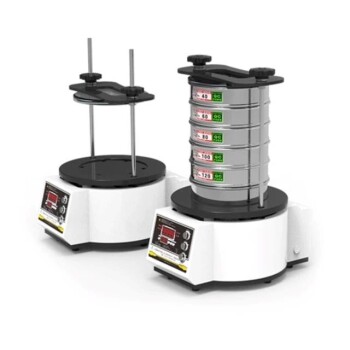
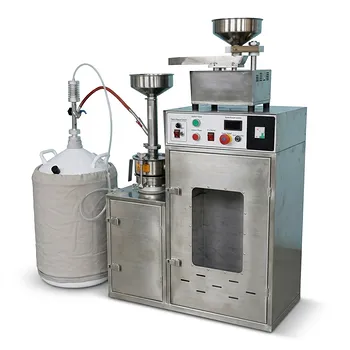
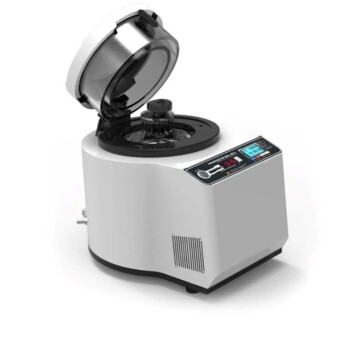
A crushing and sieving system acts as the fundamental catalyst for efficient gold recovery in e-waste processing. By mechanically reducing components like Printed Circuit Boards (PCBs) and CPUs into fine powders, this system exposes gold that is otherwise physically locked inside the material, enabling chemical solutions to interact with the metal effectively.
Core Insight: The physical state of your input material dictates your chemical success. Mechanical reduction to a particle size of less than 0.1 mm is necessary to liberate encapsulated gold, directly transforming a potential recovery rate of under 20% into a yield of over 80%.
The Mechanics of Liberation
To understand why crushing is vital, you must understand the nature of the waste. Gold in electronics is rarely surface-level; it is layered, coated, and hidden.
Overcoming Physical Encapsulation
In raw e-waste, gold particles are often encapsulated within the rigid structures of boards or components.
If you attempt to process these whole components, the chemical agents simply cannot reach the gold. The crushing system breaks these structures apart, physically freeing the metal.
The Target Particle Size
Precision matters in this mechanical stage. The objective is not just to break the material, but to pulverize it.
The system aims to reduce the material to a specific particle size of less than 0.1 mm. This is the threshold required to ensure that the internal gold is fully exposed to the processing environment.
Enhancing Chemical Interaction
Once the material is physically broken down, the sieving system ensures uniformity, which directly impacts chemical efficiency.
Increasing Specific Surface Area
The primary technical benefit of crushing is a massive increase in specific surface area.
By turning a solid board into fine dust, you exponentially increase the amount of surface area available for reaction relative to the volume of the material.
Facilitating Thiourea Contact
This increased surface area is critical for the leaching stage, specifically when using a thiourea solution.
With the gold fully exposed and the surface area maximized, the thiourea solution makes frequent and direct contact with the gold particles. This contact is the prerequisite for the chemical reaction that dissolves and recovers the gold.
The Consequences of Particle Size
There is a direct, quantifiable correlation between the mechanical preparation of the material and the final yield.
The Risk of Large Particles
If the crushing and sieving process is skipped or inefficient, leaving large particles, the recovery efficiency collapses.
Due to the lack of exposure, the leaching rate for large particles remains under 20 percent. This represents a massive loss of value, as the majority of the gold remains trapped in the waste.
The Efficiency of Fine Particles
Conversely, adhering to the sub-0.1 mm standard fundamentally changes the economics of the process.
Properly crushed and sieved material allows for a gold leaching rate of over 80 percent. This four-fold increase in efficiency is driven entirely by the mechanical preparation of the feedstock.
Making the Right Choice for Your Goal
When designing or optimizing your e-waste processing line, the crushing system should be viewed as a yield-multiplier, not just a disposal tool.
- If your primary focus is Maximizing Yield: Ensure your crushing circuit is calibrated to consistently produce output material smaller than 0.1 mm to expose encapsulated gold.
- If your primary focus is Process Troubleshooting: Investigate your particle size distribution first; if your recovery rates are near 20%, your material is likely too coarse for the leaching agent to penetrate.
Mechanical precision in the initial stage is the single greatest predictor of chemical success in the final stage.
Summary Table:
| Factor | Coarse Material (>0.1 mm) | Fine Powder (<0.1 mm) |
|---|---|---|
| Gold Exposure | Encapsulated / Locked | Fully Exposed / Liberated |
| Surface Area | Low | Very High |
| Thiourea Contact | Minimal / Surface Only | Maximum / Immediate |
| Recovery Yield | < 20% | > 80% |
Maximize Your Gold Recovery with KINTEK’s Precision Systems
Don't let valuable gold stay trapped in your e-waste. At KINTEK, we specialize in the high-performance crushing and milling systems and sieving equipment required to achieve the critical sub-0.1 mm particle size needed for superior leaching yields.
Whether you are processing PCBs or CPUs, our robust laboratory and industrial solutions—including hydraulic presses and high-temperature reactors—are designed to optimize your entire recovery workflow. From feedstock preparation to chemical extraction, KINTEK provides the tools that turn waste into wealth.
Ready to upgrade your recovery efficiency? Contact our technical experts today to find the perfect crushing and sieving configuration for your laboratory or processing facility.
References
- Daniel A. Ray, Sébastien Farnaud. Thiourea Leaching: An Update on a Sustainable Approach for Gold Recovery from E-waste. DOI: 10.1007/s40831-022-00499-8
This article is also based on technical information from Kintek Solution Knowledge Base .
Related Products
- Laboratory Test Sieves and Sieving Machines
- Three-dimensional electromagnetic sieving instrument
- Laboratory Vibratory Sieve Shaker Machine for Dry and Wet Three-Dimensional Sieving
- Powerful Plastic Crusher Machine
- Sealed Jaw Crusher High Efficiency Environmental Protection Safe and Reliable
People Also Ask
- What are laboratory test sieves used for? A Guide to Particle Size Analysis
- How do you calculate the sieve test? Master Particle Size Distribution for Quality Control
- How does a lab test sieve contribute to biomass charcoal powder preparation? Achieve Uniform Particle Size
- What are the specifications for test sieves? A Guide to ASTM & ISO Standards for Accurate Particle Analysis
- What materials are required for sieving? Achieve Accurate Particle Size Analysis