Knowledge How does a freeze dryer prevent MoS2–hBN agglomeration? Preserving Nanoparticle Dispersibility and Activity
Author avatar

Tech Team · Kintek Solution

Updated 1 day ago

How does a freeze dryer prevent MoS2–hBN agglomeration? Preserving Nanoparticle Dispersibility and Activity


A freeze dryer prevents agglomeration in MoS2–hBN hybrid nanoparticles by utilizing the principle of sublimation to remove moisture. By freezing the material first and then lowering the pressure, the device allows ice to convert directly into vapor. This process completely bypasses the liquid phase, effectively eliminating the physical forces that cause nanoparticles to clump together during conventional drying methods.

By avoiding the liquid state entirely, freeze drying preserves the independent structure of the nanoparticles. This ensures the final powder retains the high dispersibility and catalytic activity that are often lost when particles fuse during standard evaporation processes.

The Mechanism of Preservation

Utilizing Sublimation

The core mechanism of a freeze dryer is sublimation. This is a physical phase transition where a substance changes from a solid directly into a gas without ever becoming a liquid.

The Two-Step Process

To achieve this, the freeze dryer first freezes the MoS2–hBN material completely, locking the water into a solid ice lattice. Once frozen, the surrounding pressure is significantly reduced (vacuum), allowing the ice to vaporize essentially "in place."

Bypassing the Liquid Phase

The critical advantage for nanoparticles is the avoidance of the liquid phase. In conventional drying, as liquid water evaporates, surface tension creates capillary forces that pull particles together.

Eliminating Capillary Forces

By skipping the liquid phase, freeze drying eliminates these capillary forces entirely. The nanoparticles are not dragged toward one another by receding liquid, allowing them to remain fixed in their dispersed positions as the ice vanishes.

Impact on Nanoparticle Quality

Preventing Agglomeration

The primary result of this process is the prevention of agglomeration (clumping). Because the particles are not forced together during drying, they remain distinct and separate in the final powder.

Maintaining High Dispersibility

Because the particles do not clump, the final product exhibits high dispersibility. This means the powder can be easily redistributed in a solvent or matrix without requiring aggressive mechanical force to break apart clusters.

Preserving Chemical Activity

Agglomeration reduces the effective surface area of nanoparticles, hiding their active sites. By keeping the particles separate, freeze drying ensures the MoS2–hBN hybrids maintain their maximum chemical activity and performance potential.

Understanding the Trade-offs

Processing Time

While freeze drying preserves quality, it is a slow process compared to heat drying. Sublimation occurs at a much lower rate than evaporation, often requiring significantly longer cycle times to remove all moisture.

Energy and Complexity

This method requires maintaining low temperatures and high vacuums simultaneously. This makes the process more energy-intensive and requires more complex equipment than standard thermal drying methods.

Making the Right Choice for Your Goal

To maximize the effectiveness of your MoS2–hBN hybrid nanoparticles, apply the following guidelines:

  • If your primary focus is Maximal Surface Area: Use freeze drying to ensure particles remain discrete and do not collapse into larger aggregates.
  • If your primary focus is Chemical Performance: Rely on this method to maintain high activity, as agglomeration can significantly shield active catalytic sites.

By selecting freeze drying, you prioritize the structural integrity and functional performance of your nanomaterials over processing speed.

Summary Table:

Feature Freeze Drying (Sublimation) Conventional Drying (Evaporation)
Physical State Transition Solid to Gas (Direct) Liquid to Gas
Capillary Forces Eliminated High (Causes clumping)
Particle Structure Dispersed & Discrete Agglomerated & Fused
Chemical Activity High (Preserved surface area) Reduced (Blocked active sites)
Dispersibility Excellent Poor (Requires high-energy milling)

Elevate Your Nanomaterial Precision with KINTEK

Don't let agglomeration compromise the catalytic activity of your MoS2–hBN hybrids. KINTEK specializes in advanced laboratory solutions, offering high-performance freeze dryers and cold traps designed to maintain the structural integrity of your most sensitive nanoparticles.

Whether you are conducting battery research or developing high-performance catalysts, our comprehensive portfolio—including ultra-low temperature freezers, vacuum systems, and ceramic crucibles—provides the reliability your research demands.

Ready to preserve the full potential of your materials? Contact our experts today to find the perfect drying and cooling solution for your laboratory.

References

  1. Thachnatharen Nagarajan, Mohammad Khalid. Synergistic performance evaluation of MoS2–hBN hybrid nanoparticles as a tribological additive in diesel-based engine oil. DOI: 10.1038/s41598-023-39216-0

This article is also based on technical information from Kintek Solution Knowledge Base .

Related Products

People Also Ask

Related Products

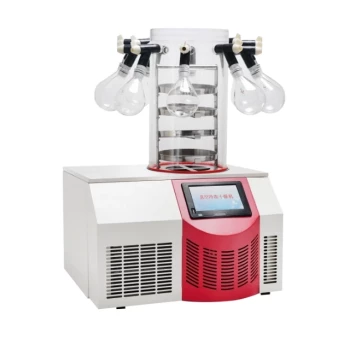
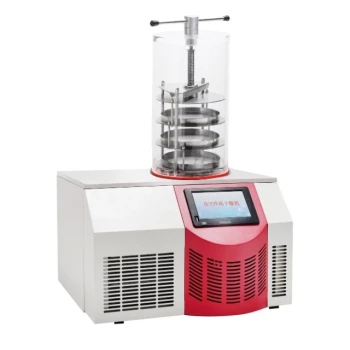
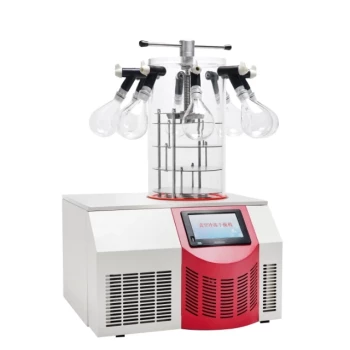
Benchtop Laboratory Freeze Dryer for Lab Use

Benchtop Laboratory Freeze Dryer for Lab Use

Premium benchtop laboratory freeze dryer for lyophilization, preserving samples with ≤ -60°C cooling. Ideal for pharmaceuticals & research.

Vacuum Cold Trap Chiller Indirect Cold Trap Chiller

Vacuum Cold Trap Chiller Indirect Cold Trap Chiller

Boost vacuum system efficiency and prolong pump life with our Indirect Cold Trap. Built-in chilling system with no need for fluid or dry ice. Compact design and easy to use.

Heated Hydraulic Press Machine with Heated Plates for Vacuum Box Laboratory Hot Press

Heated Hydraulic Press Machine with Heated Plates for Vacuum Box Laboratory Hot Press

Enhance your lab's precision with our lab press for vacuum box. Press pills and powders with ease and precision in a vacuum environment, reducing oxidation and improving consistency. Compact and easy to use with a digital pressure gauge.

Small Vacuum Heat Treat and Tungsten Wire Sintering Furnace

Small Vacuum Heat Treat and Tungsten Wire Sintering Furnace

The small vacuum tungsten wire sintering furnace is a compact experimental vacuum furnace specially designed for universities and scientific research institutes. The furnace features a CNC welded shell and vacuum piping to ensure leak-free operation. Quick-connect electrical connections facilitate relocation and debugging, and the standard electrical control cabinet is safe and convenient to operate.

30T 40T Split Automatic Heated Hydraulic Press Machine with Heated Plates for Laboratory Hot Press

30T 40T Split Automatic Heated Hydraulic Press Machine with Heated Plates for Laboratory Hot Press

Discover our split automatic heated lab press 30T/40T for precise sample preparation in material research, pharmacy, ceramics, and electronics industries. With a small footprint and heating up to 300°C, it's perfect for processing under vacuum environment.

Lab-Scale Vacuum Induction Melting Furnace

Lab-Scale Vacuum Induction Melting Furnace

Get precise alloy composition with our Vacuum Induction Melting Furnace. Ideal for aerospace, nuclear energy, and electronic industries. Order now for effective smelting and casting of metals and alloys.

Laboratory Vacuum Tilt Rotary Tube Furnace Rotating Tube Furnace

Laboratory Vacuum Tilt Rotary Tube Furnace Rotating Tube Furnace

Discover the versatility of Laboratory Rotary Furnace: Ideal for calcination, drying, sintering, and high-temperature reactions. Adjustable rotating and tilting functions for optimal heating. Suitable for vacuum and controlled atmosphere environments. Learn more now!

Electric Heated Hydraulic Vacuum Heat Press for Lab

Electric Heated Hydraulic Vacuum Heat Press for Lab

The Electric Vacuum Heat Press is a specialized heat press equipment that operates in a vacuum environment, utilizing advanced infrared heating and precise temperature control for high quality, rugged and reliable performance.

Laboratory Hydraulic Press Lab Pellet Press for Button Battery

Laboratory Hydraulic Press Lab Pellet Press for Button Battery

Efficiently prepare samples with our 2T Button Battery Press. Ideal for material research labs and small-scale production. Small footprint, lightweight, and vacuum-compatible.

Large Vertical Graphite Vacuum Graphitization Furnace

Large Vertical Graphite Vacuum Graphitization Furnace

A large vertical high-temperature graphitization furnace is a type of industrial furnace used for the graphitization of carbon materials, such as carbon fiber and carbon black. It is a high-temperature furnace that can reach temperatures of up to 3100°C.

Vacuum Heat Treat Furnace with Ceramic Fiber Liner

Vacuum Heat Treat Furnace with Ceramic Fiber Liner

Vacuum furnace with polycrystalline ceramic fiber insulation liner for excellent heat insulation and uniform temperature field. Choose from 1200℃ or 1700℃ max. working temperature with high vacuum performance and precise temperature control.

Dental Porcelain Zirconia Sintering Ceramic Vacuum Press Furnace

Dental Porcelain Zirconia Sintering Ceramic Vacuum Press Furnace

Get precise dental results with Dental Vacuum Press Furnace. Automatic temperature calibration, low noise tray, and touch screen operation. Order now!

Vacuum Heat Treat and Sintering Furnace with 9MPa Air Pressure

Vacuum Heat Treat and Sintering Furnace with 9MPa Air Pressure

The air pressure sintering furnace is a high-tech equipment commonly used for the sintering of advanced ceramic materials. It combines vacuum sintering and pressure sintering techniques to achieve high-density and high-strength ceramics.

Graphite Vacuum Continuous Graphitization Furnace

Graphite Vacuum Continuous Graphitization Furnace

High-temperature graphitization furnace is a professional equipment for graphitization treatment of carbon materials. It is a key equipment for the production of high-quality graphite products. It has high temperature, high efficiency and uniform heating. It is suitable for various high-temperature treatments and graphitization treatments. It is widely used in metallurgy, electronics, aerospace, etc. industry.

Vacuum Heat Treat Sintering Brazing Furnace

Vacuum Heat Treat Sintering Brazing Furnace

A vacuum brazing furnace is a type of industrial furnace used for brazing, a metalworking process that joins two pieces of metal using a filler metal that melts at a lower temperature than the base metals. Vacuum brazing furnaces are typically used for high-quality applications where a strong, clean joint is required.

Custom PTFE Teflon Parts Manufacturer for PTFE Tweezers

Custom PTFE Teflon Parts Manufacturer for PTFE Tweezers

PTFE tweezers inherit the excellent physical and chemical properties of PTFE, such as high temperature resistance, cold resistance, acid and alkali resistance, and corrosion resistance to most organic solvents.

Vacuum Hot Press Furnace Machine Heated Vacuum Press

Vacuum Hot Press Furnace Machine Heated Vacuum Press

Discover the advantages of Vacuum Hot Press Furnace! Manufacture dense refractory metals & compounds, ceramics, and composites under high temp and pressure.

Graphite Vacuum Furnace IGBT Experimental Graphitization Furnace

Graphite Vacuum Furnace IGBT Experimental Graphitization Furnace

IGBT experimental graphitization furnace, a tailored solution for universities and research institutions, with high heating efficiency, user-friendliness, and precise temperature control.

Circulating Water Vacuum Pump for Laboratory and Industrial Use

Circulating Water Vacuum Pump for Laboratory and Industrial Use

Efficient circulating water vacuum pump for labs - oil-free, corrosion-resistant, quiet operation. Multiple models available. Get yours now!

Vacuum Hot Press Furnace Machine for Lamination and Heating

Vacuum Hot Press Furnace Machine for Lamination and Heating

Experience clean and precise lamination with Vacuum Lamination Press. Perfect for wafer bonding, thin-film transformations, and LCP lamination. Order now!


Leave Your Message