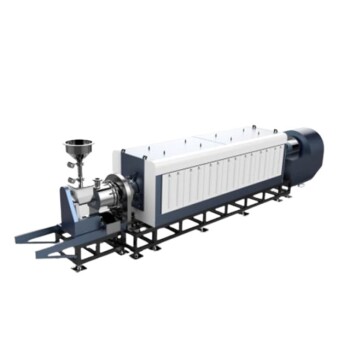
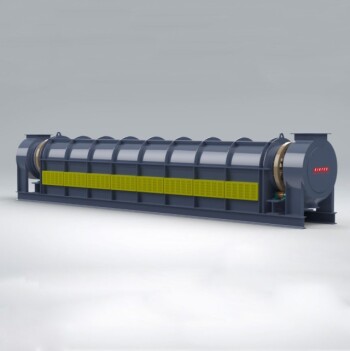
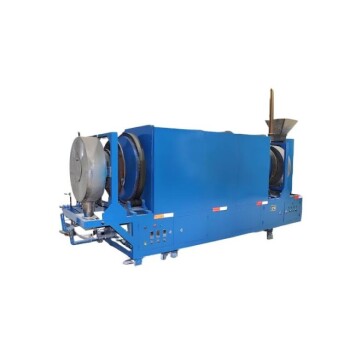
The high-precision vacuum tube furnace is the fundamental engine for converting Pickled Mustard Root Skin (PoBJ) into high-performance biochar. By maintaining a strictly anaerobic environment at pressures near -0.1 MPa and executing precise, programmed heating rates (such as 10°C/min), the furnace induces directional carbonization. This specialized environment ensures that organic matter undergoes cracking and reconstruction without combustion, resulting in a carbon-rich material with optimized surface chemistry.
A high-precision vacuum tube furnace facilitates vacuum pyrolysis by providing the exact thermal and atmospheric conditions required to preserve vital functional groups. This controlled decomposition allows for the creation of PoBJ biochar with the specific porous structures and chemical signatures necessary for selective adsorption.
Establishing the Anaerobic Pyrolysis Environment
Pressure Regulation and Oxygen Exclusion
The furnace facilitates pyrolysis by reducing system pressure to -0.1 MPa, effectively removing oxygen from the reaction chamber. This low-pressure environment is critical for PoBJ because it prevents the raw biomass from simply burning or oxidizing into ash.
Use of Inert Protective Gases
While vacuum is the primary driver, these furnaces often utilize high-purity nitrogen (N2) as a protective gas to maintain a stable, oxygen-deficient atmosphere. This dual-action approach—vacuum combined with inert gas flow—ensures that the carbonization process remains strictly anaerobic.
Preservation of Volatile Compounds
By controlling the atmosphere so strictly, the furnace prevents the premature loss of essential elements. This allows the biomass to retain oxygen-containing, nitrogen-containing, and sulfur-containing functional groups that would otherwise be lost in a standard combustion environment.
Precision Thermal Control and Directional Carbonization
Programmed Heating Rates
High-precision furnaces allow researchers to set specific heating rates, such as 10°C/min or 25°C/min, which dictate the speed of thermal decomposition. For PoBJ skin, a controlled ramp-up is vital for directional carbonization, ensuring the carbon skeleton forms consistently without structural collapse.
Multi-Stage Isothermal Holding
The ability to hold the furnace at constant temperatures (e.g., 350°C to 700°C) allows for the complete cracking and reconstruction of organic matter. These holding phases are essential for the polymerization reactions that stabilize the biochar’s carbon structure and define its final yield.
Impact on Pore Structure
The furnace's precise thermal environment directly determines the initial pore structure and specific surface area of the resulting biochar. This controlled "thermal stress" induces the formation of micropores and mesopores, which are the primary sites for future adsorption tasks.
Understanding the Trade-offs and Pitfalls
Heating Rate vs. Surface Functionality
Faster heating rates (e.g., 25°C/min) may increase throughput but can lead to the rapid loss of surface functional groups. If the goal is high selective adsorption, a slower heating rate (e.g., 2°C/min to 10°C/min) is often required to preserve the chemical integrity of the PoBJ precursor.
Seal Integrity and Vacuum Leaks
The effectiveness of a high-precision furnace is entirely dependent on its vacuum seal integrity. Even minor leaks can introduce trace oxygen, which can cause partial oxidation of the biochar, significantly reducing its carbon content and altering its phosphorus transformation mechanisms.
Temperature Uniformity
In lower-quality furnaces, temperature gradients across the tube can lead to inconsistent biochar quality. High-precision models are necessary to ensure that the entire batch of Pickled Mustard Root Skin experiences identical thermal conditions, ensuring a homogenous end product.
Optimizing the Pyrolysis Process for Your Goals
To achieve the best results with your PoBJ biochar, align your furnace settings with your specific research or production objectives.
- If your primary focus is Selective Adsorption: Use a slow heating rate (10°C/min) and lower terminal temperatures to maximize the retention of N, O, and S functional groups.
- If your primary focus is High Surface Area: Utilize higher carbonization temperatures and multi-stage isothermal holds to encourage the development of extensive porous structures.
- If your primary focus is Biochar Yield: Ensure the system is strictly sealed at -0.1 MPa and utilize nitrogen protection to prevent any mass loss through oxidation.
By mastering the furnace's atmospheric and thermal controls, you can precisely engineer the chemical and physical properties of PoBJ biochar for advanced environmental applications.
Summary Table:
| Feature | Process Function | Impact on PoBJ Biochar |
|---|---|---|
| Vacuum Control (-0.1 MPa) | Oxygen Exclusion | Prevents combustion; preserves N, O, and S functional groups |
| Programmed Heating | Controlled Decomposition | Defines pore structure and prevents structural collapse |
| Multi-stage Isothermal Holding | Complete Carbonization | Stabilizes carbon skeleton and optimizes final yield |
| Inert Gas (N2) Flow | Stable Anaerobic Atmosphere | Ensures uniform cracking and reconstruction of organic matter |
Elevate Your Biochar Research with KINTEK’s Precision Engineering
Achieving the perfect balance of surface area and functional group retention requires equipment that offers absolute control. KINTEK specializes in high-precision laboratory solutions designed to transform biomass like Pickled Mustard Root Skin (PoBJ) into high-performance materials. Our vacuum tube furnaces provide the thermal uniformity and vacuum integrity essential for successful directional carbonization.
Our extensive portfolio includes:
- High-Temperature Furnaces: Muffle, tube, rotary, vacuum, CVD, and PECVD systems.
- Pressure & Reaction Vessels: High-temperature high-pressure reactors and autoclaves.
- Material Processing: Crushing and milling systems, sieving equipment, and hydraulic presses (pellet, hot, isostatic).
- Specialized Lab Tools: Electrolytic cells, electrodes, battery research tools, and advanced cooling solutions.
- Premium Consumables: High-purity PTFE products, ceramics, and crucibles.
Ready to optimize your pyrolysis process? Contact KINTEK today to discover how our advanced furnace technology can enhance your lab's efficiency and material quality.
References
- Tao-Tao Shi, Jin‐Gang Yu. Efficient and Selective Removal of Organic Cationic Dyes by Peel of Brassica juncea Coss. var. gemmifera Lee et Lin-Based Biochar. DOI: 10.3390/molecules28083353
This article is also based on technical information from Kintek Solution Knowledge Base .
Related Products
- Laboratory High Pressure Vacuum Tube Furnace
- Laboratory Vacuum Tilt Rotary Tube Furnace Rotating Tube Furnace
- Vacuum Sealed Continuous Working Rotary Tube Furnace Rotating Tube Furnace
- Electric Rotary Kiln Small Rotary Furnace Biomass Pyrolysis Plant
- 1700℃ Controlled Atmosphere Furnace Nitrogen Inert Atmosphere Furnace
People Also Ask
- What is the primary function of a high-vacuum tube furnace in CVD synthesis of Sb-doped Bi2Se3? Precision Growth Control
- What role does a high-vacuum tube furnace play in synthesizing manganese nitride? Achieve Precise Phase & Stoichiometry.
- What is the role of a high-vacuum tube furnace in preparing Co3S4@NiS2/C composite materials? Expert Synthesis Insights
- Role of High-Pressure Tube Furnace in Ru/OMC Synthesis: Achieve Precise Reduction & Nanostructure Control
- What are the primary functions of a high-pressure tube furnace? Expert Guide to MWCNT/Metal Oxide Synthesis