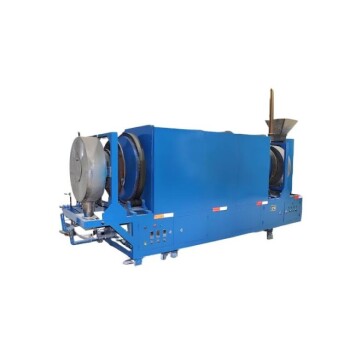
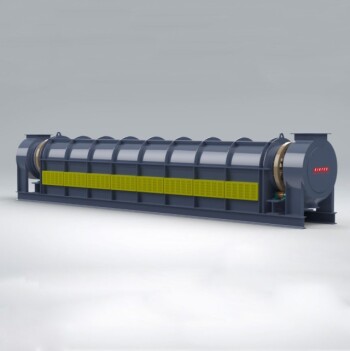
A high-temperature pyrolysis furnace drives the PIP process by applying precise thermal energy within a controlled inert environment. It converts liquid organometallic precursors into solid inorganic ceramics through a strictly managed sequence of chemical reactions—specifically cross-linking, gas evolution, and ceramization—at temperatures ranging from 1000°C to 1600°C.
In the Precursor Infiltration and Pyrolysis (PIP) process, the furnace acts as a reactor that transforms organic polymers into durable inorganic matrices (such as ZrC, HfC, or SiC) by stripping away volatile components under high heat while preventing oxidation.
The Mechanism of Transformation
The pyrolysis furnace facilitates the conversion of polymer to ceramic through three distinct physical and chemical mechanisms.
Precise Thermal Management
The furnace operates between 1000°C and 1600°C.
It does not simply heat the material; it executes precise temperature control programs.
These ramp rates determine how the material behaves, ensuring the precursor transitions from a liquid or solid polymer into a ceramic without destroying the underlying fiber architecture.
Chemical Cross-Linking and Curing
Before full ceramization occurs, the furnace facilitates cross-linking.
This stage stabilizes the polymer structure, effectively "freezing" the shape of the impregnated precursor.
It prevents the material from melting or deforming uncontrollably as temperatures continue to rise.
Gas Evolution and Ceramization
As the temperature peaks, the organic components of the precursor break down.
This process, known as gas evolution, releases volatile elements, leaving behind the desired inorganic backbone.
The remaining material undergoes ceramization, crystallizing into a hard ceramic matrix like Zirconium Carbide (ZrC) or Silicon Carbide (SiC) around the fiber preform.
The Critical Role of Atmosphere Control
The environment inside the furnace is just as critical as the temperature.
Inert Gas Protection
The furnace maintains a strictly controlled inert atmosphere throughout the process.
This prevents oxygen from reacting with the precursor or the fiber reinforcement.
Without this protection, the high temperatures would cause the materials to oxidize and degrade rather than convert into the target ceramic.
Understanding the Trade-offs: Porosity and Cycles
While the pyrolysis furnace is effective at converting chemistry, the process introduces structural challenges that must be managed.
Inherent Porosity and Shrinkage
The gas evolution phase inevitably leads to mass loss.
As volatile gases escape the matrix, they leave behind voids, resulting in a porous inorganic ceramic matrix.
This porosity can significantly reduce the mechanical strength of the final composite if left unaddressed.
The Requirement for Multiple Cycles
To counteract porosity, a single pass through the furnace is rarely sufficient.
The process often requires multiple cycles of infiltration and pyrolysis.
By repeatedly impregnating the porous ceramic and re-firing it, you gradually increase density and connection strength, potentially exceeding 200 MPa.
Making the Right Choice for Your Goal
The effectiveness of the PIP process depends on how you tune the furnace parameters to match your specific material requirements.
- If your primary focus is maximizing density: Plan for multiple pyrolysis cycles to fill the micropores and cracks created by gas evolution.
- If your primary focus is material purity: Ensure your furnace maintains a flawless inert atmosphere to prevent oxidation during the sensitive high-temperature phases.
Success in PIP relies not just on reaching high temperatures, but on the precise control of the thermal ramp and atmospheric conditions.
Summary Table:
| PIP Process Stage | Temperature Range | Primary Mechanism | Outcome |
|---|---|---|---|
| Cross-linking | Low to Mid Range | Chemical Stabilization | Stabilizes polymer structure; prevents deformation. |
| Gas Evolution | 1000°C - 1600°C | Volatile Removal | Organic components break down; leaves inorganic backbone. |
| Ceramization | Peak Temperatures | Crystallization | Formation of hard ceramic matrix (e.g., SiC, ZrC). |
| Densification | Multiple Cycles | Repeat Infiltration | Fills voids/pores to achieve high mechanical strength (>200 MPa). |
Elevate Your Material Science with KINTEK Precision
Unlock the full potential of your Precursor Infiltration and Pyrolysis (PIP) workflows with KINTEK’s advanced thermal solutions. Whether you are developing high-performance SiC composites or next-generation ZrC matrices, our high-temperature furnaces—including vacuum, atmosphere, and tube systems—provide the precise ramp control and inert environments essential for flawless ceramization.
From crushing and milling systems for precursor preparation to high-pressure reactors and specialized isostatic presses for densification, KINTEK offers a comprehensive ecosystem for laboratory and industrial research. Don't let porosity or oxidation compromise your results.
Ready to optimize your ceramic conversion? Contact KINTEK today to discuss your specific application and furnace requirements!
Related Products
- 1700℃ Laboratory High Temperature Tube Furnace with Alumina Tube
- High Temperature Muffle Oven Furnace for Laboratory Debinding and Pre Sintering
- Ultra-High Temperature Graphite Vacuum Graphitization Furnace
- Vacuum Heat Treat and Pressure Sintering Furnace for High Temperature Applications
- Vertical High Temperature Graphite Vacuum Graphitization Furnace
People Also Ask
- What functions does a laboratory high-temperature tube furnace perform? Master Catalyst Synthesis & Carbonization
- What roles does a high-temperature tube furnace play in the synthesis of N/O co-doped carbon? Master Precise Doping
- How does a laboratory tube furnace facilitate methane catalyst evaluation & regeneration? Optimize Thermal Performance
- How does a high-temperature tube furnace influence 253MA steel? Master Microstructure & High-Temp Creep Resistance
- What are the primary applications of muffle and tube furnaces in photocatalysts? Optimize Metal Loading & Support Synthesis