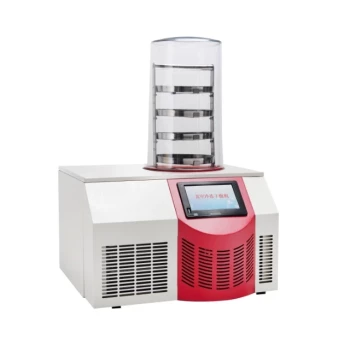
A vacuum drying oven serves as the definitive structural refinement step in the fabrication of Sandwich Composite Polymer Electrolyte (SCPE) membranes. Following the coating process, this equipment is used to extract residual solvents, specifically Acetonitrile (ACN) and N-Methyl-2-pyrrolidone (NMP), at controlled temperatures between 60°C and 80°C. By leveraging low pressure, the oven enables efficient evaporation without exposing the sensitive polymer matrix to the high temperatures that would otherwise be required.
While the vacuum drying oven is essential for solvent removal, its most critical function is structural engineering. It eliminates air bubbles and pore defects, creating a dense, defect-free membrane with the tight interlayer bonding necessary for high-performance solid-state batteries.
Preserving the Polymer Matrix via Thermal Control
Lowering the Evaporation Threshold
The primary challenge in fabricating SCPE membranes is removing stubborn solvents like NMP and ACN without burning the material.
The vacuum environment significantly lowers the boiling point of these solvents. This allows them to evaporate efficiently at moderate temperatures (60-80°C).
Preventing Thermal Degradation
Standard drying methods often require high heat to drive off solvents, which can damage polymer chains.
By operating at reduced temperatures, the vacuum oven prevents thermal degradation. This ensures the chemical backbone of the polymer remains intact, maintaining the mechanical strength and flexibility of the electrolyte.
Achieving Structural Density and Bonding
Elimination of Micro-Defects
During the coating process, air bubbles and volatile gases can become trapped in the slurry.
If left untreated, these bubbles create porous defects in the final membrane. The vacuum process actively draws these trapped gases out, resulting in a dense, uniform structure free of voids.
Facilitating Interlayer Bonding
SCPE membranes rely on a "sandwich" structure, which requires distinct layers to adhere perfectly to one another.
The vacuum drying process ensures tight interlayer bonding by removing the solvent interfaces that could separate layers. This creates a cohesive, single-unit membrane rather than a loose stack of materials.
Understanding the Trade-offs
Process Time vs. Membrane Integrity
While vacuum drying allows for lower temperatures, it often requires significantly longer processing times (often 24 to 48 hours) to ensure total solvent removal.
Rushing this process by increasing the temperature—even under vacuum—can lead to rapid evaporation that causes cracking or warping. Patience is required to maintain the structural homogeneity of the membrane.
The Risk of Residual Contaminants
Even trace amounts of residual solvent or moisture can compromise the electrochemical window or react with lithium metal.
Operators must ensure the vacuum level is sufficient to remove the "last 1%" of contaminants. A membrane that looks dry may still contain microscopic residues that will degrade battery performance over time.
Making the Right Choice for Your Goal
The vacuum drying parameters you choose will define the final characteristics of your electrolyte membrane.
- If your primary focus is Mechanical Longevity: Prioritize lower temperatures (closer to 60°C) over longer durations to minimize thermal stress and maximize polymer flexibility.
- If your primary focus is Electrochemical Stability: Ensure the drying duration is extended to guarantee the absolute removal of ACN and moisture, preventing side reactions with the anode.
Success in SCPE fabrication lies in using the vacuum oven not just as a dryer, but as a tool to densify and unify the composite structure.
Summary Table:
| Feature | Benefit for SCPE Fabrication |
|---|---|
| Low-Pressure Environment | Lowers solvent boiling points to protect sensitive polymer matrices from high heat. |
| Thermal Control (60-80°C) | Prevents thermal degradation, maintaining the mechanical strength and flexibility of the electrolyte. |
| Bubble Elimination | Removes trapped gases and air bubbles to create a dense, void-free, and uniform membrane structure. |
| Interlayer Bonding | Facilitates superior adhesion between the 'sandwich' layers for a cohesive single-unit membrane. |
| Contaminant Removal | Ensures absolute removal of residual ACN and moisture to prevent electrochemical side reactions. |
Elevate Your Battery Research with KINTEK Precision Solutions
Precision is paramount in the fabrication of high-performance Sandwich Composite Polymer Electrolyte (SCPE) membranes. KINTEK specializes in advanced laboratory equipment designed to meet the rigorous demands of solid-state battery research.
Our high-performance vacuum ovens and battery research tools provide the controlled environments necessary to eliminate defects and ensure structural integrity. Beyond drying solutions, we offer a comprehensive portfolio including:
- High-Temperature Furnaces & Reactors (Muffle, Tube, CVD, PECVD)
- Hydraulic Presses (Pellet, Hot, Isostatic) for material densification
- Crushing, Milling, and Sieving Systems for precursor preparation
- Essential Consumables (PTFE products, ceramics, and crucibles)
Ready to optimize your membrane integrity and electrochemical stability? Contact KINTEK today to discover how our specialized equipment can enhance your lab's efficiency and research outcomes.
Related Products
- 56L Vertical Laboratory Vacuum Drying Oven
- 23L Laboratory Vacuum Drying Oven
- Laboratory Scientific Electric Heating Blast Drying Oven
- Benchtop Laboratory Vacuum Freeze Dryer
- Dental Porcelain Zirconia Sintering Ceramic Vacuum Press Furnace
People Also Ask
- Why is a laboratory vacuum drying oven recommended for rice straw residues? Protect Your Biomass Integrity
- What role does a laboratory vacuum drying oven play in the preparation of modified multi-walled carbon nanotubes?
- What is the importance of using a laboratory vacuum drying oven? Preserving Slow-Release Microcapsule Integrity
- Why is a Laboratory Vacuum Drying Oven recommended for PBAT microspheres? Protect Sensitive Polymer Integrity
- What role does a laboratory vacuum drying oven play in processing nanoparticle powder samples? Protect Sample Integrity