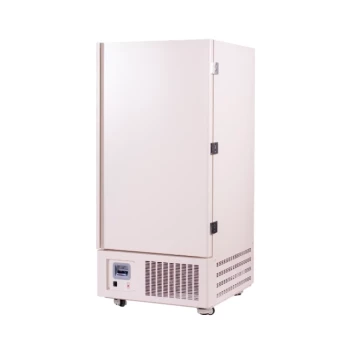
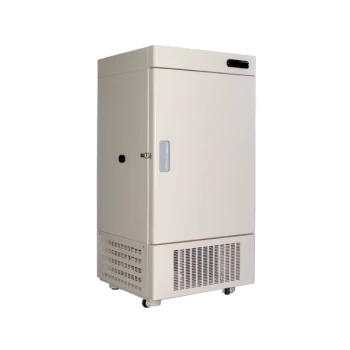
Vacuum freeze drying prevents oxidation by sublimating a frozen liquid medium directly into gas under vacuum conditions, effectively bypassing the liquid phase evaporation used in traditional methods. This process isolates the aluminum powder from atmospheric oxygen during the critical drying phase, preventing chemical reactions that would otherwise degrade the material's metallic activity.
The Core Insight Fine aluminum powders possess high surface energy, making them chemically unstable and prone to violent oxidation when exposed to air or heat. Vacuum freeze drying neutralizes this risk by maintaining a low-temperature, oxygen-free environment that removes solvents via sublimation, thereby preserving the raw material's chemical purity and reactivity.
The Mechanics of Oxidation Prevention
Bypassing the Liquid Phase
The fundamental difference in freeze drying is the removal of the solvent through sublimation. Instead of heating a liquid until it evaporates, the medium (such as tert-butanol) is frozen solid and then converted directly into gas.
This allows the drying process to skip the liquid phase entirely. By avoiding the liquid state during drying, the system eliminates a primary vector for chemical instability that often occurs during conventional evaporation.
The Protective Vacuum Environment
The entire process takes place within a vacuum chamber. This physically removes atmospheric oxygen from the immediate environment surrounding the powder.
Without the presence of oxygen, the aluminum cannot undergo the oxidation reactions that typically degrade its quality. This "oxygen-free" condition is essential for maintaining the material's integrity.
Why Aluminum Powder Requires Special Handling
High Surface Energy and Reactivity
Ball-milled aluminum-based powders are characterized by extreme fineness and high surface energy. In technical terms, this high energy state makes the particles desperate to react with their surroundings.
If exposed to standard atmospheric conditions during drying, these powders can react violently. This sensitivity requires a method that strictly controls the environmental variables, specifically temperature and gas composition.
Preserving Metallic Activity
The ultimate goal of using a freeze dryer in this context is to retain "metallic activity." Oxidation forms a passivation layer on the aluminum, rendering it less reactive for its intended application.
By preventing this oxide layer from forming, the freeze dryer ensures the final powder retains the high chemical potential generated during the ball-milling process.
Risks of Conventional Drying Methods
Thermal Oxidation and Denaturation
Traditional drying methods, such as spray drying or standard oven drying, rely heavily on heat to evaporate moisture. Heat acts as a catalyst for oxidation, accelerating the degradation of the aluminum powder.
Furthermore, heat-sensitive components within a mixed powder can denature or chemically alter. This results in a product with changed texture, size, and reduced performance characteristics.
Structural Collapse and "Hornification"
Conventional thermal drying often causes a phenomenon known as "hornification," where microporous structures collapse and surfaces harden due to surface tension during liquid evaporation.
This physical collapse reduces the surface area and accessibility of the material. Freeze drying prevents this shrinkage and densification, preserving the loose, porous structure essential for subsequent chemical bonding or ion transport.
Ensuring Material Integrity for Your Application
To maximize the performance of your aluminum-based powders, align your drying strategy with your specific material requirements.
- If your primary focus is High Chemical Reactivity: Choose vacuum freeze drying to prevent oxidation and preserve the high surface energy required for energetic or catalytic applications.
- If your primary focus is Structural Preservation: Use freeze drying to maintain the micron-scale porous channels and loose physical structure, avoiding the pore collapse associated with thermal evaporation.
Summary: By replacing heat-driven evaporation with vacuum sublimation, you effectively decouple the drying process from the chemical risks of oxidation, ensuring your aluminum powders remain active, porous, and pure.
Summary Table:
| Feature | Vacuum Freeze Drying | Traditional Thermal Drying |
|---|---|---|
| Mechanism | Sublimation (Solid to Gas) | Evaporation (Liquid to Gas) |
| Environment | Low-temp, Oxygen-free Vacuum | High-temp, Atmospheric Air |
| Oxidation Risk | Minimal - Prevents oxide layer | High - Heat accelerates oxidation |
| Structure | Porous, loose (no shrinkage) | Dense, collapsed ("Hornification") |
| Metallic Activity | High preservation of purity | Reduced due to passivation layer |
Elevate Your Material Synthesis with KINTEK Precision
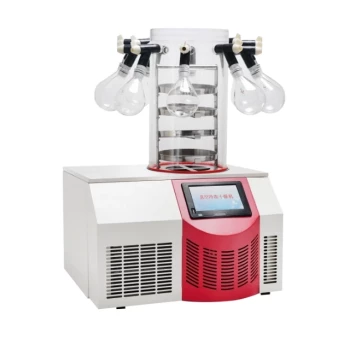
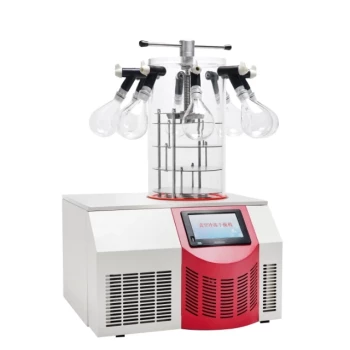
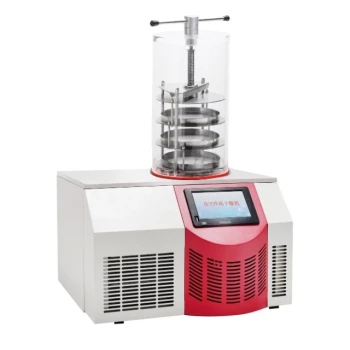
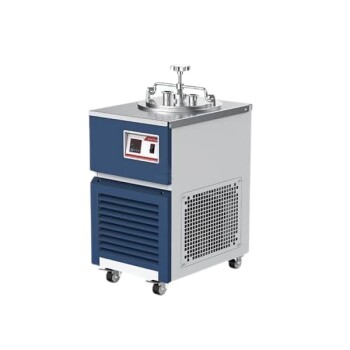
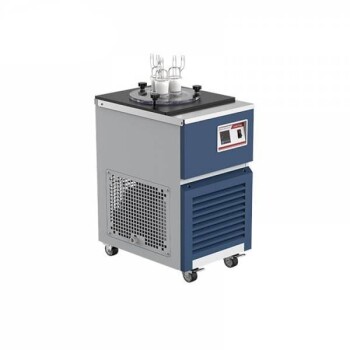
Preserving the high surface energy and metallic activity of ball-milled aluminum requires more than just standard drying—it requires precision environmental control. KINTEK specializes in advanced laboratory solutions designed to protect your most sensitive materials. Our range of vacuum freeze dryers (cold traps and freeze dryers) ensures oxygen-free sublimation, preventing oxidation and structural collapse in reactive powders.
Beyond drying, KINTEK offers a comprehensive ecosystem for material research, including:
- Crushing and Milling Systems: For achieving uniform, high-energy powders.
- High-Temperature Furnaces & Reactors: For subsequent processing under controlled atmospheres.
- Specialized Consumables: From high-purity ceramics to PTFE products that ensure zero contamination.
Don't let oxidation compromise your research. Contact KINTEK today to find the perfect drying and processing solution for your laboratory!
Related Products
- Benchtop Laboratory Vacuum Freeze Dryer
- High Performance Laboratory Freeze Dryer
- Benchtop Laboratory Freeze Dryer for Lab Use
- High Performance Laboratory Freeze Dryer for Research and Development
- 56L Vertical Laboratory Vacuum Drying Oven
People Also Ask
- What are the technical advantages of using a laboratory freeze dryer for porous carbon precursors? Preserve 3D Networks
- How do laboratory freeze dryers support scientific research? Preserve Sample Integrity for Reproducible Results
- Why is a laboratory freeze dryer preferred over traditional heating? Preserve Biochar Structure & Maximize Porosity
- What types of liquid samples can be processed using a laboratory freeze dryer? Preserve Your Sensitive Materials
- What role do laboratory freeze dryers play in the food industry? Unlock Superior Food Preservation