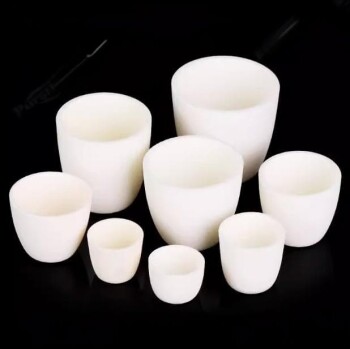
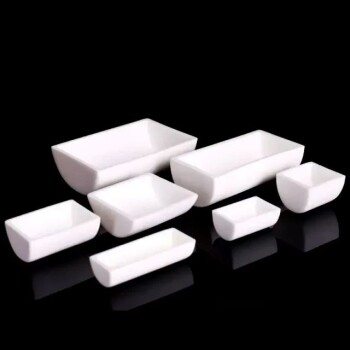
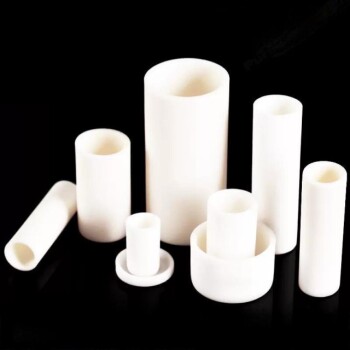
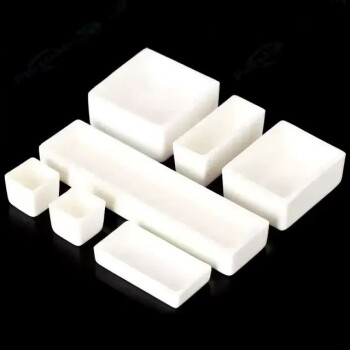
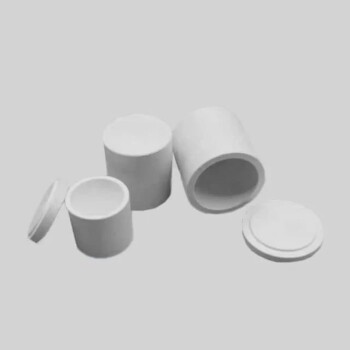
During the high-temperature sintering of NZSP solid electrolytes, an alumina crucible functions as a specialized isolation chamber that protects the chemical composition of the material. Specifically, it holds the NZSP green bodies and protective "mother powders" at temperatures around 1180°C, creating a controlled micro-environment that suppresses the loss of volatile elements while shielding the sample from the furnace chamber.
The alumina crucible is the primary defense against sodium volatilization, which is the leading cause of performance degradation in NZSP electrolytes. By containing the sample within a bed of mother powder, the crucible ensures the final ceramic retains the correct chemical stoichiometry required for high ionic conductivity.
The Critical Roles of Containment
Thermal Stability Under Extreme Heat
The sintering process for NZSP requires temperatures that can reach or exceed 1180°C. Alumina crucibles are selected for this task because they possess excellent high-temperature resistance.
While they can withstand environments up to 1800°C, their stability at the specific NZSP sintering point (1180°C) is crucial. At this temperature, the crucible remains structurally rigid and does not soften or deform, ensuring the physical shape of the green body is preserved.
Isolation from the Furnace Environment
A major risk during sintering is contamination from the furnace lining or heating elements. The alumina crucible acts as a physical barrier.
It effectively prevents the NZSP material from reacting with the furnace chamber materials. Conversely, it also prevents molten substances or volatile components from the sample from leaking out and damaging the furnace lining.
Controlling Stoichiometry and Volatilization
The Challenge of Sodium Volatilization
NZSP (Na super ionic conductor type materials) contains sodium, which is highly volatile at sintering temperatures. If sodium evaporates uncontrolled, the material loses its intended chemical formula (stoichiometry).
This loss leads to the formation of secondary phases and a drastic reduction in ionic conductivity. The crucible's most distinct function is helping to mitigate this loss.
The Role of Mother Powders
To solve the volatilization problem, the alumina crucible is used to hold "mother powders" (sacrificial powder of the same composition) alongside the NZSP green body.
The crucible contains this powder around the sample. This creates a local atmosphere saturated with sodium vapor within the crucible volume. This equilibrium pressure suppresses further evaporation from the actual NZSP sample, ensuring the final electrolyte is pure and conductive.
Understanding the Trade-offs
Thermal Shock Sensitivity
While alumina has good thermal resistance, it is generally less resistant to rapid temperature changes than metals.
Sudden heating or cooling can cause the crucible to crack. It is essential to manage ramp rates carefully to prevent crucible failure, which could expose the sample to the furnace atmosphere or spill materials.
Chemical Compatibility
Although alumina is chemically stable, direct contact between the electrolyte green body and the crucible wall can sometimes lead to adhesion or minor reactions at peak temperatures.
This is another reason the mother powder is critical. It acts similarly to a sacrificial layer (like the setup used in LATP sintering), physically isolating the green body from the crucible walls to prevent sticking or contamination.
Making the Right Choice for Your Goal
To ensure the success of your NZSP sintering process, consider how you utilize the crucible assembly:
- If your primary focus is Chemical Purity (Stoichiometry): Ensure the alumina crucible is generously filled with mother powder to fully encase the green body, creating a robust buffer against sodium loss.
- If your primary focus is Process Consistency: Monitor the crucible condition closely for micro-cracks caused by thermal shock, as compromised integrity will alter the local atmosphere and lead to batch-to-batch variance.
The alumina crucible is not merely a container; it is a vital process control tool that enables the precise chemical environment necessary for high-performance solid electrolytes.
Summary Table:
| Function | Description | Key Benefit |
|---|---|---|
| Thermal Stability | Withstands temperatures up to 1800°C without deformation. | Maintains sample shape at 1180°C sintering point. |
| Isolation Barrier | Shields samples from furnace linings and heating elements. | Prevents cross-contamination and furnace damage. |
| Atmosphere Control | Holds sacrificial "mother powders" around the green body. | Suppresses sodium loss to ensure high ionic conductivity. |
| Chemical Purity | Acts as a controlled micro-environment chamber. | Guarantees correct stoichiometry for pure electrolytes. |
Elevate your material research with KINTEK’s precision engineering. Whether you are sintering advanced NZSP electrolytes or developing next-generation batteries, KINTEK specializes in high-performance laboratory equipment. From high-purity alumina crucibles and ceramics to advanced muffle and vacuum furnaces, we provide the tools necessary to prevent volatilization and ensure chemical purity. Our comprehensive portfolio also includes high-pressure reactors, crushing systems, and hydraulic presses tailored for demanding lab environments. Contact us today to discover how our high-temperature solutions can optimize your sintering consistency and research outcomes!
Related Products
- Arc-Shaped Alumina Ceramic Crucible High Temperature Resistant for Engineering Advanced Fine Ceramics
- Alumina Al2O3 Ceramic Crucible Semicircle Boat with Lid for Engineering Advanced Fine Ceramics
- Engineering Advanced Fine Ceramics Alumina Al2O3 Crucible With Lid Cylindrical Laboratory Crucible
- Engineering Advanced Fine Ceramics Alumina Crucibles (Al2O3) for Thermal Analysis TGA DTA
- Engineering Advanced Fine Alumina Al2O3 Ceramic Crucible for Laboratory Muffle Furnace
People Also Ask
- Why Use Alumina Crucibles & Powder Burial for NaSICON? Ensure Phase Purity and Prevent Elemental Volatilization
- What is the primary purpose of using alumina crucibles for LLTO ceramics? Optimize Your High-Temperature Sintering
- Why are alumina crucibles and mother powder essential for LATP sintering? Optimize Your Solid Electrolyte Performance
- Why are high-purity alumina crucibles used for liquid lead corrosion experiments? Ensure Data Accuracy at 550°C
- Primary considerations for choosing alumina crucibles and quartz tubes in indium intercalation: Ensure Material Purity