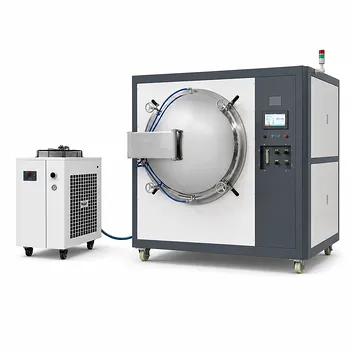
Precise programmatic heating is the key mechanism by which a multi-stage annealing furnace resolves structural issues in EK-181 steel. By utilizing defined durations at specific temperatures, the furnace significantly reduces the intensity of martensite tempering, preventing the degradation of the material's internal structure.
Core Takeaway Multi-stage temperature control moves beyond simple heating to act as a microstructural engineering tool. It specifically minimizes ferrite formation and restricts martensitic plate growth, ensuring the steel retains the high dislocation density required for superior mechanical performance.
The Mechanics of Structural Preservation
Programmed Thermal Management
The fundamental advantage of this furnace technology is its ability to execute programmed heating.
Rather than a monotonic increase in heat, the system modulates temperature and duration across various stages.
This modulation is the direct countermeasure to the natural tendency of martensite to temper too intensely during standard annealing processes.
Key Structural Improvements
Minimizing Ferrite Volume
A primary structural issue in annealing is the unwanted formation of ferrite, which can soften the steel.
Multi-stage control effectively minimizes the volume fraction of ferrite.
By limiting this fraction, the steel maintains a harder, more robust matrix better suited for high-stress applications.
Restricting Martensitic Growth
Uncontrolled heating often leads to the coarsening of the microstructure.
This specific process restricts the lateral growth of martensitic plates.
Keeping these plates fine and narrow is essential for maintaining the material's structural integrity and toughness.
Preserving Dislocation Density
Strength in steel is often derived from crystal lattice defects known as dislocations.
The multi-stage process preserves a higher dislocation density than conventional methods.
This retention is critical because a loss of dislocation density typically correlates with a loss of yield strength.
Optimizing Particle Distribution
The final structural benefit is the arrangement of the strengthening phase.
The controlled thermal environment optimizes the distribution of strengthening phase particles.
A uniform distribution ensures consistent mechanical properties throughout the material, avoiding weak points caused by particle clustering.
Understanding the Pitfalls of Standard Annealing
The Risk of Intense Tempering
Without the intervention of multi-stage control, EK-181 steel is susceptible to intense martensite tempering.
This typically results in a rapid degradation of the material's hardness and strength, negating the benefits of the initial heat treatment.
Loss of Microstructural Refinement
Standard annealing lacks the precision to inhibit microstructural coarsening.
This leads to wider martensitic plates and increased ferrite volume, structurally compromising the steel compared to the refined state achieved through programmed control.
Making the Right Choice for Your Goal
When processing EK-181 steel, your thermal cycle strategy dictates the final properties of the alloy.
- If your primary focus is maximum strength: Prioritize the preservation of high dislocation density by adhering strictly to programmed durations that prevent over-tempering.
- If your primary focus is microstructural uniformity: Focus on the stages that minimize ferrite volume and restrict the lateral growth of martensitic plates to ensure a consistent matrix.
Multi-stage temperature control is not merely a heating method; it is a critical requirement for stabilizing the strengthening phases and dislocation structure of EK-181 steel.
Summary Table:
| Structural Factor | Impact of Multi-Stage Control | Benefit to EK-181 Steel |
|---|---|---|
| Martensitic Plates | Restricts lateral plate growth | Maintains structural integrity & toughness |
| Ferrite Volume | Minimizes volume fraction | Prevents softening; maintains a robust matrix |
| Dislocation Density | Preserves high density levels | Ensures high yield strength and durability |
| Particle Distribution | Optimizes strengthening phase | Provides uniform mechanical properties |
| Tempering Intensity | Reduces intensity via programmed heating | Prevents rapid degradation of hardness |
Elevate Your Materials Research with KINTEK Precision
Unlock the full potential of EK-181 steel and other advanced alloys with KINTEK’s industry-leading thermal processing solutions. Our high-performance muffle and tube furnaces feature advanced multi-stage temperature control systems designed to eliminate microstructural coarsening and ensure precise structural preservation.
Whether you are refining microstructures or scaling production, KINTEK provides a comprehensive range of high-temperature furnaces, vacuum systems, and crushing and milling equipment tailored for the most demanding laboratory and industrial applications. From high-pressure reactors to specialized PTFE and ceramic consumables, we deliver the tools necessary for superior mechanical performance and consistent results.
Ready to optimize your annealing process? Contact KINTEK today to consult with our experts and find the perfect heating solution for your lab!
References
- Evgeniy Panin. Martensitic Transformations in Stainless Steels. DOI: 10.15407/ufm.23.04.684
This article is also based on technical information from Kintek Solution Knowledge Base .
Related Products
- Vacuum Heat Treat Furnace with Ceramic Fiber Liner
- Controlled Nitrogen Inert Hydrogen Atmosphere Furnace
- 1400℃ Controlled Atmosphere Furnace with Nitrogen and Inert Atmosphere
- 1700℃ Controlled Atmosphere Furnace Nitrogen Inert Atmosphere Furnace
- 1200℃ Controlled Atmosphere Furnace Nitrogen Inert Atmosphere Furnace
People Also Ask
- What is a vacuum heat treatment furnace? The Ultimate Guide to Controlled Atmosphere Processing
- What is vacuum heat treatment process? Achieve Superior Control, Cleanliness, and Quality
- How does a vacuum heat treatment work? Achieve Superior Material Properties in a Pristine Environment
- What is a vacuum heat treatment furnace? Achieve Unmatched Purity and Control
- What is the temperature of vacuum heat treatment? Achieve Superior Material Properties & Pristine Finishes