Knowledge thermal elements How does an electric oven heating element work? The Science of Resistive Heating Explained
Author avatar

Tech Team · Kintek Solution

Updated 2 months ago

How does an electric oven heating element work? The Science of Resistive Heating Explained


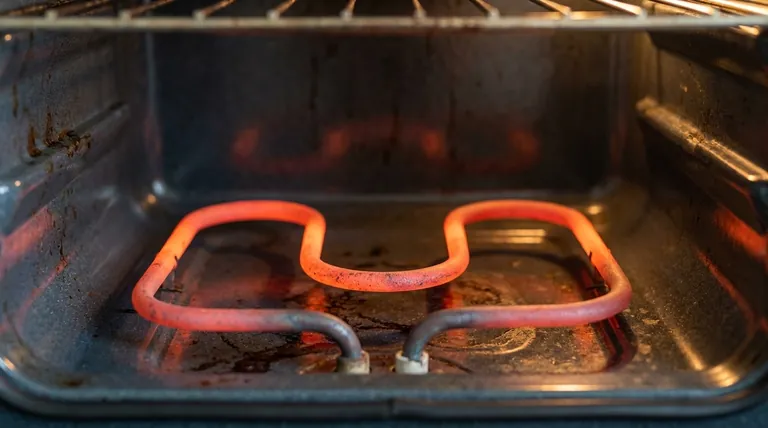
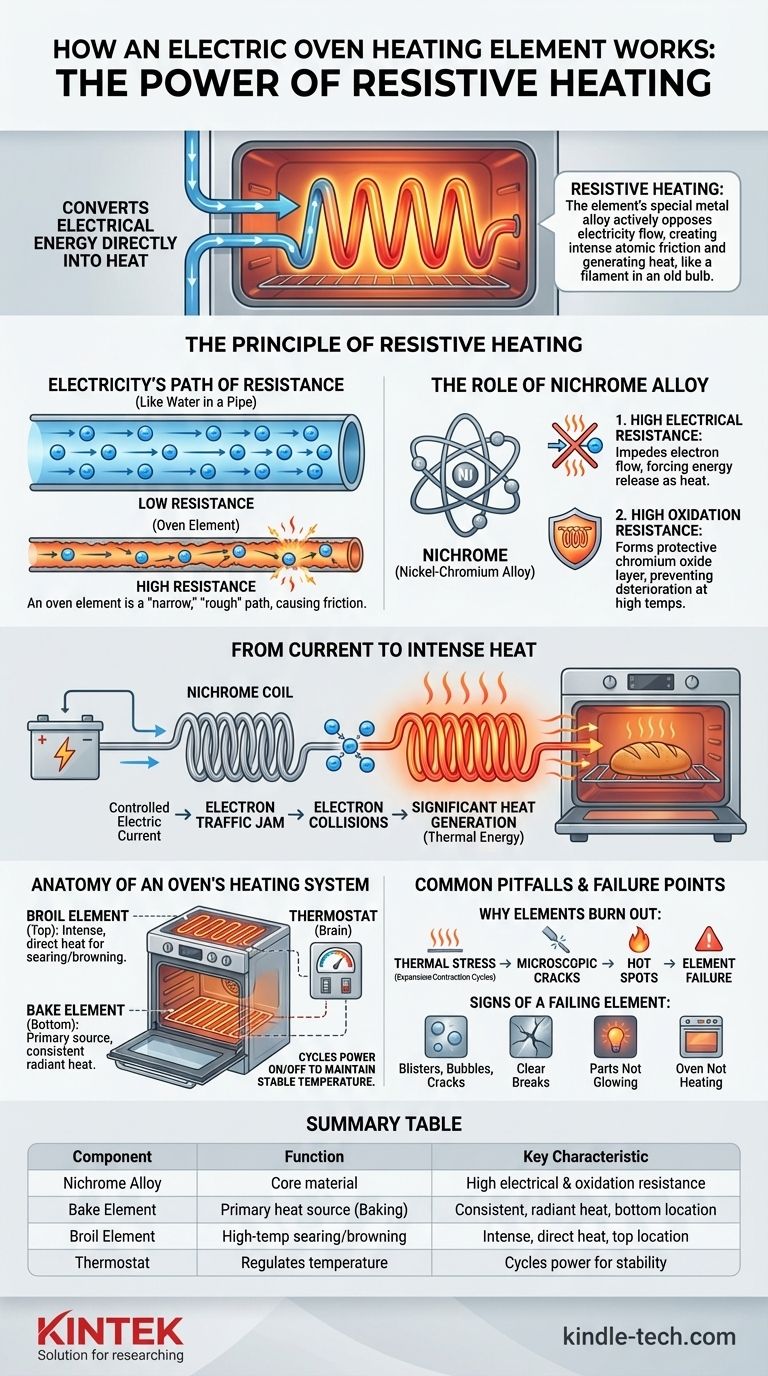
At its core, an electric oven heating element works by converting electrical energy directly into heat through a process known as resistive heating. When an electric current is passed through the element, the special metal alloy inside actively resists the flow of electricity. This opposition, or resistance, generates intense friction at an atomic level, causing the element to heat up and glow red-hot, much like the filament in an old incandescent light bulb.

The function of an oven's heating element is not merely to conduct electricity, but to actively resist its flow. This intentional opposition is what generates the intense, controlled heat required for cooking, turning electrical energy directly into thermal energy.
How does an electric oven heating element work? The Science of Resistive Heating Explained

The Principle of Resistive Heating

To understand how your oven works, you must first grasp the fundamental relationship between electricity and resistance. This simple principle is the foundation of all electric heating.

Electricity's Path of Resistance

Think of electricity flowing through a wire like water flowing through a pipe. A wide, smooth pipe allows water to flow easily with little friction. Similarly, a good conductor like a copper wire allows electricity to flow with very low resistance.

An oven heating element, however, is designed to be a very "narrow" and "rough" pipe for electricity.

The Role of Nichrome Alloy

Heating elements are typically made from nichrome, an alloy of nickel and chromium. This material is chosen for two critical properties:

  1. High Electrical Resistance: It naturally impedes the flow of electrons, forcing them to work harder and release energy as heat.
  2. High Oxidation Resistance: It forms a protective outer layer of chromium oxide when heated, which prevents it from deteriorating or burning out quickly at extreme temperatures.

From Current to Intense Heat

When you turn on your oven, a controlled electric current is sent to the nichrome coil inside the element. The alloy's high resistance causes a "traffic jam" for the flowing electrons.

These electron collisions generate significant heat. The energy that is lost by the electrons pushing through the resistive material is converted directly into thermal energy, causing the element to glow and radiate heat into the oven cavity.

Anatomy of an Oven's Heating System

The heating element doesn't work in isolation. It's a key component in a system designed to create and maintain specific cooking temperatures.

The Bake Element

Located at the bottom of the oven, the bake element is the primary source of heat for most baking functions. It provides consistent, radiant heat that rises and circulates throughout the oven.

The Broil Element

The broil element is at the top of the oven. It is designed for high-temperature, top-down cooking, providing intense, direct heat to sear or brown the surface of food quickly.

The Thermostat's Critical Role

The elements do not stay on continuously. A thermostat inside the oven acts as the system's brain, constantly monitoring the internal temperature.

When the oven reaches your set temperature, the thermostat cuts power to the element. As the temperature begins to drop, the thermostat sends power again. This constant cycling is what maintains a stable cooking environment.

Common Pitfalls and Failure Points

Heating elements are simple, but they are subject to intense stress and are often the first component in an electric oven to fail.

Why Elements Burn Out

The most common cause of failure is simple wear and tear. The constant cycle of extreme heating and cooling (thermal stress) causes the internal metal coil to expand and contract.

Over thousands of cycles, this can create a weak spot or a microscopic crack. At this weak point, resistance increases dramatically, creating a "hot spot" that can melt the metal and break the electrical circuit, rendering the element useless.

Signs of a Failing Element

You can often diagnose a bad element with a simple visual inspection. Key signs include:

  • Visible blisters, bubbles, or cracks on the element's surface.
  • A clear break or gap in the element.
  • Parts of the element not glowing when the oven is on.
  • The oven failing to heat up to the proper temperature.

Making the Right Choice for Your Goal

Understanding this process empowers you to diagnose issues and use your appliance more effectively.

  • If your primary focus is troubleshooting an oven that won't heat: First, visually inspect the bake and broil elements for any breaks, blisters, or spots that fail to glow red when turned on.
  • If your primary focus is longevity: Avoid placing foil directly on the oven floor, as this can trap heat and cause the bake element to overheat and fail prematurely.
  • If your primary focus is understanding the process: Remember that the element's entire purpose is to create friction for electricity, converting that energy into the controlled heat that cooks your food.

By grasping this simple principle of resistance, you can demystify your oven's operation and better appreciate the engineering at work.

Summary Table:

Component Function Key Characteristic
Nichrome Alloy The core material of the heating element High electrical resistance and oxidation resistance
Bake Element Primary heat source for baking Located at the bottom, provides consistent, radiant heat
Broil Element For high-temperature searing/browning Located at the top, provides intense, direct heat
Thermostat Regulates oven temperature Cycles power to the element to maintain a stable temperature

Need precise, reliable heating for your laboratory processes? The principle of resistive heating is fundamental to many lab ovens and furnaces. At KINTEK, we specialize in high-performance lab equipment designed for accuracy and durability. Whether you need a standard drying oven or a high-temperature muffle furnace, our solutions are engineered to meet the rigorous demands of your laboratory. Contact us today to find the perfect heating solution for your application!

Visual Guide
How does an electric oven heating element work? The Science of Resistive Heating Explained Visual Guide

Related Products

People Also Ask

Related Products

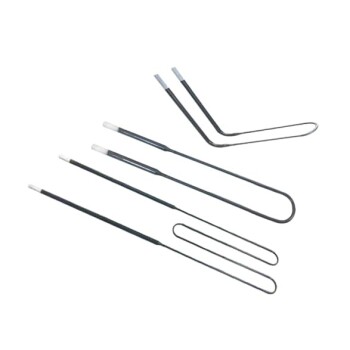
Molybdenum Disilicide (MoSi2) Thermal Elements Electric Furnace Heating Element

Molybdenum Disilicide (MoSi2) Thermal Elements Electric Furnace Heating Element

Discover the power of Molybdenum Disilicide (MoSi2) Heating Element for high-temperature resistance. Unique oxidation resistance with stable resistance value. Learn more about its benefits now!

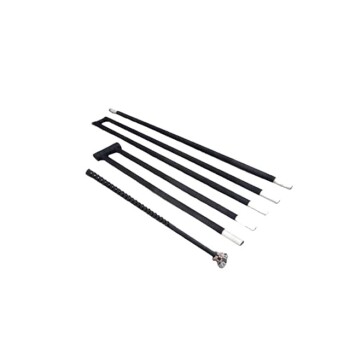
Silicon Carbide SiC Thermal Heating Elements for Electric Furnace

Silicon Carbide SiC Thermal Heating Elements for Electric Furnace

Experience the advantages of Silicon Carbide (SiC) Heating Element: Long service life, high corrosion and oxidation resistance, fast heating speed, and easy maintenance. Learn more now!

Engineering Advanced Fine Ceramics Aluminum Oxide Al2O3 Heat Sink for Insulation

Engineering Advanced Fine Ceramics Aluminum Oxide Al2O3 Heat Sink for Insulation

The hole structure of the ceramic heat sink increases the heat dissipation area in contact with the air, which greatly enhances the heat dissipation effect, and the heat dissipation effect is better than that of super copper and aluminum.

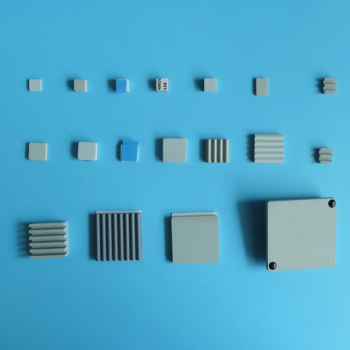
Silicon Carbide (SIC) Ceramic Sheet Flat Corrugated Heat Sink for Engineering Advanced Fine Ceramics

Silicon Carbide (SIC) Ceramic Sheet Flat Corrugated Heat Sink for Engineering Advanced Fine Ceramics

Silicon carbide (sic) ceramic heat sink not only does not generate electromagnetic waves, but also can isolate electromagnetic waves and absorb part of electromagnetic waves.

Double Plate Heating Press Mold for Lab

Double Plate Heating Press Mold for Lab

Discover precision in heating with our Double Plate Heating Mold, featuring high-quality steel and uniform temperature control for efficient lab processes. Ideal for various thermal applications.

10L Heating Chilling Circulator Cooling Water Bath Circulator for High and Low Temperature Constant Temperature Reaction

10L Heating Chilling Circulator Cooling Water Bath Circulator for High and Low Temperature Constant Temperature Reaction

Experience efficient lab performance with KinTek KCBH 10L Heating Chilling Circulator. Its all-in-one design offers reliable heating, chilling, and circulating functions for industrial and lab use.

50L Heating Chilling Circulator Cooling Water Bath Circulator for High and Low Temperature Constant Temperature Reaction

50L Heating Chilling Circulator Cooling Water Bath Circulator for High and Low Temperature Constant Temperature Reaction

Experience versatile heating, chilling, and circulating capabilities with our KinTek KCBH 50L Heating Chilling Circulator. Ideal for labs and industrial settings, with efficient and reliable performance.

High Temperature Constant Temperature Heating Circulator Water Bath Chiller Circulator for Reaction Bath

High Temperature Constant Temperature Heating Circulator Water Bath Chiller Circulator for Reaction Bath

Efficient and reliable, KinTek KHB Heating Circulator is perfect for your lab needs. With a max. heating temperature of up to 300℃, it features accurate temperature control and fast heating.

5L Heating Chilling Circulator Cooling Water Bath Circulator for High and Low Temperature Constant Temperature Reaction

5L Heating Chilling Circulator Cooling Water Bath Circulator for High and Low Temperature Constant Temperature Reaction

KinTek KCBH 5L Heating Chilling Circulator - Ideal for labs and industrial conditions with multi-functional design and reliable performance.

100L Heating Chilling Circulator Cooling Water Bath Circulator for High and Low Temperature Constant Temperature Reaction

100L Heating Chilling Circulator Cooling Water Bath Circulator for High and Low Temperature Constant Temperature Reaction

Get all-in-one heating, chilling, and circulating capabilities with our KinTek KCBH 80L Heating Chilling Circulator. High efficiency, reliable performance for labs and industrial applications.

30L Heating Chilling Circulator Cooling Water Bath Circulator for High and Low Temperature Constant Temperature Reaction

30L Heating Chilling Circulator Cooling Water Bath Circulator for High and Low Temperature Constant Temperature Reaction

Get versatile lab performance with KinTek KCBH 30L Heating Chilling Circulator. With max. heating temp of 200℃ and max. chilling temp of -80℃, it's perfect for industrial needs.

20L Heating Chilling Circulator Cooling Water Bath Circulator for High and Low Temperature Constant Temperature Reaction

20L Heating Chilling Circulator Cooling Water Bath Circulator for High and Low Temperature Constant Temperature Reaction

Maximize lab productivity with KinTek KCBH 20L Heating Chilling Circulator. Its all-in-one design offers reliable heating, chilling, and circulating functions for industrial and lab use.

Molybdenum Vacuum Heat Treat Furnace

Molybdenum Vacuum Heat Treat Furnace

Discover the benefits of a high-configuration molybdenum vacuum furnace with heat shield insulation. Ideal for high-purity, vacuum environments like sapphire crystal growth and heat treatment.

Automatic High Temperature Heated Hydraulic Press Machine with Heated Plates for Lab

Automatic High Temperature Heated Hydraulic Press Machine with Heated Plates for Lab

The High Temperature Hot Press is a machine specifically designed for pressing, sintering and processing materials in a high temperature environment. It is capable of operating in the range of hundreds of degrees Celsius to thousands of degrees Celsius for a variety of high temperature process requirements.

Manual High Temperature Heated Hydraulic Press Machine with Heated Plates for Lab

Manual High Temperature Heated Hydraulic Press Machine with Heated Plates for Lab

The High Temperature Hot Press is a machine specifically designed for pressing, sintering and processing materials in a high temperature environment. It is capable of operating in the range of hundreds of degrees Celsius to thousands of degrees Celsius for a variety of high temperature process requirements.

Laboratory Rapid Thermal Processing (RTP) Quartz Tube Furnace

Laboratory Rapid Thermal Processing (RTP) Quartz Tube Furnace

Get lightning-fast heating with our RTP Rapid Heating Tube Furnace. Designed for precise, high-speed heating and cooling with convenient sliding rail and TFT touch screen controller. Order now for ideal thermal processing!

Evaporation Boat for Organic Matter

Evaporation Boat for Organic Matter

The evaporation boat for organic matter is an important tool for precise and uniform heating during the deposition of organic materials.

Reference Electrode Calomel Silver Chloride Mercury Sulfate for Laboratory Use

Reference Electrode Calomel Silver Chloride Mercury Sulfate for Laboratory Use

Find high-quality reference electrodes for electrochemical experiments with complete specifications. Our models offer resistance to acid and alkali, durability, and safety, with customization options available to meet your specific needs.

Laboratory Scientific Electric Heating Blast Drying Oven

Laboratory Scientific Electric Heating Blast Drying Oven

The desktop fast autoclave sterilizer is a compact and reliable device used for rapid sterilization of medical, pharmaceutical, and research items.

Electric Rotary Kiln Continuous Working Small Rotary Furnace Heating Pyrolysis Plant

Electric Rotary Kiln Continuous Working Small Rotary Furnace Heating Pyrolysis Plant

Efficiently calcine and dry bulk powder and lump fluid materials with an electric heating rotary furnace. Ideal for processing lithium ion battery materials and more.


Leave Your Message