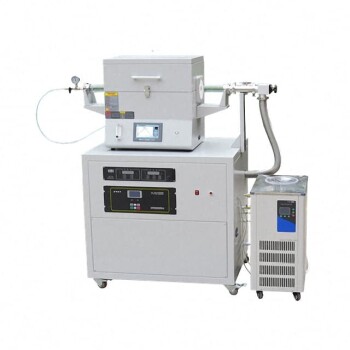
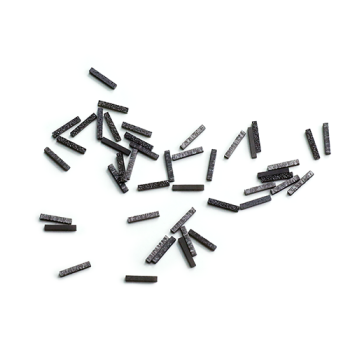
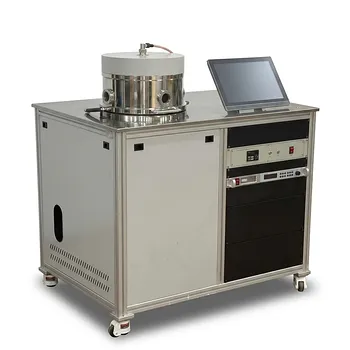
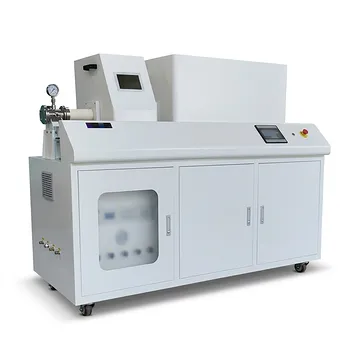
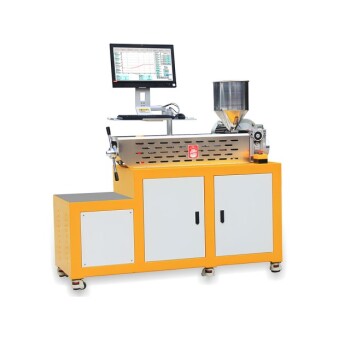
Chemical Vapor Infiltration (CVI) equipment functions as the central control unit for synthesizing advanced ceramic composites. It precisely regulates the introduction of specific precursor gases—BCl3, NH3, and MTS—into a high-temperature environment to build materials atom by atom. This process allows for the exact creation of structural features, such as 350 nm Boron Nitride (BN) interface layers and dense Silicon Carbide (SiC) matrices.
The core function of CVI equipment is to stabilize reaction conditions, allowing gases to penetrate deep into fiber bundles. This ensures micro-pores are effectively filled, transforming loose fibers into a cohesive, dense composite structure.
The Mechanics of Deposition Control
Precision Gas Regulation
The primary role of CVI equipment is the management of chemical precursors. It governs the flow rates of source gases, specifically BCl3 (Boron Trichloride), NH3 (Ammonia), and MTS (Methyltrichlorosilane).
By controlling the ratio and velocity of these gases, the equipment dictates the chemical composition of the deposited material. This regulation is critical for switching between the deposition of the interface layer and the structural matrix.
Thermal Environment Stability
Beyond gas flow, the equipment maintains a high-temperature reaction field. This thermal energy is the catalyst that drives the chemical decomposition of the precursor gases.
A stable thermal environment ensures that the chemical reactions occur at a predictable rate. This stability is required to achieve uniform material properties throughout the composite.
Achieving Structural Integrity
The Boron Nitride Interface
The equipment facilitates the orderly deposition of the Boron Nitride (BN) interface layer. This layer is critical for the composite's mechanical behavior and is typically targeted at a thickness of around 350 nm.
Precise control over the BCl3 and NH3 flow rates allows the equipment to achieve this specific nanometric thickness with high accuracy.
Densification of the SiC Matrix
Once the interface is established, the equipment shifts focus to the Silicon Carbide (SiC) matrix using MTS. The goal is to create a dense and continuous structure.
The CVI process allows the matrix material to effectively infiltrate and fill the micro-pores within the fiber bundles. This deep infiltration capability is what binds the fibers together into a robust solid.
Understanding the Process Sensitivities
The Necessity of Uniform Permeation
While CVI is powerful, it relies heavily on the stability of the reaction field. If the equipment fails to maintain consistent temperature or flow rates, the deposition becomes disordered.
Risk of Incomplete Infiltration
The process targets the internal micro-pores of fiber bundles. If the reaction occurs too quickly (due to incorrect parameter settings), the outer pores may close off before the inner voids are filled.
This results in a composite with lower density and compromised structural integrity. The equipment's precise control is the only safeguard against this "canning" effect.
Making the Right Choice for Your Goal
To maximize the effectiveness of CVI equipment for your specific composite requirements:
- If your primary focus is Interface Performance: Prioritize the precise modulation of BCl3 and NH3 flow rates to ensure the BN layer remains strictly within the 350 nm target for optimal deflection.
- If your primary focus is Structural Density: Ensure the equipment maintains a highly stable thermal profile to allow MTS to deeply infiltrate and fill all micro-pores within the fiber bundles.
Success in Chemical Vapor Infiltration depends entirely on the rigorous synchronization of gas kinetics and thermal stability.
Summary Table:
| Feature | Precursor Gases | Primary Function | Target Specification |
|---|---|---|---|
| Interface Layer | BCl3, NH3 | Crack deflection & fiber protection | ~350 nm thickness |
| Structural Matrix | MTS (Methyltrichlorosilane) | Densification & structural integrity | Filling micro-pores |
| Control Unit | N/A | Gas flow & thermal regulation | Uniform infiltration |
Elevate Your Advanced Material Synthesis with KINTEK
Precision is the difference between a compromised composite and a high-performance masterpiece. KINTEK specializes in cutting-edge laboratory equipment, providing the thermal stability and gas regulation needed for complex CVD and CVI processes.
Whether you are developing next-generation ceramic composites or advanced battery materials, our comprehensive range of high-temperature furnaces (vacuum, CVD, PECVD, tube) and high-pressure reactors ensure your research meets the most rigorous standards.
Ready to achieve superior structural density and nanometric precision? Contact our technical experts today to find the perfect CVI solution for your laboratory.
References
- Chaokun Song, Nan Chai. Enhanced mechanical property and tunable dielectric property of SiCf/SiC-SiBCN composites by CVI combined with PIP. DOI: 10.1007/s40145-021-0470-5
This article is also based on technical information from Kintek Solution Knowledge Base .
Related Products
- Chemical Vapor Deposition CVD Equipment System Chamber Slide PECVD Tube Furnace with Liquid Gasifier PECVD Machine
- Customer Made Versatile CVD Tube Furnace Chemical Vapor Deposition Chamber System Equipment
- Split Chamber CVD Tube Furnace with Vacuum Station Chemical Vapor Deposition System Equipment Machine
- Multi Heating Zones CVD Tube Furnace Machine Chemical Vapor Deposition Chamber System Equipment
- HFCVD Machine System Equipment for Drawing Die Nano-Diamond Coating
People Also Ask
- What are the advantages of chemical vapor deposition? Achieve Superior Thin Films for Your Lab
- What types of substrates are used in CVD to facilitate graphene films? Optimize Graphene Growth with the Right Catalyst
- What is the chemical vapor deposition growth process? Build Superior Thin Films from the Atom Up
- How expensive is chemical vapor deposition? Understanding the True Cost of High-Performance Coating
- Why is Chemical Vapor Deposition (CVD) equipment uniquely suited for constructing hierarchical superhydrophobic structures?