Deposition in DC sputtering is a kinetic process driven by momentum transfer, rather than thermal evaporation. It occurs when positively charged gas ions are accelerated at high speeds into a source material (the target), physically dislodging atoms that travel across a vacuum to coat a receiving surface (the substrate).
At its core, DC sputtering utilizes high-voltage plasma to erode a target material atom-by-atom. The process converts a solid source into a vapor through ionic bombardment, allowing those atoms to reassemble as a thin, uniform film on a substrate.
The Physics of the Process
Setting the Stage: The Vacuum Chamber
The process begins inside a sealed chamber maintained at a very low pressure, typically between 0 and 0.03 Torr.
This vacuum environment is essential to control the mean free path of the particles involved.
The chamber is backfilled with a process gas, most commonly argon, which acts as the medium for transferring energy.
Establishing the Electrical Circuit
To initiate sputtering, a Direct Current (DC) voltage is applied across the system.
The target material (the source of the coating) is connected to the negatively charged cathode.
The substrate (the part being coated) is connected to the positively charged anode (or grounded).
Creating the Plasma
Free electrons within the chamber accelerate toward the positively charged anode.
En route, these electrons collide with the neutral argon atoms floating in the chamber.
This collision strips electrons from the gas atoms, converting them into positively charged argon ions.
The Mechanism of Ejection and Deposition
Ionic Acceleration
Because opposites attract, the newly created positive argon ions are violently attracted to the negatively charged target (cathode).
They accelerate rapidly, gaining significant kinetic energy as they approach the target surface.
The Sputtering Event
This is the critical moment defined by the primary reference: the high-speed argon ions strike the target material.
This is not a chemical reaction or a melting process; it is a physical collision, similar to a cue ball scattering billiard balls.
The transfer of momentum is so intense that it ejects (sputters) atoms from the solid lattice of the target material.
Film Formation
Once ejected, the target atoms are free to move through the vacuum.
They travel from the target to the substrate, where they land and condense.
Over time, these atoms accumulate to form a thin, uniform layer, effectively coating the part.
Understanding the Trade-offs
Kinetic vs. Thermal Energy
It is a common misconception that sputtering involves melting the material.
Unlike evaporation, which uses heat, sputtering uses kinetic impact. This allows for better adhesion and film density, but it is generally a slower deposition rate than thermal methods.
Material Conductivity Limitations
DC sputtering relies on a constant flow of electrical current through the target.
Therefore, this method is strictly limited to electrically conductive materials (metals like gold, aluminum, or chrome).
If you attempt to DC sputter a non-conductive insulator, the positive ions will accumulate on the target surface, leading to charge buildup and electrical arcing (lightning-like discharges) that ruin the film.
Making the Right Choice for Your Goal
DC sputtering is a foundational technique, but its utility depends on your specific materials and requirements.
- If your primary focus is coating conductive metals: DC Sputtering is the most efficient and cost-effective choice due to its high deposition rates for conductors.
- If your primary focus is coating insulating materials (ceramics/glass): You must avoid standard DC sputtering and opt for RF (Radio Frequency) sputtering to prevent charge buildup and arcing.
- If your primary focus is precision and adhesion: Rely on DC sputtering for its high-energy impact, which generally creates denser, better-adhering films than simple thermal evaporation.
DC sputtering offers a robust balance of simplicity and control, provided your source material can conduct the current necessary to drive the plasma.
Summary Table:
| Feature | DC Sputtering Specification |
|---|---|
| Driving Mechanism | Kinetic Momentum Transfer (Physical Impact) |
| Target Material | Electrically Conductive Metals (Gold, Al, Cr, etc.) |
| Process Gas | Argon (Commonly used) |
| Chamber Pressure | 0 to 0.03 Torr (Vacuum Environment) |
| Key Advantage | High adhesion, film density, and cost-effectiveness |
| Primary Limitation | Not suitable for non-conductive insulators |
Elevate Your Thin Film Deposition with KINTEK
Precision in DC sputtering requires reliable equipment and high-purity materials. KINTEK specializes in advanced laboratory solutions, providing high-performance vacuum systems and essential components for your research and production needs.
From our robust vacuum systems and high-temperature furnaces to precision hydraulic presses for target preparation, we empower your lab to achieve superior coating density and adhesion. Whether you are working on battery research, semiconductor development, or material science, our comprehensive portfolio—including PTFE consumables, ceramics, and cooling solutions—ensures consistent results.
Ready to optimize your deposition process? Contact KINTEK today to consult with our experts and find the perfect equipment for your specific application.
Related Products
- Spark Plasma Sintering Furnace SPS Furnace
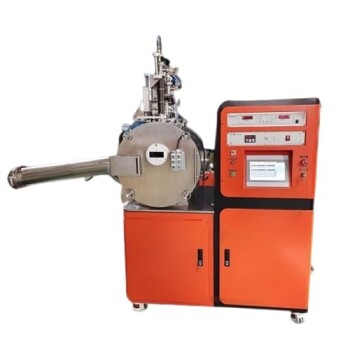
- Vacuum Induction Melting Spinning System Arc Melting Furnace
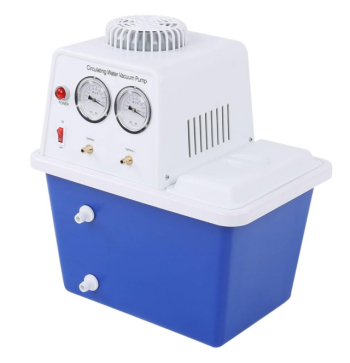
- Circulating Water Vacuum Pump for Laboratory and Industrial Use
People Also Ask
- What is SPS sintering method? A Guide to High-Speed, High-Performance Material Fabrication
- Why are Spark Plasma Sintering (SPS) furnaces or hot presses utilized in the preparation of Li3PS4 solid electrolytes?
- What is the difference between spark plasma sintering and flash sintering? A Guide to Advanced Sintering Methods
- What technical advantages does a Spark Plasma Sintering (SPS) furnace offer for LZP ceramics? Enhance Ionic Conductivity
- What is the theory of spark plasma sintering? A Guide to Rapid, Low-Temperature Densification