High-power ultrasonic dispersion equipment drives the exfoliation process by generating intense acoustic cavitation within a liquid medium, such as formic acid. This creates instantaneous high-pressure shock waves that physically overcome the strong Van der Waals forces holding graphite layers together, separating them into multilayer graphene nanosheets.
Core Takeaway This technology utilizes non-destructive physical forces to separate graphite layers without damaging their intrinsic structure. By preserving the two-dimensional integrity of the nanosheets, it ensures the final material retains the superior electrical and thermal characteristics required for high-performance applications like ceramic composites.
The Mechanics of Ultrasonic Exfoliation
Generating the Cavitation Effect
The core mechanism relies on acoustic cavitation. When high-power ultrasound waves propagate through a liquid medium (such as formic acid or deionized water), they create alternating high-pressure and low-pressure cycles.
Creating Shock Waves and Shear Forces
During the low-pressure cycle, microscopic vacuum bubbles form. When these bubbles collapse during the high-pressure cycle, they generate instantaneous high-pressure shock waves and significant local shear forces.
Overcoming Interlayer Bonding
Graphite consists of stacked layers held together by Van der Waals forces. The shock waves generated by the equipment act directly on these bonds.
The physical energy released is sufficient to overcome these intermolecular forces, effectively peeling layers off the bulk graphite to form thinner graphene nanosheets.
Preserving Material Integrity
Non-Destructive Separation
Unlike chemical oxidation methods that can degrade the material's lattice, ultrasonic exfoliation is a non-destructive process.
It relies on physical mechanics rather than harsh chemical reactions to achieve separation.
Maintaining 2D Structure
Because the process is non-destructive, the two-dimensional structure of the graphene is preserved.
This structural integrity is critical. It allows the graphene to maintain the superior electrical and thermal properties that make it valuable as a reinforcement material in composites.
Optimizing the Dispersion Environment
Breaking Agglomeration
Beyond initial exfoliation, ultrasonic treatment is effective at breaking up agglomeration.
Supplementary data indicates that when nanomaterials are mixed into suspensions (like NMP or polymer solutions), the high-power effects ensure a highly uniform physical dispersion, preventing sheets from re-stacking.
Removing Defects via De-aeration
Ultrasonic treatment serves a dual purpose by helping to remove micro-bubbles from the solution.
Eliminating these bubbles from the casting solution is vital to prevent pinholes or physical defects in the final product after drying.
Understanding the Trade-offs
Solvent Selection is Critical
While the equipment provides the force, the medium dictates the efficiency.
The primary method utilizes formic acid to facilitate shock waves, whereas other applications might use deionized water or NMP. The choice of solvent affects how effectively the cavitation energy is transferred to the graphite.
Balance of Force
The process relies on high-frequency mechanical vibrations and shear forces.
While generally non-destructive, the parameters must be tuned to ensure the force is sufficient to exfoliate without pulverizing the sheets into dimensionally useless fragments.
Making the Right Choice for Your Goal
To maximize the benefits of ultrasonic exfoliation, align your approach with your specific end-use requirements:
- If your primary focus is High-Performance Composites: Prioritize this method to preserve the electrical and thermal properties of the graphene by maintaining its 2D structure.
- If your primary focus is Film or Membrane Production: Utilize the ultrasonic treatment to degas the solution, ensuring a defect-free surface by removing micro-bubbles before drying.
- If your primary focus is Chemical Stability: Leverage the physical (non-oxidative) nature of this process to avoid introducing chemical defects into the carbon lattice.
High-power ultrasonic dispersion offers a precise, physical pathway to high-quality graphene, bridging the gap between bulk graphite and advanced nanomaterial applications.
Summary Table:
| Feature | Ultrasonic Exfoliation Mechanism | Benefit to Graphene Quality |
|---|---|---|
| Energy Source | Acoustic Cavitation & Shock Waves | Overcomes Van der Waals forces without chemical damage |
| Structural Impact | Non-destructive Physical Shearing | Preserves 2D lattice for high electrical/thermal conductivity |
| Dispersion State | High-frequency Mechanical Vibration | Prevents re-stacking and breaks up agglomeration |
| Solution Quality | Ultrasonic De-aeration | Removes micro-bubbles to prevent defects in final films |
Elevate Your Nanomaterial Research with KINTEK
Unlock the full potential of graphene and advanced composites with KINTEK’s precision laboratory solutions. Whether you are performing liquid-phase exfoliation or developing high-performance ceramic composites, our extensive range of high-power ultrasonic homogenizers, crushing and milling systems, and vacuum furnaces ensures your materials maintain their superior intrinsic properties.
From high-temperature high-pressure reactors for advanced synthesis to PTFE consumables and ceramics for chemical stability, KINTEK provides the specialized tools required for cutting-edge material science.
Ready to optimize your dispersion process and achieve defect-free results? Contact our technical experts today to find the perfect equipment for your lab.
References
- Dumooa R. Hussein, Ahmed Al-Ghaban. Synthesizinge a novel Zr2Al-GNS MAX phase ceramic with superior electrical properties using pressureless sintering technique. DOI: 10.55730/1300-0527.3577
This article is also based on technical information from Kintek Solution Knowledge Base .
Related Products
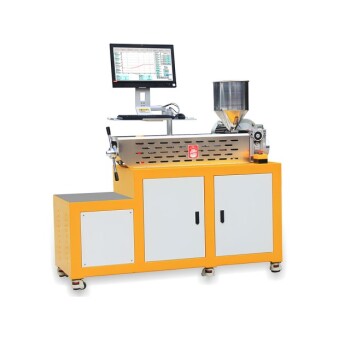
- Filter Testing Machine FPV for Dispersion Properties of Polymers and Pigments
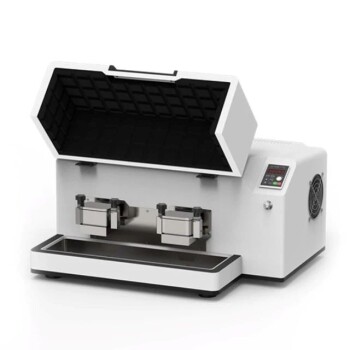
- High Energy Vibratory Ball Mill for Lab Use
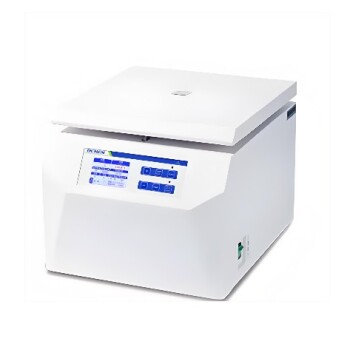
- Benchtop High Speed Small Lab Centrifuge for Serum Separation and Low Temperature Dehydration
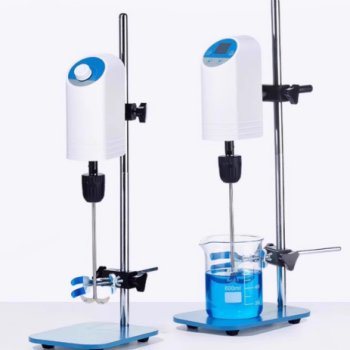
- High Performance Laboratory Stirrers for Diverse Applications
- High Energy Vibratory Laboratory Ball Mill Double Tank Type
People Also Ask
- What is a filter tester? A Guide to Measuring Filtration Efficiency & Performance
- What is the role of high-purity nitrogen in a supercritical water test loop? Ensure Test Data Integrity
- Why are porous ceramic filters utilized in methane pyrolysis? Protect Your Assets with High-Precision Filtration
- How is a laboratory analytical balance utilized in studies of capillary water absorption kinetics? | Precision Data
- What is the best solvent for FTIR? Master Solvent Selection for Clear, Accurate Spectra