High-temperature heating equipment simulates extreme service environments by subjecting ceramic samples to precise, repetitive thermal stress. Specifically, the equipment heats the material to 1000°C, holds it for one hour, and then subjects it to rapid cooling to mimic the drastic temperature fluctuations found in nuclear fusion reactor blankets.
The equipment replicates the harsh conditions of nuclear fusion reactors through repetitive heating and cooling cycles. This stress-testing reveals potential failure points like lattice cracking or volume expansion, validating the material's long-term stability.
The Mechanics of Thermal Simulation
Cyclic Loading Protocol
The core of the simulation lies in cyclic loading. Samples are heated to a specific target temperature of 1000°C.
Once this peak temperature is reached, the equipment maintains the heat for a dwell period of one hour.
Following this hold, the equipment induces rapid cooling to complete one cycle, shocking the material thermally before the process repeats.
Simulating Nuclear Fusion Conditions
This specific thermal profile is designed to replicate the environment of nuclear fusion reactor blanket materials.
These components face intense, fluctuating heat rather than a static thermal load.
By mimicking these fluctuations, the equipment ensures the test conditions align with the actual operational stresses the ceramics will face in service.
Evaluating Material Integrity
Identifying Structural Degradation
The primary goal of this simulation is to detect thermal structural degradation.
The equipment exposes physical weaknesses that might not appear under static heating but become evident under the stress of cycling.
Monitoring Lattice Stress and Cracking
Rapid temperature changes induce significant internal mechanical stress.
The test specifically looks for lattice stress cracking, a failure mode caused by the rapid expansion and contraction of the material's crystal structure during cooling.
Assessing Oxygen Penetration and Expansion
High temperatures can facilitate unwanted chemical interactions with the environment.
The simulation monitors for volume expansion, a specific defect resulting from oxygen penetration into the ceramic matrix during the heating phase.
Validating Material Enhancements
Verifying MgO Doping Effectiveness
These tests serve as a critical verification method for chemical modifications to the ceramic.
Specifically, the cycling determines if MgO (Magnesium Oxide) doping successfully improves the ceramic's resistance to thermal shock.
If the doped samples survive the cycles without cracking or expanding, the doping strategy is validated for long-term stability.
Understanding the Limitations
Simulation vs. Operational Reality
While this equipment accurately mimics thermal fluctuations, it remains a laboratory simulation.
It focuses on thermal stress and oxygen exposure but may not replicate other reactor variables, such as neutron irradiation damage, simultaneously.
Parameter Specificity
The test is defined by rigid parameters, specifically the 1000°C limit and one-hour hold time.
If a material is intended for service environments that exceed these temperatures or require faster cycle times, the test parameters must be adjusted to remain valid.
Making the Right Choice for Your Goal
When interpreting data from these high-temperature simulations, focus on the specific failure mode most critical to your application.
- If your primary focus is mechanical durability: Prioritize results regarding lattice stress cracking, as this indicates how well the material handles physical shock during cooling.
- If your primary focus is dimensional stability: Scrutinize data on volume expansion, which signals susceptibility to oxygen penetration.
By rigorously applying these thermal cycles, engineers can confidently predict and verify the long-term service stability of advanced ceramics in fusion energy applications.
Summary Table:
| Feature | Simulation Parameter | Key Outcome |
|---|---|---|
| Peak Temperature | 1000°C | Mimics nuclear fusion blanket conditions |
| Dwell Time | 1 Hour | Ensures uniform thermal saturation |
| Stress Mechanism | Cyclic Loading | Induces lattice stress and rapid contraction |
| Critical Metric | Structural Integrity | Monitors for volume expansion and cracking |
| Verification | MgO Doping Effectiveness | Confirms thermal shock resistance enhancement |
Elevate Your Material Research with KINTEK Precision
Ensure your advanced ceramics can withstand the world's most extreme environments. KINTEK specializes in high-performance laboratory solutions, providing the muffle furnaces, vacuum furnaces, and atmosphere-controlled systems essential for rigorous thermal stability cycling tests.
From high-temperature high-pressure reactors to specialized crushing and milling systems for sample preparation, our comprehensive portfolio is engineered to help researchers identify lattice stress, volume expansion, and the effectiveness of chemical doping with absolute accuracy.
Ready to validate your materials for the future of fusion energy? Contact KINTEK today to consult with our experts on the perfect high-temperature setup for your lab.
References
- Dmitriy I. Shlimas, Maxim V. Zdorovets. Synthesis and Structural and Strength Properties of xLi2ZrO3-(1-x)MgO Ceramics—Materials for Blankets. DOI: 10.3390/ma16145176
This article is also based on technical information from Kintek Solution Knowledge Base .
Related Products
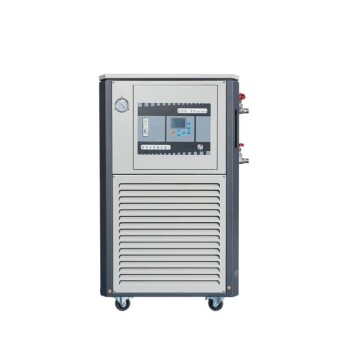
- High Temperature Constant Temperature Heating Circulator Water Bath Chiller Circulator for Reaction Bath
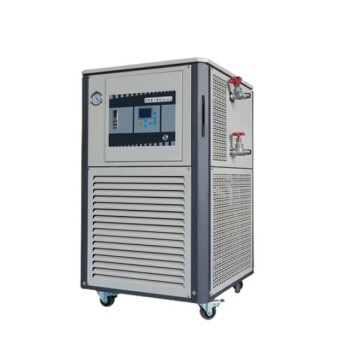
- 5L Heating Chilling Circulator Cooling Water Bath Circulator for High and Low Temperature Constant Temperature Reaction
- 10L Heating Chilling Circulator Cooling Water Bath Circulator for High and Low Temperature Constant Temperature Reaction
- 100L Heating Chilling Circulator Cooling Water Bath Circulator for High and Low Temperature Constant Temperature Reaction
- 20L Heating Chilling Circulator Cooling Water Bath Circulator for High and Low Temperature Constant Temperature Reaction
People Also Ask
- What is the necessity of a circulating water bath in chlorate production? Optimize Yield & Purity with Precision
- How do constant temperature circulators impact weight-loss immersion tests? Ensure Precision in Corrosion Analysis
- How does a constant temperature circulator support the leaching reaction of gold scrap? Optimize Gold Recovery Results
- Why is a constant temperature water bath used for precursor storage in CVD? Achieve Stable Nanocrystalline SiC Deposition
- Why is a high-precision constant temperature water bath necessary for anaerobic digestion? Ensure Success at 37±0.02°C