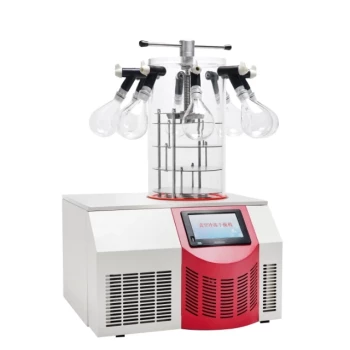
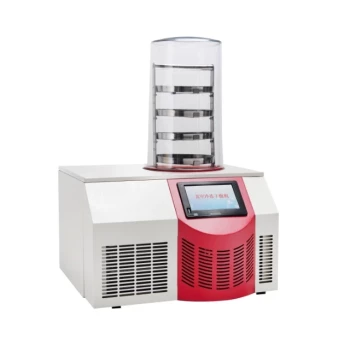
Laboratory drying equipment plays a definitional role in the final performance of hydrogel carriers by dictating the integrity of their internal nanostructure. The equipment removes solvents under precisely controlled conditions to prevent the polymer matrix from collapsing during formation. This preservation of structure ensures the hydrogel retains micropores of specific sizes, which directly determines the carrier's drug loading capacity and release mechanics.
The effectiveness of a hydrogel drug carrier relies on the preservation of its microporous structure during solvent removal. Precise temperature control prevents structural collapse, ensuring the pores match the drug molecules for optimal loading and controlled release.
The Critical Link Between Drying and Structure
Solvent Removal and Nanostructure Formation
The primary function of laboratory drying equipment in this context is the removal of solvents used during hydrogel preparation.
This is not merely a dehydration process; it is a structural formation step.
Removing the solvent properly is vital for establishing the final nanostructures that define the material's functional properties.
The Role of Precise Temperature Control
The most significant contribution of high-quality drying equipment is the ability to maintain precise temperatures.
This precision is required to ensure the polymer matrix remains stable throughout the drying phase.
Without exact thermal regulation, the matrix is prone to structural collapse, which destroys the internal architecture of the carrier.
Impact on Drug Immobilization Performance
Maintaining Micropore Geometry
When the polymer matrix is preserved, the hydrogel retains its intended micropores.
The equipment allows these pores to remain open and dimensionally stable.
Crucially, this preservation allows the pore size to match the specific size of the drug molecules intended for immobilization.
Enhancing Loading and Release Metrics
The direct result of a well-preserved microporous structure is significantly improved performance.
First, it increases the drug loading capacity, allowing the carrier to hold a higher volume of the therapeutic agent.
Second, it optimizes controlled release performance, ensuring the drug is dispensed at a predictable rate rather than being trapped or dumped prematurely.
Understanding the Trade-offs
The Risk of Structural Collapse
If the drying equipment lacks precision, the primary risk is the collapse of the polymer matrix.
A collapsed matrix eliminates the micropores necessary for drug encapsulation.
This results in a dense material with negligible loading capacity, rendering the hydrogel ineffective as a carrier.
Sensitivity to Process Conditions
The reliance on precise temperature control makes the process highly sensitive to equipment calibration.
Minor fluctuations in dryer performance can lead to batch-to-batch variability in pore size.
This inconsistency can result in unpredictable drug release profiles, compromising the reliability of the final pharmaceutical product.
Making the Right Choice for Your Goal
To maximize the potential of your hydrogel carriers, align your drying process with your specific performance metrics.
- If your primary focus is Maximum Drug Loading: Prioritize equipment with the highest stability to prevent matrix collapse and maximize available pore volume.
- If your primary focus is Controlled Release Kinetics: Focus on equipment with the most precise temperature regulation to ensure pore sizes strictly match your target drug molecule.
By treating the drying process as a structural engineering step rather than simple solvent removal, you ensure the functionality and reliability of your hydrogel system.
Summary Table:
| Factor | Influence on Hydrogel | Impact on Drug Performance |
|---|---|---|
| Temperature Control | Prevents polymer matrix collapse | Ensures stable drug loading capacity |
| Solvent Removal | Establishes final nanostructures | Defines drug release kinetics |
| Micropore Integrity | Maintains dimensional stability | Matches pore size to drug molecules |
| Process Stability | Reduces batch-to-batch variability | Ensures predictable pharmaceutical profiles |
Elevate Your Drug Delivery Research with KINTEK
Precision is the difference between a successful carrier and a collapsed matrix. KINTEK specializes in advanced laboratory solutions designed to preserve the delicate integrity of your materials. Our comprehensive portfolio includes high-performance freeze dryers, cooling solutions (ULT freezers, cold traps), and precisely regulated drying systems tailored for sensitive hydrogel and polymer research.
Whether you are focusing on maximizing drug loading or mastering controlled release kinetics, KINTEK provides the reliability your lab needs. Beyond drying, we offer a full range of equipment—from high-temperature reactors and autoclaves for synthesis to crushing, milling, and pellet presses for material preparation.
Ready to optimize your hydrogel carrier performance? Contact our technical experts today to find the perfect equipment for your specific pharmaceutical goals.
References
- Tunzala Ibrahimova Rasif Novruzov. EFFECT OF PHASE PROPERTIES OF W-V-O CATALYSTS ON THEIR ACTIVITY IN THE ETHANOL OXIDATION REACTION. DOI: 10.36962/pahtei24012023-92
This article is also based on technical information from Kintek Solution Knowledge Base .
Related Products
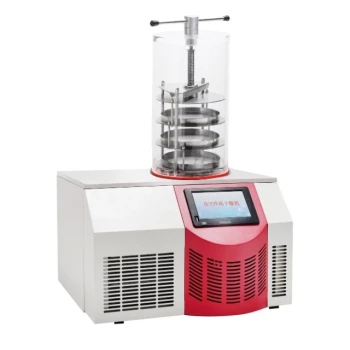
- High Performance Laboratory Freeze Dryer for Research and Development
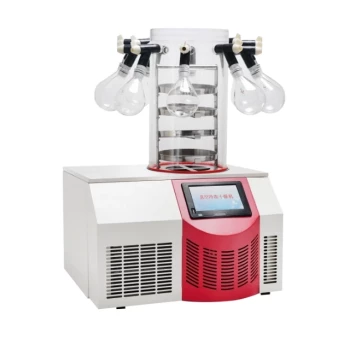
- High Performance Laboratory Freeze Dryer
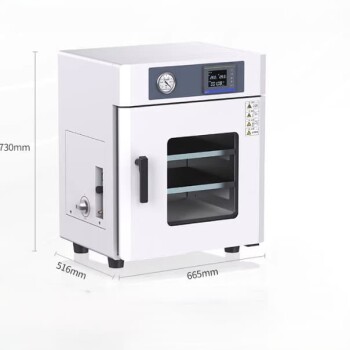
- 56L Vertical Laboratory Vacuum Drying Oven
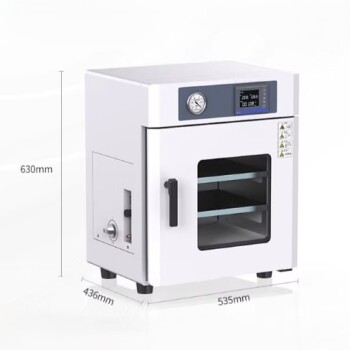
- 23L Laboratory Vacuum Drying Oven
- Laboratory Scientific Electric Heating Blast Drying Oven
People Also Ask
- Why use a laboratory freeze dryer for microalgae? Preserve Sample Integrity for Accurate Analysis
- What are the technical advantages of using a laboratory freeze dryer for porous carbon precursors? Preserve 3D Networks
- What types of liquid samples can be processed using a laboratory freeze dryer? Preserve Your Sensitive Materials
- How do laboratory freeze dryers support scientific research? Preserve Sample Integrity for Reproducible Results
- Why is a laboratory freeze dryer preferred over traditional heating? Preserve Biochar Structure & Maximize Porosity