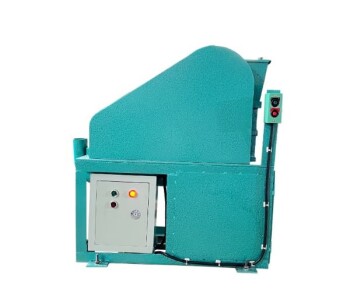
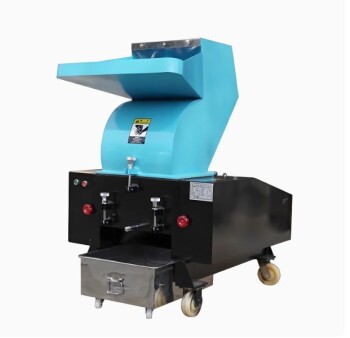
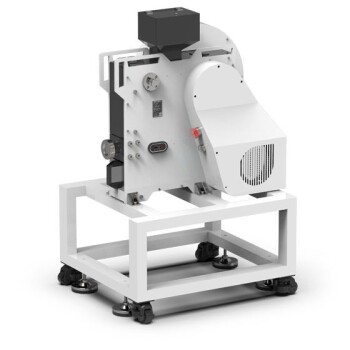
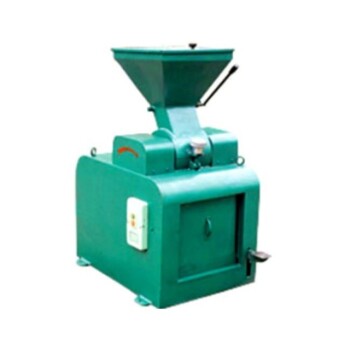
Mechanical crushing significantly enhances reaction efficiency by physically altering the biomass prior to liquefaction. By reducing particle size, this equipment increases the specific surface area of the material, which facilitates better thermal conduction and accelerates the chemical breakdown required for biocrude production.
While mechanical crushing directly improves heat penetration and biocrude yields, true efficiency is achieved only when the energy consumed by the crushing process is less than the energy value gained from the increased oil production.
The Physics of Particle Reduction
Increasing Specific Surface Area
The primary function of mechanical crushing equipment is to break down raw biomass into significantly smaller fragments. This process dramatically increases the specific surface area exposed to the reaction medium.
Enhancing Thermal Conduction
A larger surface area allows heat to penetrate the biomass slurry more effectively. Smaller particles reduce the distance heat must travel to reach the core of the material, ensuring rapid and uniform thermal conduction.
Impact on Chemical Conversion
Rapid Bond Breaking
Improved heat transfer creates an environment where chemical bonds within the biomass destabilize more quickly. This allows the complex organic structures to break down rapidly rather than resisting the thermal energy.
Boosting Biocrude Yields
More complete bond breakage leads to a higher conversion rate of raw material into the final product. Consequently, this pretreatment step directly increases the production efficiency and overall yield of biocrude oil.
Understanding the Trade-offs
The Energy Balance Equation
It is critical to recognize that mechanical crushing is an energy-intensive process. While smaller particles generally lead to better conversion, there is a point of diminishing returns.
Evaluating Net Efficiency
You must weigh the energy consumption of the crushing equipment against the resulting increase in yield. If the energy required to crush the biomass exceeds the energy gain from the additional biocrude produced, the overall system efficiency drops.
Optimizing Your Pretreatment Strategy
To maximize the value of mechanical crushing, consider your specific production goals:
- If your primary focus is maximum biocrude yield: Prioritize finer crushing to maximize surface area and ensure the most complete chemical bond breakage possible.
- If your primary focus is net system energy efficiency: Calibrate the crushing intensity to produce a particle size where the energy cost of reduction is balanced by the value of the yield increase.
Ultimately, mechanical crushing is a precise lever for efficiency that must be tuned to balance operational costs with production gains.
Summary Table:
| Factor | Impact on HTL Process | Benefit to Production |
|---|---|---|
| Particle Size | Reduction via mechanical crushing | Increased specific surface area for reaction |
| Thermal Conduction | Faster heat penetration to particle core | Uniform and rapid chemical breakdown |
| Bond Breaking | Enhanced destabilization of organic structures | Higher conversion rates of biomass to oil |
| Energy Balance | Trade-off between crushing cost and yield | Optimized net system energy efficiency |
Maximize Your HTL Efficiency with KINTEK
Ready to transform your biomass conversion process? KINTEK specializes in high-performance crushing and milling systems and sieving equipment designed to optimize feedstock preparation for hydrothermal liquefaction. Our precision-engineered solutions, paired with our industry-leading high-temperature high-pressure reactors and autoclaves, ensure you achieve the perfect balance between particle reduction and energy efficiency.
From lab-scale research to industrial production, KINTEK provides the advanced tools—including hydraulic presses, PTFE products, and cooling solutions—necessary for superior biocrude yields. Contact us today to discover how our equipment can enhance your lab's efficiency and output!
References
- Saeed Ranjbar, F. Xavier Malcata. Hydrothermal Liquefaction: How the Holistic Approach by Nature Will Help Solve the Environmental Conundrum. DOI: 10.3390/molecules28248127
This article is also based on technical information from Kintek Solution Knowledge Base .
Related Products
- Sealed Jaw Crusher High Efficiency Environmental Protection Safe and Reliable
- Powerful Plastic Crusher Machine
- Laboratory Jaw Crusher
- Laboratory Sealed Hammer Crusher for Efficient Sample Preparation
- Laboratory Disc Cup Vibratory Mill for Sample Grinding
People Also Ask
- How does a jaw crusher contribute to the primary processing of slate waste? Optimize Your Size Reduction Workflow
- What is the primary function of a jaw crusher in ore pre-treatment? Optimize Your Magnesite & Limonite Processing
- What is the use of jaw crusher in laboratory? The Essential First Step for Sample Reduction
- What is a laboratory crusher? The First Step to Accurate Sample Analysis
- What is a jaw crusher for labs? The Essential First Step for Accurate Sample Analysis