Precise thermal regulation is the primary driver behind the successful synthesis of carbon nanotubes in Chemical Vapor Deposition (CVD). To achieve high-yield growth, the reaction chamber must typically be maintained between 700 and 900 degrees Celsius. This specific heat range triggers the decomposition of hydrocarbon gases and activates the metal catalysts required to precipitate solid carbon structures.
Core Takeaway The thermal environment in CVD does more than simply heat the substrate; it dictates the solubility of carbon within the catalyst. By maintaining a critical temperature window, you ensure the effective breakdown of source gases and the controlled precipitation of carbon, which determines the density, alignment, and quality of the resulting nanotubes.
The Mechanism of Thermal Activation
Breaking Down the Source Gas
For carbon nanotubes to form, the carbon source—typically hydrocarbon gases like acetylene, methane, or ethylene—must first be chemically decomposed. The reaction chamber provides the high-energy environment necessary to break the chemical bonds of these gases. Without reaching the critical temperature range of 700°C to 900°C, the gases will not decompose effectively, preventing the release of carbon atoms needed for growth.
Catalyst Solubility and Saturation
Temperature directly controls how carbon interacts with metal catalysts such as iron, nickel, or cobalt. At the optimal temperature, the solubility of carbon within these metal particles reaches a critical point. This saturation forces the carbon to precipitate out of the catalyst, initiating the nucleation and continuous growth of the nanotube structure.
Structural Control and Alignment
Regulating Growth Direction
The thermal environment allows for the regulation of how nanotubes grow relative to the substrate. In standard thermal CVD, the heat facilitates interaction between the catalyst and the substrate, promoting directional decomposition. For applications requiring strict vertical alignment, systems like Plasma Enhanced Chemical Vapor Deposition (PECVD) utilize electric fields and plasma to guide growth, often allowing for synthesis at lower overall temperatures.
Defining Dimensions and Strength
Beyond simple growth, the thermal profile impacts the physical properties of the nanotubes. Equipment capable of precise temperature control allows you to manipulate the diameter and wall thickness of multi-walled nanotubes. This results in a macroscopic support with higher mechanical strength and a more ordered structure, which is vital if the nanotubes are to support subsequent materials like platinum nanoparticles.
The Role of Reactor Design
Maintaining a Uniform Thermal Field
Whether using a horizontal or vertical reactor, the stability of the thermal field is paramount. Vertical tube quartz reactors, for example, are designed to provide a stable and uniform thermal environment, sometimes operating in specific ranges (e.g., 500–600°C for specific fiber types) to ensure consistency. Quartz is often selected for these vessels because it maintains chemical inertness at high heat, preventing impurities from contaminating the growth.
Managing Residence Time
Temperature must be balanced with the residence time of the gas within the hot zone. Residence time dictates how long the gas molecules are exposed to the thermal energy and the catalyst. This variable is critical for maintaining a high growth rate without exhausting the carbon source or allowing by-products to accumulate.
Understanding the Trade-offs
The Risk of Thermal Deviations
If the temperature drops below the optimal window, the carbon source will not accumulate or decompose sufficient material. This leads to wasted raw materials and sparse or non-existent nanotube growth. Conversely, excessive temperatures or overly long residence times can lead to the accumulation of unwanted by-products, degrading the purity of the sample.
Complexity vs. Control
While standard thermal CVD relies heavily on high temperatures (700-900°C), incorporating plasma (PECVD) introduces a trade-off. PECVD lowers the thermal requirement and improves alignment via electric fields, but it adds significant complexity to the equipment setup. You must decide if the need for vertical alignment warrants the additional system complexity over a standard high-temperature thermal setup.
Making the Right Choice for Your Goal
To optimize your CVD process, align your thermal strategy with your specific output requirements:
- If your primary focus is High-Yield Synthesis: Maintain the reaction chamber strictly between 700°C and 900°C to maximize carbon solubility and precipitation from the catalyst.
- If your primary focus is Vertical Alignment: Consider using Plasma Enhanced CVD (PECVD), which utilizes electric fields and allows for directional growth at potentially lower temperatures.
- If your primary focus is Purity and Structural Integrity: Utilize a quartz reactor to ensure chemical inertness and carefully calibrate gas residence time to prevent by-product accumulation.
Success in growing carbon nanotubes relies not just on reaching a high temperature, but on stabilizing that heat to orchestrate the precise chemistry of decomposition and precipitation.
Summary Table:
| Factor | Thermal Range | Impact on Carbon Nanotube (CNT) Growth |
|---|---|---|
| Gas Decomposition | 700°C - 900°C | Essential for breaking hydrocarbon bonds (CH4, C2H2) to release carbon. |
| Catalyst Activation | Optimal Point | Controls carbon solubility and saturation, triggering precipitation. |
| Structural Alignment | Variable | PECVD allows lower temps & vertical alignment via electric fields. |
| Purity Control | Stable Field | Prevents accumulation of by-products and ensures uniform tube diameters. |
Optimize Your Nanomaterial Synthesis with KINTEK
Precision is the difference between a successful growth cycle and wasted resources. KINTEK specializes in advanced laboratory equipment designed to provide the stable thermal environments required for sophisticated research.
Whether you are scaling high-yield carbon nanotube production or exploring cutting-edge battery research, our comprehensive range of high-temperature solutions—including CVD, PECVD, and MPCVD furnaces, as well as high-pressure reactors and precision milling systems—ensures you maintain total control over your variables.
Ready to elevate your lab's performance? Contact us today to find the perfect thermal or pressure solution for your application.
References
- Dimitrios Ν. Bikiaris. Microstructure and Properties of Polypropylene/Carbon Nanotube Nanocomposites. DOI: 10.3390/ma3042884
This article is also based on technical information from Kintek Solution Knowledge Base .
Related Products
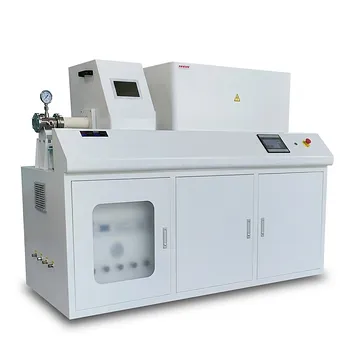
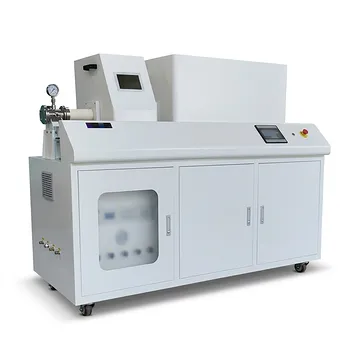
- Customer Made Versatile CVD Tube Furnace Chemical Vapor Deposition Chamber System Equipment
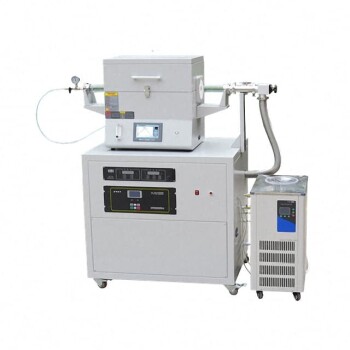
- Chemical Vapor Deposition CVD Equipment System Chamber Slide PECVD Tube Furnace with Liquid Gasifier PECVD Machine
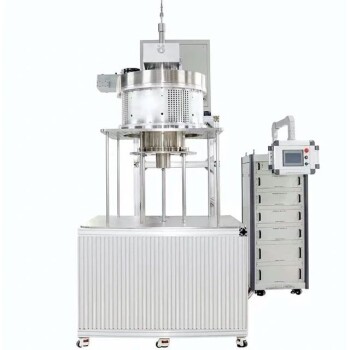
- Split Chamber CVD Tube Furnace with Vacuum Station Chemical Vapor Deposition System Equipment Machine
- Multi Heating Zones CVD Tube Furnace Machine Chemical Vapor Deposition Chamber System Equipment
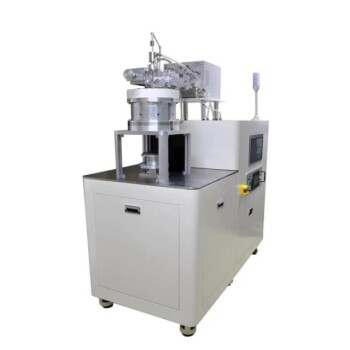
- 915MHz MPCVD Diamond Machine Microwave Plasma Chemical Vapor Deposition System Reactor
People Also Ask
- What is a CVD tube furnace? A Complete Guide to Thin-Film Deposition
- What is the function of a high-temperature CVD tube furnace in 3D graphene foam prep? Master 3D Nanomaterial Growth
- What are the technical advantages of using a CVD tube furnace? Optimize Silicon-Carbon Battery Anodes
- How does a CVD tube furnace inhibit the sintering of silver supports? Boost Membrane Durability and Performance
- What is the function of a tube furnace in CVD SiC synthesis? Achieving Ultra-Pure Silicon Carbide Powders