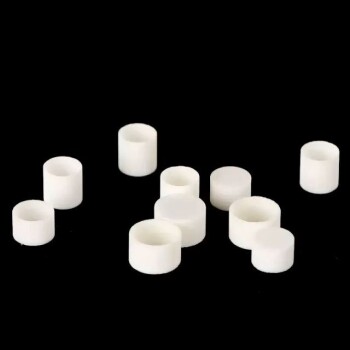
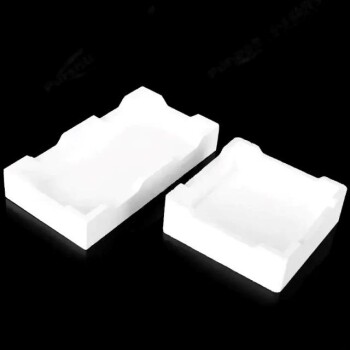
Choosing a ceramic boat as a sample container is a critical decision that ensures the accuracy of coal pyrolysis results by providing a thermally stable, chemically inert environment. The geometry of the boat allows coal powder to be spread in a thin layer, which promotes uniform heat transfer and facilitates the rapid escape of volatiles. This setup minimizes unwanted secondary reactions and ensures that the analyzed gas components truly represent the primary decomposition of the coal.
Core Takeaway: The use of a ceramic boat transforms the container from a passive holder into a precision tool that maintains sample purity and thermal consistency, which is essential for reproducible pyrolysis data and protecting sensitive furnace equipment.
Thermal Dynamics and Sample Consistency
Achieving Uniform Heat Distribution
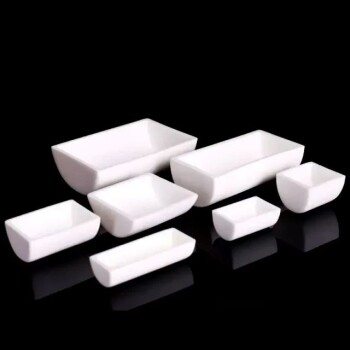
The flat, shallow design of a ceramic boat allows coal powder to be spread in a thin, even layer. This physical arrangement ensures that heat penetrates the entire sample simultaneously, preventing a temperature gradient between the surface and the core.
Maintaining Structural Integrity at High Temperatures
High-purity ceramic materials can withstand extreme temperatures, often reaching 900°C or higher, without deforming. This stability ensures that the sample geometry remains constant throughout the heating cycle, providing consistent results across multiple experimental runs.
Facilitating Rapid Volatile Release
The open structure of a ceramic boat is specifically designed to allow organic volatiles to escape the reaction zone immediately. By preventing these gases from lingering near the heated coal, the boat minimizes secondary cracking or re-polymerization reactions that could skew the final analysis.
Chemical Stability and Analytical Purity
Eliminating Cross-Reactions
Ceramic boats possess exceptional chemical inertness, meaning they do not react with coal or its diverse pyrolysis products. This ensures that the gas component analysis remains pure and is not contaminated by reactions between the sample and the container material.
Protecting the Experimental Environment
Beyond the sample itself, the ceramic boat acts as a protective barrier for the inner liner of the tube furnace. It prevents aggressive precursors or corrosive gases from coming into direct contact with the furnace hardware, extending the lifespan of the equipment.
Ensuring Consistent Catalyst Performance
In experiments involving coal-based precursors or catalysts, the inert nature of the ceramic ensures that the chemical composition of the resulting products remains consistent. There is no risk of the boat leaching elements into the sample or absorbing critical reaction intermediates.
Understanding the Trade-offs
Thermal Shock Sensitivity
While ceramic boats are excellent at high temperatures, they can be sensitive to rapid temperature changes. Heating or cooling the boat too quickly can lead to cracking, which may compromise the containment of the sample during an experiment.
Porosity and Cleaning Challenges
Some ceramic materials may have a slight surface porosity that can trap residual carbon or minerals after a run. If not cleaned rigorously or replaced, this residue can act as a contaminant in subsequent experiments, potentially catalyzing unexpected reactions.
Material Selection vs. Cost
Higher-purity ceramics, such as those made of alumina or zirconia, offer superior inertness and heat resistance but come at a higher cost. Using lower-grade ceramics might introduce trace impurities that could interfere with high-sensitivity gas chromatography or mass spectrometry.
Optimizing Your Experimental Setup
To achieve the most accurate and reproducible pyrolysis data, consider the specific requirements of your coal sample and furnace environment.
- If your primary focus is gas-phase analysis: Use a long, shallow ceramic boat to maximize surface area and ensure the rapid escape of volatiles to prevent secondary reactions.
- If your primary focus is extreme temperature stability (up to 900°C): Select a high-purity alumina ceramic boat to prevent deformation and ensure the container does not react with vanadium or iron-based composites.
- If your primary focus is furnace longevity: Always use a ceramic boat to act as a sacrificial barrier that prevents corrosive coal byproducts from damaging your quartz or ceramic furnace tubes.
The right ceramic boat ensures that your data reflects the true chemistry of the coal rather than the limitations of your experimental hardware.
Summary Table:
| Feature | Benefit for Pyrolysis | Impact on Analytical Data |
|---|---|---|
| Shallow Geometry | Facilitates thin sample spreading | Ensures uniform heat transfer and consistent decomposition |
| Chemical Inertness | Prevents reactions between boat and sample | Eliminates contamination; ensures pure gas component analysis |
| High Thermal Stability | Withstands temperatures up to 900°C+ | Maintains structural integrity for reproducible experimental runs |
| Open Structure | Allows rapid escape of volatiles | Minimizes secondary cracking and re-polymerization reactions |
| Protective Barrier | Shields inner furnace liners | Extends the lifespan of expensive tube and muffle furnaces |
Elevate Your Research Precision with KINTEK
Precision in coal pyrolysis starts with the right consumables. KINTEK specializes in high-performance laboratory equipment and consumables designed to meet the rigorous demands of material science. From high-purity ceramic boats and crucibles that ensure analytical purity to advanced tube, muffle, and vacuum furnaces for controlled thermal processing, we provide the tools you need for reproducible results.
Whether you require crushing and milling systems for sample preparation or high-temperature high-pressure reactors for complex synthesis, KINTEK is your partner in laboratory excellence.
Ready to optimize your experimental setup? Contact our specialists today to find the perfect solution for your lab!
References
- Yang Ma, Xiumin Jiang. Influences of the Introduced O-Containing Functional Groups on the Gaseous Pyrolysis Product of Superfine Pulverized Coal. DOI: 10.3390/en16114418
This article is also based on technical information from Kintek Solution Knowledge Base .
Related Products
- Aluminized Ceramic Evaporation Boat for Thin Film Deposition
- Ceramic Evaporation Boat Set Alumina Crucible for Laboratory Use
- Alumina Al2O3 Ceramic Crucible Semicircle Boat with Lid for Engineering Advanced Fine Ceramics
- Carbon Graphite Boat -Laboratory Tube Furnace with Cover
- Molybdenum Tungsten Tantalum Special Shape Evaporation Boat
People Also Ask
- What is the source of evaporation for thin film? Choosing Between Thermal and E-Beam Methods
- Why are high-purity ceramic boats used for lignin activation? Ensure Purity & Thermal Stability
- Why is an alumina boat and Ti3AlC2 powder bed necessary for Ti2AlC sintering? Protect MAX Phase Purity
- Why use an alumina boat for high-temperature carbon activation? Ensure Maximum Material Purity & Thermal Stability
- Why is an alumina boat selected for catalyst precursors? Ensure Sample Purity at 1000 °C