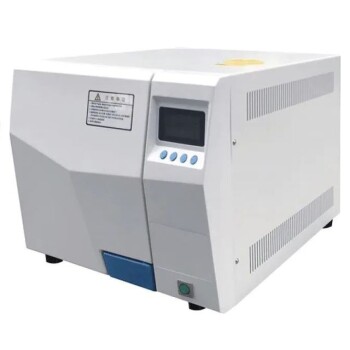
Precise temperature control in a laboratory oven is the defining variable that determines the final distribution of active sites in bimetallic catalysts prepared via incipient wetness impregnation. By maintaining a stable thermal environment—specifically during the critical 100°C drying phase—the oven ensures that solvents evaporate smoothly rather than erratically. This controlled rate of evaporation prevents the physical displacement of metal salts, ensuring they settle uniformly where they are most effective.
The success of the impregnation method relies entirely on preventing the rapid migration of active components during drying. Stable temperature regulation anchors metal salts within the support's internal pores, preventing the formation of low-activity clusters on the external surface.
The Mechanics of Controlled Drying
Regulating Solvent Removal
The primary function of the laboratory oven in this context is to manage the evaporation of solvents after the carrier has been impregnated.
To achieve high-performance catalysts, this evaporation must be smooth and consistent.
Sudden fluctuations or spikes in temperature can cause the solvent to flash off too quickly, disrupting the delicate chemical balance established during impregnation.
Preventing Component Migration
When temperature control is imprecise, the rapid movement of escaping solvent drags dissolved metal salts along with it.
In the preparation of bimetallic catalysts, specifically those using sodium nitrate and cerium nitrate, this phenomenon is detrimental.
Stable heating prevents this "capillary migration," ensuring the salts remain dispersed rather than being pulled to the outer edges of the material.
Optimizing Structure in SBA-15 Supports
Targeting Mesoporous Channels
The goal of using a support like SBA-15 is to utilize its intricate network of mesoporous channels.
Precise temperature control allows the active components to settle deep within these internal channels.
This internal distribution maximizes the surface area available for catalytic reactions.
Avoiding External Accumulation
If the oven temperature is unstable, the metal salts will migrate out of the pores and accumulate on the external surface of the SBA-15 support.
This results in a "crust" of active material that is poorly dispersed and prone to sintering.
By maintaining strict thermal stability, you force the active components to distribute uniformly throughout the support's architecture, rather than clustering on the outside.
Understanding the Risks of Thermal Instability
The Threat of Agglomeration
One of the most significant pitfalls in catalyst preparation is the agglomeration of metal particles.
Without precise heat regulation, metal salts group together into large, ineffective clumps during the drying process.
These agglomerates reduce the overall active surface area, significantly lowering the catalytic efficiency of the final product.
Consistency vs. Speed
There is often a temptation to increase temperatures to speed up the drying process.
However, accelerating evaporation compromises the uniformity of the metal dispersion.
The trade-off for a faster drying time is often a catalyst with significant structural defects and lower performance.
Making the Right Choice for Your Goal
To ensure your bimetallic catalysts perform as intended, apply these principles to your drying protocol:
- If your primary focus is Uniform Dispersion: Prioritize oven stability to prevent the migration of sodium and cerium nitrates during solvent evaporation.
- If your primary focus is Pore Utilization: Maintain a strict temperature setpoint (e.g., 100°C) to ensure active components deposit inside the SBA-15 channels rather than on the exterior.
The difference between a high-performance catalyst and a failed batch often lies in the precision of the drying step.
Summary Table:
| Factor | Effect of Precise Temperature Control | Consequences of Thermal Instability |
|---|---|---|
| Solvent Evaporation | Smooth, consistent removal | Flash-off / erratic evaporation |
| Metal Salt Distribution | Anchored within internal pores | Capillary migration to external surface |
| Active Surface Area | Maximized via uniform dispersion | Reduced via agglomeration and clumping |
| Catalytic Performance | High efficiency and stability | Structural defects and lower activity |
| Support (SBA-15) | Deep channel utilization | External "crust" formation |
Elevate Your Catalyst Synthesis with KINTEK Precision
High-performance bimetallic catalysts demand absolute thermal stability. At KINTEK, we specialize in advanced laboratory equipment designed to give you total control over your research outcomes. From high-precision laboratory ovens and vacuum furnaces to our specialized high-temperature high-pressure reactors and autoclaves, we provide the tools necessary to prevent agglomeration and ensure perfect metal dispersion.
Whether you are working with SBA-15 supports, developing battery technologies using our battery research tools, or requiring durable PTFE and ceramic consumables, KINTEK is your partner in scientific excellence. Our solutions empower researchers to achieve repeatable, high-efficiency results every time.
Ready to optimize your drying protocols and catalyst performance?
References
- Edgar M. Sánchez Faba, Griselda A. Eimer. Na-Ce-modified-SBA-15 as an effective and reusable bimetallic mesoporous catalyst for the sustainable production of biodiesel. DOI: 10.1016/j.apcata.2020.117769
This article is also based on technical information from Kintek Solution Knowledge Base .
Related Products
- Laboratory Scientific Electric Heating Blast Drying Oven
- 56L Vertical Laboratory Vacuum Drying Oven
- 23L Laboratory Vacuum Drying Oven
- 1200℃ Muffle Furnace Oven for Laboratory
- 1700℃ Muffle Oven Furnace for Laboratory
People Also Ask
- How does a laboratory electric drying oven contribute to the formation of the initial coating? Expert Insights
- What role does a precision laboratory drying oven play in the synthesis of GO-PANI nanocomposites? Protect Material Integrity
- What role does a laboratory drying oven play in the preparation of zinc oxide nanoparticle precursors?
- What is the necessity of using a laboratory drying oven when processing MoO3/GO composite nanopowders? Find out here.
- What is the role of a laboratory drying oven in cellulose citrate production? Ensure Material Stability & Purity