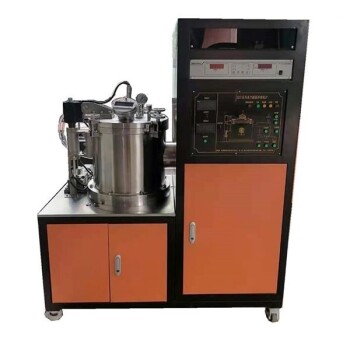
Strict environmental control is the deciding factor in Beryllium structural integrity. The atmosphere within your processing equipment directly dictates the material's mechanical performance by regulating oxygen exposure. By utilizing high vacuum or inert atmosphere systems, you prevent the formation of large oxide inclusions, which are the primary root cause of grain boundary microcracks during thermal deformation.
By maintaining a high vacuum or an inert atmosphere, you minimize oxygen content and inhibit Beryllium oxide inclusions. This reduction in crack sources is essential for enhancing the overall mechanical properties and resistance to cracking in the finished material.
The Mechanism of Material Failure
The Oxygen Problem
The fundamental challenge in processing Beryllium is its reactivity with oxygen. Without proper containment, oxygen present in the processing environment reacts with the metal. This reaction creates large oxide inclusions embedded within the material's matrix.
From Inclusion to Fracture
These inclusions are not benign defects; they are structural weak points. During the stress of thermal deformation, these oxides act as stress concentrators. They serve as the specific initiation sites where grain boundary microcracks begin to form, compromising the continuity of the material.
Securing Mechanical Performance
Inhibiting Defects
The primary purpose of vacuum or atmosphere control is to break the chain of failure before it starts. By ensuring the equipment maintains a high vacuum or strictly inert atmosphere, you effectively inhibit the formation of these dangerous oxide inclusions.
Enhancing Resistance
When the number of oxide inclusions is minimized, the material has fewer internal stress risers. This directly translates to fewer crack sources. The result is a finished Beryllium product with significantly improved resistance to cracking and superior overall mechanical properties.
Critical Considerations for Process Control
The Necessity of Consistency
Control of the processing environment is not optional; it is critical. The relationship between atmosphere and material quality is direct. Any lapse in vacuum integrity or atmosphere purity introduces oxygen, immediately risking the formation of large inclusions.
The Consequence of Neglect
If the equipment fails to maintain the required isolation from oxygen, the mechanical properties will degrade. The presence of inclusions inevitably leads to grain boundary microcracks, rendering the thermal deformation process destructive rather than constructive.
Optimizing Your Thermal Deformation Strategy
To ensure high-performance outcomes in Beryllium processing, your equipment strategy must prioritize atmospheric isolation.
- If your primary focus is structural durability: Prioritize high-vacuum equipment to eliminate oxygen, thereby preventing the oxide inclusions that act as crack initiation sites.
- If your primary focus is process consistency: Standardize the use of inert atmospheres to inhibit grain boundary microcracks and ensure uniform mechanical properties across batches.
By eliminating oxygen from the processing equation, you remove the primary barrier to producing defect-free Beryllium.
Summary Table:
| Factor | Atmosphere/Vacuum Control | Lack of Control (Oxygen Exposure) |
|---|---|---|
| Oxide Formation | Inhibited; minimal inclusions | High; large oxide inclusion formation |
| Grain Boundaries | Stable and continuous | Subject to microcrack initiation |
| Structural Defects | Significantly reduced | High concentration of stress risers |
| Mechanical Performance | Superior resistance to cracking | Degraded; prone to fracture during stress |
| Outcome | Defect-free, high-performance material | Compromised structural integrity |
Elevate Your Advanced Material Processing with KINTEK
Precise control over your thermal environment is the difference between a high-performance alloy and material failure. KINTEK specializes in cutting-edge laboratory equipment designed for the most demanding applications. Whether you are processing Beryllium or conducting high-stakes metallurgy, our range of vacuum and atmosphere furnaces (muffle, tube, and rotary), high-temperature high-pressure reactors, and isostatic presses ensure the atmospheric purity and thermal precision your research requires.
Don't let oxygen inclusions compromise your results. From crushing and milling systems to PTFE and ceramic consumables, KINTEK provides the end-to-end solutions needed to optimize your thermal deformation strategy.
Ready to secure your material's mechanical properties? Contact our technical experts today to find the perfect high-vacuum solution for your laboratory.
Related Products
- 1400℃ Controlled Atmosphere Furnace with Nitrogen and Inert Atmosphere
- 1200℃ Controlled Atmosphere Furnace Nitrogen Inert Atmosphere Furnace
- 1700℃ Controlled Atmosphere Furnace Nitrogen Inert Atmosphere Furnace
- Controlled Nitrogen Inert Hydrogen Atmosphere Furnace
- Vacuum Heat Treat Furnace and Levitation Induction Melting Furnace
People Also Ask
- How is oxygen (O2) used in controlled furnace atmospheres? Mastering Surface Engineering for Metals
- What is the necessity of controlled atmosphere furnaces for gas corrosion? Ensure Precise Material Failure Modeling
- What is the role of the furnace atmosphere? Master Precise Metallurgical Control for Your Heat Treatment
- Why is a high-temperature furnace with a controlled atmosphere required for S@MMPC? Master Precision Synthesis
- What is the function of a controlled atmosphere furnace? Master Nitriding for AISI 52100 & 1010 Steel