The definitive advantage of using a freeze dryer for 3D vertically aligned lithium iron phosphate (VA-LFP) cathodes is the preservation of structural integrity. Unlike traditional heat-based methods, freeze drying utilizes sublimation to remove solvents, preventing the collapse of the critical vertical channels formed during the printing process.
Core Takeaway Traditional drying leads to shrinkage and pore collapse due to liquid evaporation forces. Freeze drying bypasses this liquid phase entirely, locking in the micron-scale, low-tortuosity architecture necessary for maximized lithium-ion transport efficiency in solid-state batteries.
Preserving the Micro-Architecture
The Mechanism of Sublimation
Traditional drying relies on evaporation, where liquid turns to gas. This creates surface tension forces that pull the material together.
Freeze drying operates on sublimation, transitioning moisture directly from solid ice to vapor under low temperature and vacuum.
Preventing Structural Collapse
The primary risk during the preparation of VA-LFP cathodes is drying shrinkage and densification.
When the slurry shrinks, the carefully engineered 3D-printed geometry is distorted. Freeze drying completely avoids this, ensuring the printed structure remains intact.
Maintaining Vertical Channels
The goal of 3D printing these cathodes is to create micron-scale vertical channels.
These channels act as "highways" for ions. Freeze drying preserves these porous structures, resulting in low-tortuosity ion transport channels. This directly translates to higher efficiency in the final battery.
Material Quality and Operational Efficiency
Eliminating Agglomeration
Beyond structural geometry, freeze drying affects the powder quality itself.
Liquid-phase evaporation often causes particles to clump together. Freeze drying prevents this particle agglomeration, resulting in precursor powders with high physical fineness and superior reaction activity.
Speed and Energy Metrics
Contrary to common assumptions about batch processing, laboratory freeze dryers can offer significant efficiency gains over conventional vacuum ovens.
The process can shorten drying times by 3 to 10 times and reduce energy consumption by a factor of 2 to 3.
Environmental and Purity Control
The process occurs in an oxygen-free vacuum chamber, protecting the chemical purity of the cathode material.
Additionally, modern systems can recycle organic solvents. This reduces production costs and mitigates environmental impact, a crucial factor when working with complex slurry formulations.
Understanding the Trade-offs
The Limitations of Traditional Drying
To make an informed choice, you must understand what you are sacrificing with traditional methods like vacuum ovens.
Conventional drying is not merely slower; it fundamentally alters the material's density. The densification caused by evaporation increases the tortuosity (the twisting path) ions must travel, creating resistance that hampers battery performance.
Contextualizing Efficiency Claims
While the supplementary data indicates high speed and low energy usage for freeze drying, note that these figures specifically reference laboratory-scale equipment.
The efficiency gains (drying in the 0°C to 50°C range) are most pronounced when strict moisture control and solvent recovery are required. For non-critical geometries where shrinkage is acceptable, the complexity of a vacuum freeze-drying system may not be necessary.
Making the Right Choice for Your Goal
To maximize the performance of your VA-LFP cathodes, align your drying method with your specific engineering targets:
- If your primary focus is Ion Transport Efficiency: Prioritize freeze drying to ensure low-tortuosity vertical channels are perfectly preserved without shrinkage.
- If your primary focus is Material Purity: Utilize the oxygen-free vacuum environment of the freeze dryer to prevent oxidation and ensure high reaction activity.
- If your primary focus is Process Speed: Leverage the freeze dryer’s ability to shorten process time by up to 10 times compared to conventional vacuum ovens.
For high-performance solid-state batteries, the structural fidelity provided by freeze drying is not a luxury; it is a prerequisite for functionality.
Summary Table:
| Feature | Traditional Heat Drying | KINTEK Freeze Drying |
|---|---|---|
| Drying Mechanism | Liquid Evaporation | Ice Sublimation (Direct Solid-to-Gas) |
| Structural Integrity | High risk of shrinkage & pore collapse | Preserves micron-scale 3D geometry |
| Ion Transport Path | High tortuosity due to densification | Low-tortuosity vertical channels |
| Particle Quality | Significant agglomeration (clumping) | Fine powder with high reaction activity |
| Efficiency | Slower; Higher energy consumption | 3-10x faster; 2-3x lower energy use |
| Atmosphere | Potential for oxidation | Oxygen-free vacuum environment |
Elevate Your Battery Research with KINTEK Precision
Don't let traditional drying methods compromise your 3D-printed architectures. KINTEK specializes in advanced laboratory solutions designed to preserve the structural integrity and purity of your high-performance materials. From our high-efficiency freeze dryers and cold traps to our comprehensive range of battery research tools, high-temperature furnaces, and vacuum systems, we provide the technology necessary to achieve low-tortuosity ion transport and maximum efficiency in VA-LFP cathodes.
Ready to optimize your lab's workflow and material quality? Contact our technical experts today to find the perfect drying and thermal processing solutions for your specific application.
Related Products
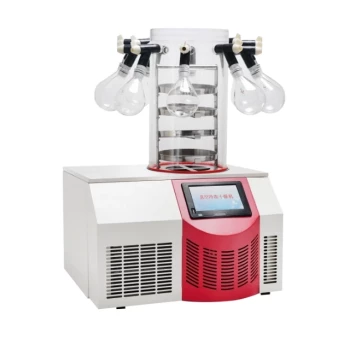
- High Performance Laboratory Freeze Dryer
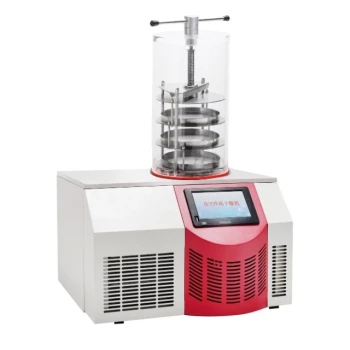
- High Performance Laboratory Freeze Dryer for Research and Development
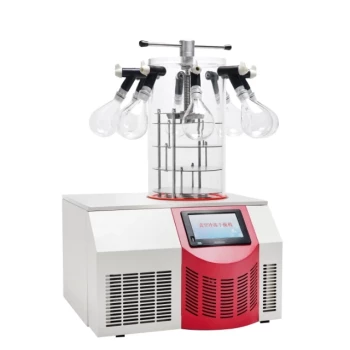
- Benchtop Laboratory Freeze Dryer for Lab Use
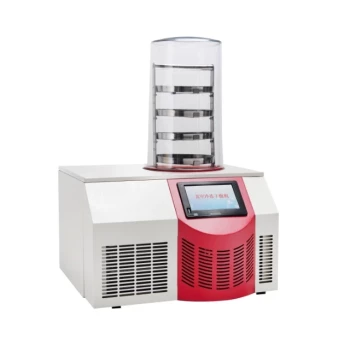
- Benchtop Laboratory Vacuum Freeze Dryer
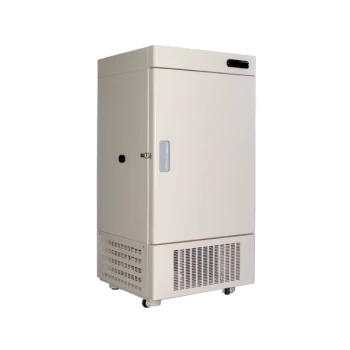
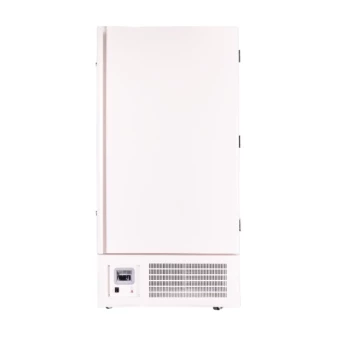
- 108L Vertical Ultra Low Temperature ULT Freezer
People Also Ask
- What role does a laboratory freeze dryer play in the synthesis of graphene-based electrocatalysts? Preserve 3D Structures
- What are the technical advantages of using a laboratory freeze dryer for porous carbon precursors? Preserve 3D Networks
- What types of liquid samples can be processed using a laboratory freeze dryer? Preserve Your Sensitive Materials
- How do laboratory freeze dryers support scientific research? Preserve Sample Integrity for Reproducible Results
- Why is a laboratory freeze dryer preferred over traditional heating? Preserve Biochar Structure & Maximize Porosity