The preparation of solar cell powder samples requires a high-precision laboratory hydraulic press to transform loose materials into dense, standardized pellets. By applying stable, unidirectional pressure, the press ensures uniform internal density and eliminates voids, which is essential for obtaining accurate measurements of electrical conductivity and optical constants.
A high-precision hydraulic press is the critical link between raw powder synthesis and reliable performance testing. It provides the mechanical consistency needed to eliminate physical variables, ensuring that test results reflect the material's intrinsic properties rather than preparation artifacts.
Achieving Material Homogeneity and Density
Eliminating Internal Voids
Loose powder contains significant air gaps and inconsistent particle distribution that can skew performance data. A hydraulic press uses precise pressure control to collapse these voids, creating a solid, bulk medium.
Standardizing Sample Geometry
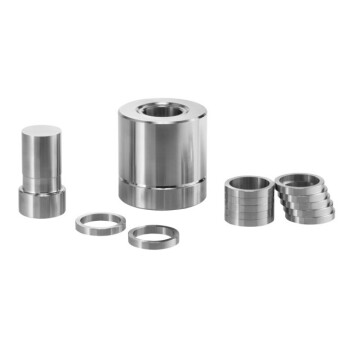
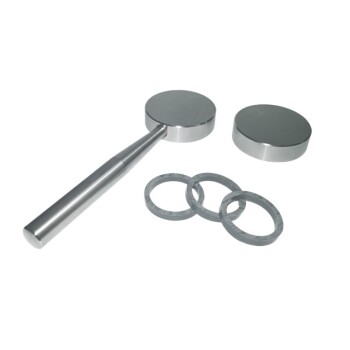
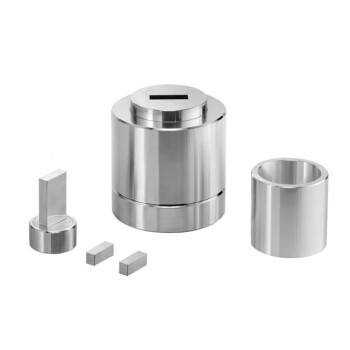
For solar cell testing, samples must have consistent dimensions to ensure the repeatability of results. The press, often used in conjunction with precision molds, creates regular geometric shapes that allow for standardized calculations of light absorption and energy conversion.
Ensuring Uniform Density Gradients
Variations in density across a sample can lead to "hot spots" or uneven electrical flow. High-precision presses provide stable, unidirectional pressure that minimizes density gradients, leading to a more homogenous internal structure.
Impact on Electrical and Optical Performance
Reducing Interfacial Contact Resistance
In solar cell assembly, tight physical contact between electrodes and electrolytes is mandatory. The press establishes a good contact interface, which significantly reduces resistance and enhances the accuracy of electrochemical test data.
Optimizing Optical Constant Measurements
Surface roughness can cause scattering interference during spectroscopic analysis. The high-pressure molding process ensures consistent surface flatness, which improves the signal-to-noise ratio and the repeatability of optical measurements.
Enhancing Charge Carrier Mobility
By forcing particles into tight contact, the hydraulic press creates a continuous path for charge carriers. This mechanical densification is vital for accurately measuring how efficiently a solar cell material can transport electricity.
Understanding the Trade-offs and Limitations
The Risk of Over-Compression
Applying excessive pressure can lead to the deformation of the material's crystalline structure or the creation of internal micro-cracks. These structural defects can trap charge carriers, leading to artificially low efficiency readings in the final test.
Pressure Consistency vs. Sample Thickness
Thicker samples may experience "pressure decay," where the center of the pellet is less dense than the surfaces. Users must carefully balance pressure duration and dwell time to ensure the entire volume of the sample is uniform.
Material Contamination Risks
The high pressures involved can cause the powder to react with or adhere to the mold surfaces. Without proper cleaning or the use of specialized liners, trace contaminants from previous samples can compromise the purity of the solar material.
How to Apply This to Your Research
Making the Right Choice for Your Goal
- If your primary focus is electrical conductivity testing: Prioritize a press with high-precision pressure gauges to ensure consistent interface contact and minimize resistance.
- If your primary focus is optical characterization: Ensure the use of polished, high-hardness molds to achieve the surface flatness required to reduce light scattering.
- If your primary focus is material stability and sintering: Focus on a press that offers adjustable "dwell times" to allow particles to settle and minimize internal stresses before heat treatment.
By mastering the precision of the hydraulic press, researchers can ensure that their solar cell performance data is both reproducible and technically sound.
Summary Table:
| Preparation Goal | Impact on Solar Cell Testing | Key Technical Benefit |
|---|---|---|
| Eliminate Voids | Removes air gaps for a solid bulk medium | Accurate density & conductivity |
| Standardize Geometry | Ensures repeatable dimensions for calculations | Consistent light absorption data |
| Uniform Density | Prevents "hot spots" and uneven electrical flow | Homogenous internal structure |
| Surface Flatness | Reduces light scattering during analysis | Optimized optical constants |
| Mechanical Densification | Creates continuous paths for charge carriers | Enhanced carrier mobility |
Elevate Your Solar Research with KINTEK Precision
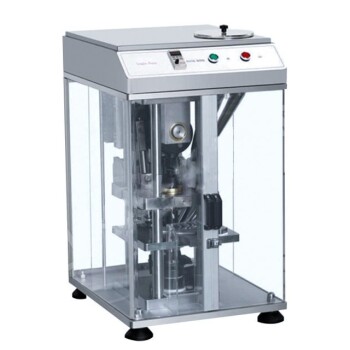
Achieving accurate and reproducible results in solar cell testing starts with flawless sample preparation. KINTEK specializes in high-performance laboratory equipment designed to meet the rigorous demands of material science. Our comprehensive range of hydraulic presses—including pellet, hot, and isostatic models—provides the stable, high-precision pressure control essential for creating dense, standardized powder samples.
Beyond sample pressing, KINTEK offers a complete ecosystem for energy research, including high-temperature furnaces (CVD, PECVD, vacuum), crushing and milling systems, and specialized electrochemical cells. Whether you are optimizing charge carrier mobility or refining optical constants, our expert team is here to provide the reliable tools and consumables you need to push the boundaries of solar efficiency.
Ready to enhance your lab's precision? Contact KINTEK today to find the perfect solution for your research!
References
- Ivan M. Santos, Manuel J. Mendes. Optically‐Boosted Planar IBC Solar Cells with Electrically‐Harmless Photonic Nanocoatings. DOI: 10.1002/adom.202300276
This article is also based on technical information from Kintek Solution Knowledge Base .
Related Products
- Automatic Laboratory Hydraulic Pellet Press Machine for Lab Use
- kbr pellet press 2t
- Automatic Laboratory Hydraulic Press for XRF & KBR Pellet Press
- XRF & KBR steel ring lab Powder Pellet Pressing Mold for FTIR
- Laboratory Hydraulic Pellet Press for XRF KBR FTIR Lab Applications
People Also Ask
- What is the role of a laboratory hydraulic pellet press and stainless steel molds in the fabrication of RuO2/NbC anodes?
- What role does a laboratory pellet press play in the enhancement of biomass energy products? Optimize Fuel Efficiency
- What is the purpose of using a laboratory pellet press when evaluating the electronic conductivity of carbon powders? Guide
- How does a laboratory hydraulic pellet press contribute to SiCw/2024 aluminum composite preforms? Optimize Densification
- What is the significance of applying 200 MPa of pressure with a laboratory hydraulic pellet press for composite ceramics?