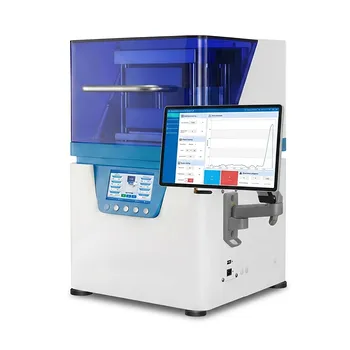
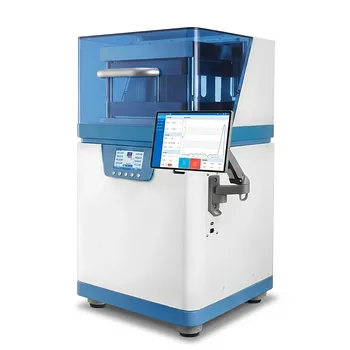
The laboratory hydraulic press is the primary tool for densifying and integrating active material layers onto metal current collectors during electrode fabrication. It applies high, controlled pressure—typically around 10 MPa—to a mixture of coal-based activated carbon, conductive agents, and binders to form a cohesive thin film. This mechanical action ensures that the active material is physically anchored to the current collector, transforming loose components into a high-performance electronic component.
A laboratory hydraulic press is essential for minimizing interfacial resistance and optimizing the electrode's density. By applying precise pressure, it creates the mechanical bonding necessary for high volumetric capacity and long-term cycling stability in supercapacitors and batteries.
Transforming Raw Materials into Functional Films
Creating Cohesive Electrode Sheets
The process begins by pressing a mixture of activated carbon, conductive carbon black, and polymer binders into thin films. The hydraulic press provides the uniform force necessary to distribute the binder effectively, holding the carbon particles in a stable, manageable sheet.
Controlling Electrode Density and Thickness
Precise pressure control allows researchers to adjust the green density and thickness of the electrode. This is critical because the thickness directly influences the path length for electron transport and ion diffusion, which are the two pillars of electrochemical performance.
Eliminating Internal Voids
Under high pressure, the hydraulic press eliminates internal air pockets or voids within the carbon slurry or film. Removing these gaps ensures that the conductive agent is in constant contact with the activated carbon particles, creating a continuous network for electron flow.
Maximizing Electrical Connectivity and Stability
Reducing Interfacial Resistance
One of the most vital roles of the press is compressing the electrode film onto a current collector, such as nickel foam or copper foil. This high-pressure contact significantly reduces the contact resistance at the interface, allowing electrons to move efficiently from the active material to the external circuit.
Strengthening Mechanical Bonding
The application of constant pressure (e.g., 10 MPa) forces the carbon mixture into the pores of the metallic framework. This creates a strong mechanical bond that prevents the active material from peeling off or detaching when it is submerged in an electrolyte during operation.
Improving Rate Performance
By shortening the electron transmission paths and ensuring intimate physical contact, the press enables the electrode to maintain high performance even at high current densities. This is particularly important for supercapacitors, which must deliver or store energy very rapidly.
Understanding the Trade-offs: Density vs. Diffusion
The Risk of Over-Compaction
While high pressure increases volumetric capacity, excessive compaction can lead to a loss of internal porosity. If the pores within the activated carbon are crushed or blocked, the electrolyte cannot penetrate the material, which severely hinders ionic diffusion.
Balancing Conductivity and Porosity
Researchers must find the "sweet spot" where the pressure is high enough to ensure excellent electronic conduction but low enough to maintain an open structure for ions. Achieving this balance is the key to maximizing both the energy density and the power density of the coal-based carbon electrode.
How to Apply This to Your Fabrication Process
When utilizing a laboratory hydraulic press for electrode fabrication, your pressure settings should be dictated by your specific performance targets.
- If your primary focus is High Power Density: Use moderate pressure to maintain high porosity, ensuring rapid ionic transport even if it slightly increases internal resistance.
- If your primary focus is Volumetric Energy Density: Increase the compaction pressure to the higher end of the recommended range (e.g., 10–12 MPa) to pack as much active material as possible into a given volume.
- If your primary focus is Long-Term Cycling Stability: Prioritize a consistent, high-pressure bond to the current collector to prevent the active material from shedding during the expansion and contraction of charge cycles.
- If your primary focus is Material Deposition (EDC): Utilize lower compaction pressures to achieve a lower initial density, which can facilitate a higher material deposition rate during specialized coating processes.
The laboratory hydraulic press is not merely a compaction tool, but a precision instrument that dictates the fundamental electrochemical efficiency of the finished coal-based electrode.
Summary Table:
| Key Aspect | Role of Hydraulic Press |
|---|---|
| Primary Function | Densifying active materials and integrating layers onto current collectors |
| Typical Pressure | Approximately 10 MPa (adjustable based on performance targets) |
| Key Benefits | Reduced interfacial resistance, eliminated internal voids, and strong mechanical bonding |
| Critical Balance | Optimizing volumetric energy density while maintaining porosity for ionic diffusion |
| Application | Fabricating high-performance supercapacitors and coal-based battery electrodes |
Elevate Your Electrode Research with KINTEK Precision
Achieving the perfect balance of conductivity and density requires reliable equipment. KINTEK specializes in high-performance laboratory solutions tailored for advanced material research. Whether you need manual, electric, or isostatic hydraulic presses for pelletizing and film densification, or high-temperature furnaces (muffle, vacuum, CVD) for carbonization, we have the expertise to support your workflow.
Our comprehensive portfolio also includes:
- Crushing and milling systems for consistent particle size distribution.
- High-temperature high-pressure reactors and autoclaves for advanced synthesis.
- Electrolytic cells, electrodes, and battery research consumables.
- Cooling solutions such as ULT freezers and freeze dryers.
Ready to optimize your fabrication process? Contact KINTEK today to consult with our experts and find the ideal equipment for your laboratory needs.
References
- Yaojie Zhang, Chuanxiang Zhang. An Effective Strategy to Synthesize Well-Designed Activated Carbon Derived from Coal-Based Carbon Dots via Oxidation before Activation with a Low KOH Content as Supercapacitor Electrodes. DOI: 10.3390/nano13222909
This article is also based on technical information from Kintek Solution Knowledge Base .
Related Products
- Laboratory Hydraulic Press Split Electric Lab Pellet Press
- Laboratory Hydraulic Press Lab Pellet Press Machine for Glove Box
- Laboratory Hydraulic Press Lab Pellet Press for Button Battery
- Automatic Laboratory Hydraulic Pellet Press Machine for Lab Use
- Fully Automatic Heated Hydraulic Lab Press for Materials Sintering and Sample Preparation
People Also Ask
- What are the roles of a laboratory hydraulic press and stainless steel molds in the preparation of graphite samples?
- What is the role of a laboratory hydraulic press in electrode prep? Maximize Energy Density & Sealing Precision
- How does a laboratory hydraulic press ensure the quality of alumina-forming alloy green bodies? Optimize CSP Research
- How is a laboratory hydraulic press used to evaluate the mechanical performance of nano-modified concrete? Expert Guide
- Why is a laboratory hydraulic press used for ASSB assembly? Achieving 392 MPa for Optimal Solid-State Battery Density