The distinct advantage of using hammer mills for lignocellulose processing lies in their operational versatility during the primary, coarse grinding stage. By employing high-speed rotating hammers to impact feed material, these machines offer a high degree of customizability. Operators can precisely adjust hammer shapes and bottom screen mesh sizes to accommodate the specific physical properties of the waste, ensuring the material is perfectly prepped for subsequent, finer grinding.
Hammer mills provide a critical "tunable" step in biomass processing, allowing operators to manipulate particle size specifications mechanically before the material enters more sensitive secondary deconstruction stages.
The Mechanics of Customization
Adapting to Material Properties
Lignocellulosic biomass can vary significantly in density and texture. Hammer mills utilize a rotor with high-speed hammers to deliver high-impact forces that shatter this tough material.
Controlling Particle Geometry
The primary benefit of this technology is the ability to swap out components to suit the feedstock. By changing hammer shapes, operators can optimize the impact force for different types of biomass.
Regulating Output Size
The bottom screen mesh acts as a precise filter for the output. Adjusting this mesh size allows for strict control over the final particle dimensions, which is essential for stabilizing the feed for secondary processing.
The Strategic Role in Biomass Conversion
Increasing Surface Area
While hammer mills focus on coarse reduction, this physical breakdown significantly increases the surface area-to-volume ratio of the biomass. This is a prerequisite for any efficient downstream processing.
Reducing Transfer Resistance
By mechanically reducing the particle size, the process lowers the resistance to heat and mass transfer. This prepares the material for thermochemical deconstruction, making the next steps faster and more energy-efficient.
Enhancing Accessibility
Breaking down the fibrous structure makes the robust cell walls more accessible. This mechanical "opening up" of the material improves the rate and yield of sugar conversion when chemical reagents or enzymes are eventually introduced.
Understanding the Trade-offs
Coarse vs. Fine Grinding
It is critical to recognize that hammer mills are designed for primary, coarse reduction. They are generally not capable of the ultra-fine grinding required to significantly weaken cellulose crystallinity on their own.
The Need for Secondary Stages
While a hammer mill prepares the material, it often cannot replace devices like ball mills. Ball mills use friction and high-energy impact to achieve the necessary micro-structural damage for optimal enzymatic hydrolysis, a step that usually must follow hammer milling.
Making the Right Choice for Your Goal
To maximize the efficiency of your lignocellulose processing line, align your equipment with your specific stage of deconstruction:
- If your primary focus is feedstock preparation: Prioritize hammer mills to convert variable raw waste into a uniform, coarse particulate suitable for handling.
- If your primary focus is enzymatic yield: Ensure your process includes a secondary grinding stage (such as ball milling) after the hammer mill to target cellulose crystallinity.
Success in biomass conversion ultimately depends on using hammer mills to create a consistent, permeable feedstock that maximizes the efficiency of downstream technologies.
Summary Table:
| Feature | Advantage for Lignocellulose Processing |
|---|---|
| High-Speed Hammers | Provides high-impact forces to shatter tough biomass structures. |
| Hammer Shape Variety | Allows customization to optimize impact force based on material density. |
| Bottom Screen Mesh | Regulates output size to ensure a uniform feed for secondary processing. |
| Surface Area Expansion | Increases surface area-to-volume ratio for improved heat and mass transfer. |
| Process Role | Acts as the essential primary stage to prepare feedstock for fine grinding. |
Optimize Your Biomass Conversion with KINTEK Solutions
Maximize your laboratory's efficiency and ensure superior feedstock preparation with KINTEK's precision crushing and milling systems. Whether you are performing primary size reduction on lignocellulosic waste or require secondary micro-structural deconstruction, our range of equipment—including high-performance hammer mills, planetary ball mills, and sieving equipment—is designed to meet the rigorous demands of biomass research.
From high-temperature furnaces for thermochemical studies to hydraulic presses and specialized consumables like crucibles and ceramics, KINTEK provides the comprehensive tools needed for advanced material science and renewable energy development.
Ready to scale your research? Contact us today to find the perfect equipment solution for your laboratory's unique requirements!
References
- Martin J. Taylor, Vasiliki Skoulou. Choosing Physical, Physicochemical and Chemical Methods of Pre-Treating Lignocellulosic Wastes to Repurpose into Solid Fuels. DOI: 10.3390/su11133604
This article is also based on technical information from Kintek Solution Knowledge Base .
Related Products
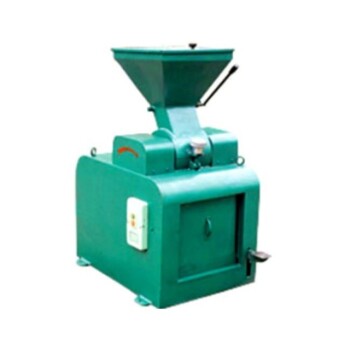
- Laboratory Sealed Hammer Crusher for Efficient Sample Preparation
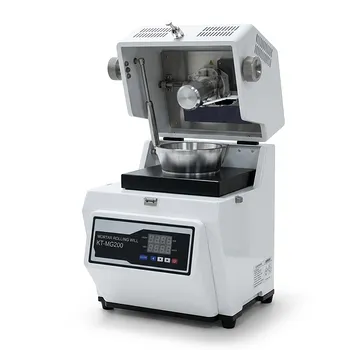
- Stainless Steel Laboratory Ball Mill for Dry Powder and Liquid with Ceramic Polyurethane Lining
- Laboratory Single Horizontal Jar Mill
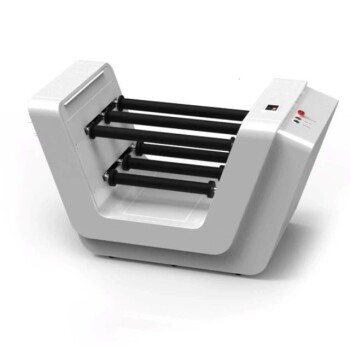
- Laboratory Ten-Body Horizontal Jar Mill for Lab Use
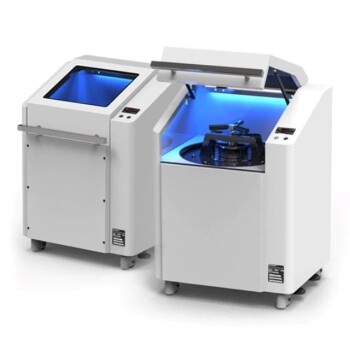
- Laboratory High Throughput Tissue Grinding Mill Grinder
People Also Ask
- What role do laboratory crushers and standard sieves play in Datura stramonium pretreatment? Optimize Your HTL Yield
- What is the primary function of a laboratory crusher? Optimize Biomass & Coal Co-Gasification Efficiency
- What lab equipment would be use to crush or grind a substance? A Guide to Choosing the Right Tool
- What is the purpose of sample preparation? Ensure Accurate & Reliable Analytical Results
- What kind of material is a hammer mill used for? Process Brittle, Dry, and Crystalline Materials Efficiently