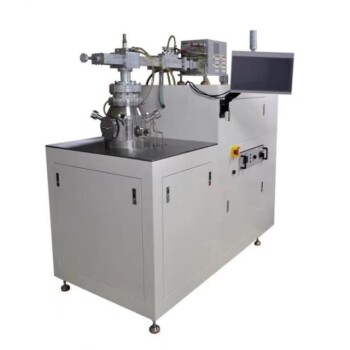
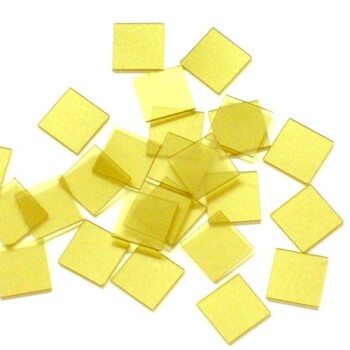
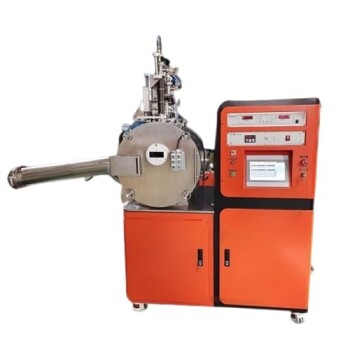
Hot Filament Chemical Vapour Deposition (HFCVD) systems are widely recognized as the primary method for the production of diamond films. Their distinct advantages lie in the simplicity of the equipment, the ease with which process conditions can be controlled, and film growth rates that are notably faster than those achieved by chemical transport methods.
Core Takeaway HFCVD provides a straightforward and economical path to diamond synthesis by utilizing thermal decomposition rather than complex plasma generation. While it excels in coating complex shapes and managing process parameters, users must actively mitigate the risk of film contamination from the filament material.
The Operational Principle of HFCVD
Thermal Decomposition
The core mechanism of HFCVD relies on a scorched tungsten filament. This filament is heated to extremely high temperatures to act as an activation source.
When carbon-containing gases (typically methane, CH4, mixed with hydrogen, H2) are introduced, the hot filament decomposes the material. This thermal activation triggers a chemical vapour phase reaction, resulting in the deposition of a diamond film on the substrate.
System Configuration
One of the system's greatest strengths is its mechanical simplicity. A typical setup includes a horizontal filament holder with a tensioning system, a double-walled stainless steel reactor, and a standard DC power supply.
It also utilizes a gas panel for managing inputs and a pumping system for pressure control. Because the equipment is less complex than other advanced deposition methods, it is generally easier to operate and maintain.
Primary Advantages
Ease of Process Control
HFCVD systems allow for precise manipulation of deposition parameters. Operators can effectively adjust the chemical composition, morphology, and crystal structure of the coating.
This flexibility ensures that the grain size and general quality of the diamond film can be tailored to specific application requirements.
Superior Growth Rates
Compared specifically to chemical transport methods, HFCVD offers faster growth rates for diamond films.
This efficiency makes it a more viable option for production scenarios where throughput is a priority, alongside its ability to coat many parts simultaneously in large batches.
Coverage of Complex Geometries
Unlike Physical Vapour Deposition (PVD), HFCVD is not a line-of-sight process. Because it uses gaseous reactants, the vapour can penetrate restricted areas.
This allows for the uniform coating of complex surfaces, deep holes, or intricate shapes that would be impossible to coat with directional deposition methods.
Understanding the Trade-offs
Filament Contamination
The most significant disadvantage of HFCVD is the potential for impurity. The tungsten wire used to heat the gas can become brittle due to carbonization.
If the wire breaks or degrades, tungsten material can contaminate the diamond film. This makes the method risky for applications requiring ultra-high purity.
Thermal Instability
Over time, the filament may suffer from deformation. This physical change can lead to an inhomogeneous temperature distribution across the substrate.
Uneven heating can result in inconsistent film quality across the surface of the part, affecting the uniformity of the final product.
Growth Rate Limitations
While faster than chemical transport, there is an upper limit to the speed of HFCVD. The concentration of active particles generated by the filament can be low compared to high-energy plasma methods.
This creates a bottleneck where increasing the growth rate further becomes difficult without altering the fundamental physics of the system.
Making the Right Choice for Your Goal
When evaluating HFCVD for your project, weigh the simplicity of the hardware against your purity requirements.
- If your primary focus is cost-effective production: HFCVD is an excellent choice due to its simple equipment, lower maintenance, and ability to coat large batches simultaneously.
- If your primary focus is coating complex geometries: Rely on HFCVD for its non-line-of-sight capability, which ensures uniform coverage on restricted surfaces and deep holes.
- If your primary focus is ultra-high purity: Proceed with caution, as the risk of filament carbonization and breakage may introduce tungsten contamination into your diamond film.
HFCVD remains the industry standard for diamond synthesis where a balance of control, growth speed, and equipment accessibility is required.
Summary Table:
| Feature | HFCVD System Benefit | Impact on Production |
|---|---|---|
| Mechanism | Thermal Decomposition | Simple, cost-effective equipment setup |
| Geometry | Non-Line-of-Sight | Uniform coating on complex shapes and deep holes |
| Growth Rate | Faster than Chemical Transport | Higher throughput for large-batch manufacturing |
| Control | Precise Parameter Management | Customizable grain size and film morphology |
| Application | Diamond Film Synthesis | Industry standard for versatile diamond coatings |
Elevate Your Material Research with KINTEK Precision
Unlock the full potential of diamond synthesis and advanced coatings with KINTEK’s industry-leading laboratory solutions. Whether you require sophisticated CVD and PECVD systems for high-purity film growth, or specialized high-temperature furnaces and vacuum reactors for thermal decomposition, our equipment is engineered for reliability and precision.
From crushing and milling systems to high-pressure autoclaves and essential consumables like crucibles and ceramics, KINTEK provides a comprehensive ecosystem for researchers and manufacturers worldwide. Our team is dedicated to helping you achieve superior results in battery research, material science, and thin-film deposition.
Ready to optimize your HFCVD process or upgrade your lab?
Contact KINTEK Today for Expert Guidance
Related Products
- HFCVD Machine System Equipment for Drawing Die Nano-Diamond Coating
- Customer Made Versatile CVD Tube Furnace Chemical Vapor Deposition Chamber System Equipment
- Multi Heating Zones CVD Tube Furnace Machine Chemical Vapor Deposition Chamber System Equipment
- Chemical Vapor Deposition CVD Equipment System Chamber Slide PECVD Tube Furnace with Liquid Gasifier PECVD Machine
- Split Chamber CVD Tube Furnace with Vacuum Station Chemical Vapor Deposition System Equipment Machine
People Also Ask
- What is the full form of HFCVD? A Guide to Hot Filament Chemical Vapor Deposition
- What are the disadvantages and challenges of the HFCVD method? Overcome Growth Limits and Filament Issues
- What is the function of tungsten filaments in HFCVD? Powering Diamond Film Synthesis with Thermal Excitation
- Why is Chemical Vapor Deposition (CVD) equipment uniquely suited for constructing hierarchical superhydrophobic structures?
- What is the chemical vapor deposition growth process? Build Superior Thin Films from the Atom Up