Knowledge What are the advantages of using a CVD system for CNT water treatment? Achieve Superior Nano-Adsorbent Precision
Author avatar

Tech Team · Kintek Solution

Updated 3 days ago

What are the advantages of using a CVD system for CNT water treatment? Achieve Superior Nano-Adsorbent Precision


Chemical Vapor Deposition (CVD) offers distinct advantages for synthesizing carbon nanotubes (CNTs) specifically intended for water treatment applications. By providing precise control over critical reaction variables, such as precursor gas flow and temperature, CVD systems ensure the production of high-quality, directionally grown nanotubes with superior adsorption capabilities.

The primary value of a CVD system lies in its ability to fine-tune the synthesis environment. This precision enables the growth of CNTs with the specific electrical and adsorption properties required to effectively remove heavy metals and persistent organic pollutants from wastewater.

Achieving Precision in Synthesis

Controlling Reaction Variables

The core advantage of a CVD system is the ability to maintain precise control over the synthesis environment.

Operators can strictly regulate precursor gas flow rates and reaction furnace temperatures. This level of control is essential for ensuring consistency across the produced batch of nanomaterials.

Enabling Directional Growth

Beyond basic environmental control, the CVD process facilitates specific growth patterns.

It enables the directional growth of carbon nanotubes directly on catalyst surfaces. This organized growth structure is often critical for maximizing the material's structural integrity and usability in filtration systems.

Translating Quality into Water Treatment Performance

Superior Adsorption Properties

The high quality of CNTs produced via CVD directly translates to excellent adsorption properties.

These materials function as highly effective nano-adsorbents. They are particularly capable of capturing and removing distinct contaminants, including heavy metals and persistent organic pollutants.

Enhanced Electrical Conductivity

CVD synthesis results in CNTs with excellent electrical conductivity.

For water treatment applications that rely on electrochemical processes, this property ensures the material facilitates electron transfer efficiently. This leads to more robust and reliable system performance.

Common Pitfalls to Avoid

The Risk of Variable Imprecision

While CVD offers high precision, the quality of the output is entirely dependent on maintaining that control.

If gas flow rates or temperatures fluctuate outside the optimal range, the quality of the carbon nanotubes will degrade. Lower-quality nanotubes will lack the adsorption capacity necessary for effective wastewater purification, negating the benefits of the system.

Making the Right Choice for Your Goal

To maximize the efficacy of your water treatment materials, align your CVD process parameters with your specific purification targets.

  • If your primary focus is removing heavy metals: Leverage the directional growth capabilities of CVD to maximize surface area and adsorption properties for superior contaminant trapping.
  • If your primary focus is advanced electrochemical filtration: Prioritize the precise temperature controls to ensure high crystallinity and maximum electrical conductivity.

By utilizing the precise control of a CVD system, you ensure the creation of robust, high-performance materials capable of tackling the most challenging wastewater contaminants.

Summary Table:

Advantage Impact on Water Treatment Key Mechanism
Precise Variable Control Consistent material quality and batch reproducibility Regulation of gas flow and furnace temperature
Directional Growth Maximized structural integrity and surface area Catalytic growth on specific surfaces
Superior Adsorption Efficient removal of heavy metals and organic pollutants High-purity nano-adsorbent production
High Conductivity Enhanced electrochemical filtration performance Improved crystallinity and electron transfer

Elevate Your Nanomaterial Synthesis with KINTEK

Ready to engineer high-performance carbon nanotubes for critical water treatment applications? KINTEK specializes in advanced laboratory equipment, providing the precision needed for the most demanding synthesis tasks. Our comprehensive range of Chemical Vapor Deposition (CVD) and PECVD systems offers the exact temperature and flow control required to produce superior nano-adsorbents.

Beyond CVD, we support your entire research workflow with:

  • High-Temperature Furnaces: Muffle, tube, and atmosphere furnaces for post-synthesis processing.
  • Material Processing: Crushing, milling, and hydraulic presses for pellet preparation.
  • Lab Essentials: High-pressure reactors, cooling solutions, and premium ceramics/crucibles.

Don't let variable imprecision compromise your results. Partner with KINTEK for reliable, industry-leading laboratory solutions. Contact our experts today to find the perfect system for your wastewater purification goals!

References

  1. Ramona Kuhn, Jörg Böllmann. Applications of Environmental Nanotechnologies in Remediation, Wastewater Treatment, Drinking Water Treatment, and Agriculture. DOI: 10.3390/applnano3010005

This article is also based on technical information from Kintek Solution Knowledge Base .

Related Products

People Also Ask

Related Products

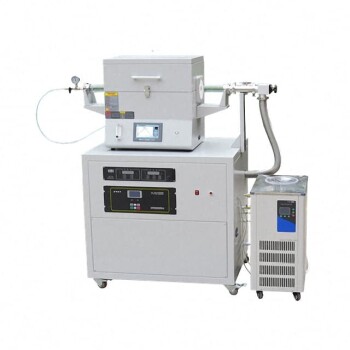
Multi Heating Zones CVD Tube Furnace Machine Chemical Vapor Deposition Chamber System Equipment

Multi Heating Zones CVD Tube Furnace Machine Chemical Vapor Deposition Chamber System Equipment

KT-CTF14 Multi Heating Zones CVD Furnace - Precise Temperature Control and Gas Flow for Advanced Applications. Max temp up to 1200℃, 4 channels MFC mass flow meter, and 7" TFT touch screen controller.

1200℃ Split Tube Furnace with Quartz Tube Laboratory Tubular Furnace

1200℃ Split Tube Furnace with Quartz Tube Laboratory Tubular Furnace

KT-TF12 split tube furnace: high-purity insulation, embedded heating wire coils, and max. 1200C. Widely used for new materials and chemical vapour deposition.

High Pressure Laboratory Vacuum Tube Furnace Quartz Tubular Furnace

High Pressure Laboratory Vacuum Tube Furnace Quartz Tubular Furnace

KT-PTF High Pressure Tube Furnace: Compact split tube furnace with strong positive pressure resistance. Working temp up to 1100°C and pressure up to 15Mpa. Also works under controller atmosphere or high vacuum.

Multi-zone Laboratory Tube Furnace

Multi-zone Laboratory Tube Furnace

Experience precise, efficient thermal testing with our Multi Zone Tube Furnace. Independent heating zones and temperature sensors allow for controlled high-temperature gradient heating fields. Order now for advanced thermal analysis!

Ultra-High Temperature Graphite Vacuum Graphitization Furnace

Ultra-High Temperature Graphite Vacuum Graphitization Furnace

The ultra-high temperature graphitization furnace utilizes medium frequency induction heating in a vacuum or inert gas environment. The induction coil generates an alternating magnetic field, inducing eddy currents in the graphite crucible, which heats up and radiates heat to the workpiece, bringing it to the desired temperature. This furnace is primarily used for graphitization and sintering of carbon materials, carbon fiber materials, and other composite materials.

Laboratory Rapid Thermal Processing (RTP) Quartz Tube Furnace

Laboratory Rapid Thermal Processing (RTP) Quartz Tube Furnace

Get lightning-fast heating with our RTP Rapid Heating Tube Furnace. Designed for precise, high-speed heating and cooling with convenient sliding rail and TFT touch screen controller. Order now for ideal thermal processing!

1200℃ Controlled Atmosphere Furnace Nitrogen Inert Atmosphere Furnace

1200℃ Controlled Atmosphere Furnace Nitrogen Inert Atmosphere Furnace

Discover our KT-12A Pro Controlled atmosphere furnace - high precision, heavy duty vacuum chamber, versatile smart touch screen controller, and excellent temperature uniformity up to 1200C. Ideal for both laboratory and industrial application.

Vacuum Heat Treat Sintering Brazing Furnace

Vacuum Heat Treat Sintering Brazing Furnace

A vacuum brazing furnace is a type of industrial furnace used for brazing, a metalworking process that joins two pieces of metal using a filler metal that melts at a lower temperature than the base metals. Vacuum brazing furnaces are typically used for high-quality applications where a strong, clean joint is required.

Vertical High Temperature Graphite Vacuum Graphitization Furnace

Vertical High Temperature Graphite Vacuum Graphitization Furnace

Vertical high temperature graphitization furnace for carbonization and graphitization of carbon materials up to 3100℃.Suitable for shaped graphitization of carbon fiber filaments and other materials sintered in a carbon environment.Applications in metallurgy, electronics, and aerospace for producing high-quality graphite products like electrodes and crucibles.

Graphite Vacuum Furnace High Thermal Conductivity Film Graphitization Furnace

Graphite Vacuum Furnace High Thermal Conductivity Film Graphitization Furnace

The high thermal conductivity film graphitization furnace has uniform temperature, low energy consumption and can operate continuously.

1700℃ Controlled Atmosphere Furnace Nitrogen Inert Atmosphere Furnace

1700℃ Controlled Atmosphere Furnace Nitrogen Inert Atmosphere Furnace

KT-17A Controlled atmosphere furnace: 1700℃ heating, vacuum sealing technology, PID temperature control, and versatile TFT smart touch screen controller for laboratory and industrial use.

Vacuum Hot Press Furnace Heated Vacuum Press Machine Tube Furnace

Vacuum Hot Press Furnace Heated Vacuum Press Machine Tube Furnace

Reduce forming pressure & shorten sintering time with Vacuum Tube Hot Press Furnace for high-density, fine-grain materials. Ideal for refractory metals.

Laboratory Vacuum Tilt Rotary Tube Furnace Rotating Tube Furnace

Laboratory Vacuum Tilt Rotary Tube Furnace Rotating Tube Furnace

Discover the versatility of Laboratory Rotary Furnace: Ideal for calcination, drying, sintering, and high-temperature reactions. Adjustable rotating and tilting functions for optimal heating. Suitable for vacuum and controlled atmosphere environments. Learn more now!

Vacuum Heat Treat and Sintering Furnace with 9MPa Air Pressure

Vacuum Heat Treat and Sintering Furnace with 9MPa Air Pressure

The air pressure sintering furnace is a high-tech equipment commonly used for the sintering of advanced ceramic materials. It combines vacuum sintering and pressure sintering techniques to achieve high-density and high-strength ceramics.

2200 ℃ Tungsten Vacuum Heat Treat and Sintering Furnace

2200 ℃ Tungsten Vacuum Heat Treat and Sintering Furnace

Experience the ultimate refractory metal furnace with our Tungsten vacuum furnace. Capable of reaching 2200℃, perfect for sintering advanced ceramics and refractory metals. Order now for high-quality results.

Vacuum Heat Treat and Molybdenum Wire Sintering Furnace for Vacuum Sintering

Vacuum Heat Treat and Molybdenum Wire Sintering Furnace for Vacuum Sintering

A vacuum molybdenum wire sintering furnace is a vertical or bedroom structure, which is suitable for withdrawal, brazing, sintering and degassing of metal materials under high vacuum and high temperature conditions. It is also suitable for dehydroxylation treatment of quartz materials.

Vacuum Heat Treat Furnace and Levitation Induction Melting Furnace

Vacuum Heat Treat Furnace and Levitation Induction Melting Furnace

Experience precise melting with our Vacuum Levitation Melting Furnace. Ideal for high melting point metals or alloys, with advanced technology for effective smelting. Order now for high-quality results.

Mesh belt controlled atmosphere furnace

Mesh belt controlled atmosphere furnace

Discover our KT-MB mesh belt sintering furnace - perfect for high-temperature sintering of electronic components & glass insulators. Available for open air or controlled atmosphere environments.

1800℃ Muffle Oven Furnace for Laboratory

1800℃ Muffle Oven Furnace for Laboratory

KT-18 muffle furnace with Japan Al2O3 polycrystalline fibe and Silicon Molybdenum heating element, up to 1900℃, PID temperature control and 7" smart touch screen. Compact design, low heat loss, and high energy efficiency. Safety interlock system and versatile functions.

1700℃ Laboratory High Temperature Tube Furnace with Alumina Tube

1700℃ Laboratory High Temperature Tube Furnace with Alumina Tube

Looking for a high-temperature tube furnace? Check out our 1700℃ Tube Furnace with Alumina Tube. Perfect for research and industrial applications up to 1700C.


Leave Your Message